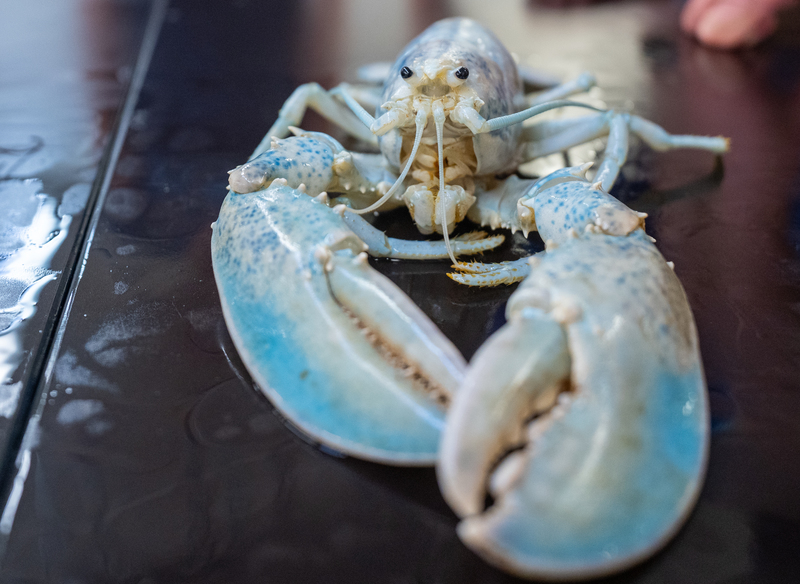
A rare white lobster estimated to occur just 1 in 100 million times has arrived at the University of New England in Biddeford to join ongoing genetic research.
Fittingly named Casper, the ghost lobster was donated to the university by the Maine State Aquarium in Boothbay. White lobsters are considered the absolute rarest among the unusual color variations found in the American lobster population.
Casper will reside at the Arthur P. Girard Marine Science Center. He is now part of a specialized research project led by Markus Frederich, professor of marine sciences, designed to understand why some lobsters develop such striking shell colors.
The initiative uses noninvasive techniques to collect and analyze genetic material without harming the animals. Researchers examine differences in gene expression to uncover the molecular mechanisms behind the pigmentation.
The university launched the research initiative in 2024 after becoming home to a growing collection of unusual specimens, including orange, yellow, blue, purple, calico, and split-colored varieties.

That effort expanded significantly after Peaches, a 1-in-30-million orange lobster, produced offspring displaying a wide range of colors. That event provided researchers with a unique opportunity to investigate how coloration is inherited.
Investigators have since collected genetic material from the juvenile lobsters and are analyzing more than 15,000 genes to identify the specific differences associated with shell color.
“Animals like Casper capture people’s attention because they are so rare and beautiful. But, for us, they also provide an amazing opportunity to ask fundamental biological questions, said Markus Frederich, professor of marine sciences.”
Frederich also serves as the director of the Invertebrate Physiology Lab at the university. He said that undergraduate students are involved in every step of the process, from handling the animals to analyzing their genes.
Casper stands out as the rarest-colored specimen to join the ongoing study to date.
Related reading
Dolly Parton Opens SongTeller Hotel in Downtown Nashville
Downtown Nashville gained a rhinestone-studded landmark on Tuesday, October 6, 2026, when SongTeller Hotel officially opened its doors...

Weary Renters and Jaded Homeowners Are Looking 430 Miles East
Weary renters and jaded homeowners are looking 430 miles east as rising living costs and urban strain reshape...

Costco Operations on North Memorial Parkway in Huntsville Shift Ahead of Upcoming Winter Holidays
Costco operations on North Memorial Parkway in Huntsville shift ahead of upcoming winter holidays, with scheduled closures and...

KATT 100.5 Lays off 3 Longtime DJs After Cumulus Bankruptcy Exit
Three longtime on-air personalities with a combined 89 years of experience at Oklahoma City rock station KATT 100.5...