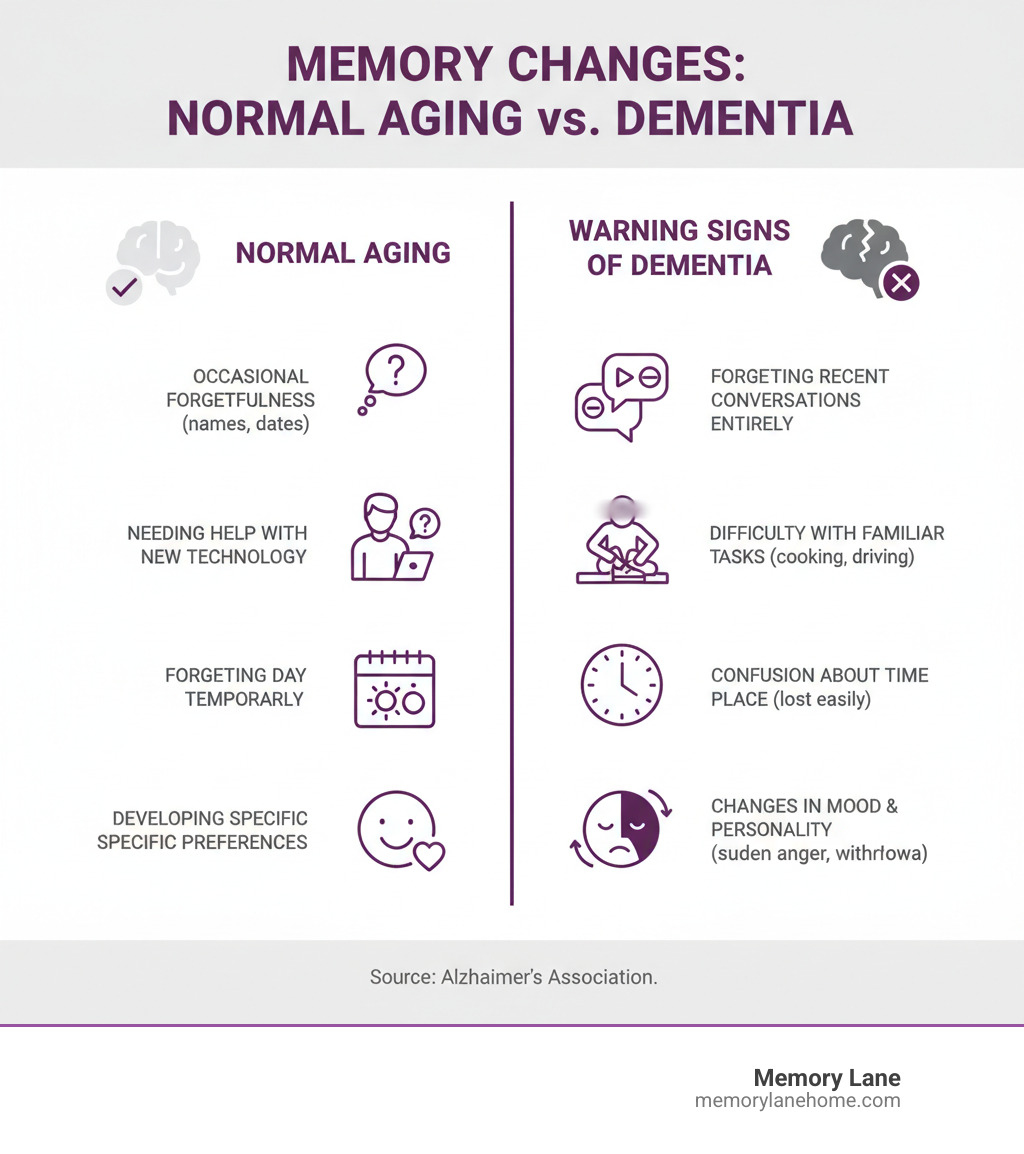
Dementia affects more than 6 million Americans, and researchers estimate 42 percent of people over 55 will eventually develop the condition, according to research published by the National Institutes of Health.
Christopher Weber, a clinical psychologist and senior director of global scientific initiatives with the Alzheimer’s Association, told Discover Magazine that difficulty learning new information is a primary red flag. “If you’re repeatedly asking for information that people have already given you several times, that’s a warning sign,” he said.
A 2025 study in Alzheimer’s & Dementia examined health records for more than 4,100 patients with diagnosed dementia, looking back a decade before diagnosis, Discover Magazine reported. The research linked persistent trouble retaining new information to later diagnosis.
New difficulties with familiar tasks mark a second warning sign. Weber told Discover Magazine that executive functioning — the brain’s ability to organize and plan — often declines before memory loss appears. A lifelong cook may struggle to follow a recipe, or someone might pay a bill twice after forgetting the first payment.
Frontotemporal dementia can be especially difficult to detect early, according to a 2025 study in Expert Review of Neurotherapeutics cited by Discover Magazine. Imaging may not yet show structural brain changes in early stages.
The third red flag is a change from a person’s normal baseline. Weber told Discover Magazine that distinguishing normal aging from disease requires knowing what is typical for that individual. “It’s tough to detect those early symptoms,” he said.
Researchers continue developing more accurate tests to identify biomarkers of cognitive decline, Discover Magazine reported.
Related reading

Haryana Police Use Water Cannons on Youth Congress Protesters
Haryana police fired water cannons at Indian Youth Congress protesters outside Meta's Gurugram office on Saturday, escalating a...

Mother of Dublin Stabbing Victim Says There is ‘No Closure’ After Attacker’s Life Sentence
The mother of a young girl stabbed in a Dublin attack has said there is "no closure" following...

Carrie Underwood, 43, Launches HiNote Nutrition Drink, Credits Flexible Fitness for ‘Best Shape’
Carrie Underwood, 43, launched HiNote, a caffeine- and sugar-free nutrition drink, on Nov. 27, saying she is in...

Victorian Greens Surge to Record Vote, Opposition Status Uncertain
The Victorian Greens have secured their highest primary vote in the state's history, winning six lower house seats...