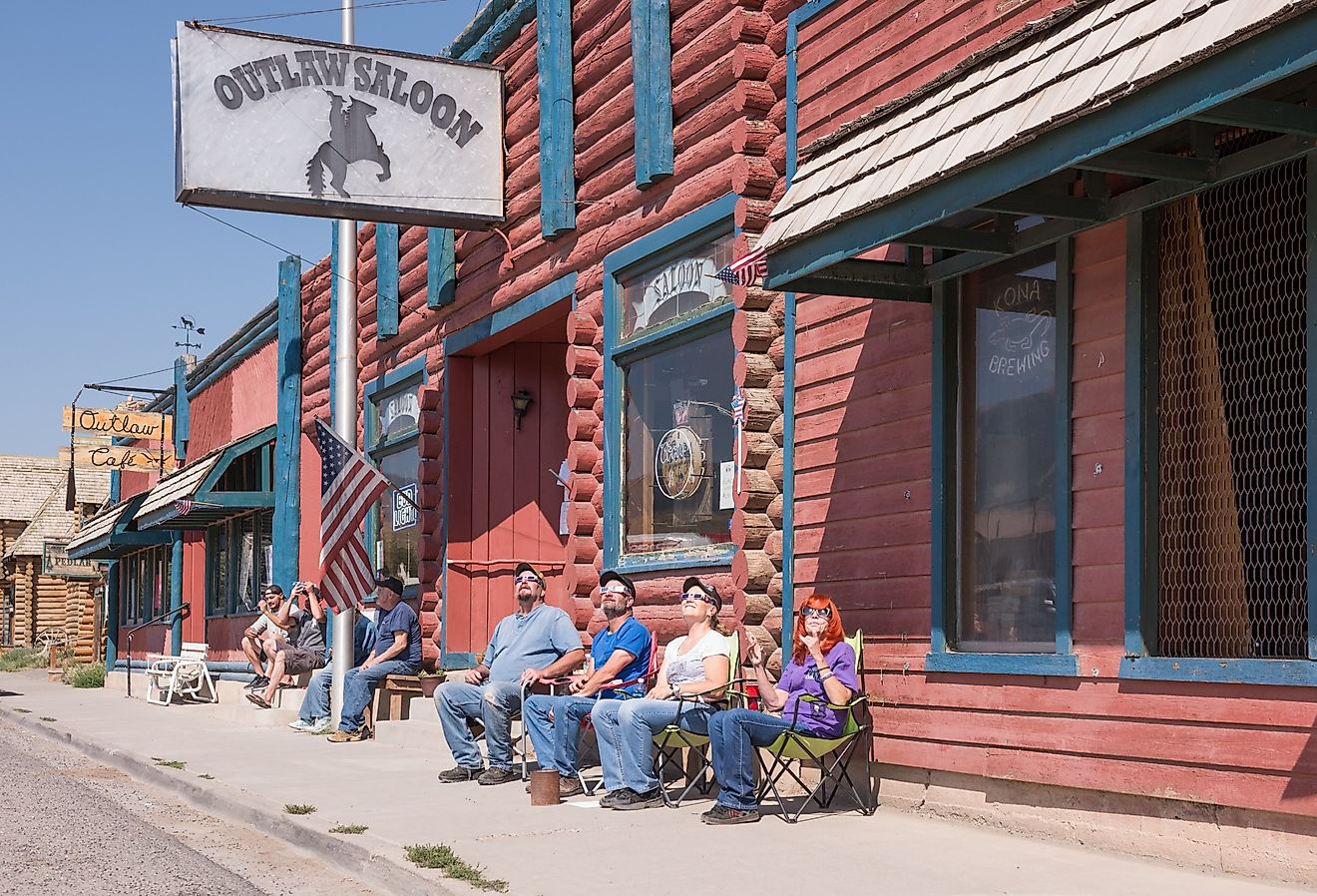
Nine towns across Montana, Wyoming and Colorado remain reachable mainly by gravel roads and keep year-round populations in the low hundreds, World Atlas reported.
The community runs largely off the power grid, and cell service is scarce. The historic Polebridge Mercantile is known for its huckleberry pastries, and the nearby Northern Lights Saloon serves meals. Bowman Lake and Kintla Lake, inside the park, draw a fraction of the crowds found elsewhere. Philipsburg, Montana, preserves a colorful Victorian main street from its silver-mining past. The Sweet Palace candy store operates on Broadway, and visitors can sift gravel for Montana sapphires at nearby Gem Mountain. Wisdom, Montana, has about 100 residents in the wide Big Hole Valley, known for ranches and beaverslide haystacks. It regularly records some of the lowest winter temperatures in the lower 48 states. Big Hole National Battlefield, just west of town, preserves the site of the 1877 battle between the U.S. Army and the Nez Perce people. The Big Hole River is one of the last strongholds of fluvial arctic grayling in the lower 48. Dubois, Wyoming, sits in the Wind River Valley on the quiet route between the Tetons and central Wyoming. Togwotee Pass climbs west toward Grand Teton National Park. Encampment, Wyoming, at the foot of the Sierra Madre range, was once a copper boomtown and is now a village of a few hundred people. The scenic Snowy Range Road crosses the mountains past alpine lakes.
Marble, Colorado, a tiny village in the Crystal River Valley, is named for the brilliant white Yule marble quarried above town. The Marble Mill Site park preserves ruins of the old stone mill, and Crystal Mill clings to a cliff above the river, reached by a rough four-wheel-drive road. With only a few dozen year-round residents, Marble is about as quiet as Colorado gets. Lake City, Colorado, the only town in Hinsdale County — one of the least populated counties in the state — sits deep in the San Juan Mountains. Its historic district is lined with Victorian homes and false-front buildings from its mining days.
Creede, Colorado, near the headwaters of the Rio Grande, was a wild silver boomtown in the 1890s and is now a quiet mountain town of a few hundred people tucked into a narrow canyon beneath towering cliffs. The Creede Repertory Theatre stages plays each summer, and the Underground Mining Museum is carved directly into the rock.
The Bachelor Historic Tour passes old mines and ghost towns with sweeping valley views. Crestone, Colorado, sits at the base of the Sangre de Cristo Mountains overlooking the wide San Luis Valley. Its remote location means dark, starry night skies and deep silence.

Clifton Gains Consistency, Paired With Lohrei on Third Line
Connor Clifton has gone four straight games without leaving the lineup, his longest run of consistency since early...

UConn Reaches Bowl Eligibility With Chaotic 29-21 Win Over Old Dominion
UConn football secured a 29-21 win over Old Dominion on Saturday at Rentschler Field to reach bowl eligibility...

Teresa Benitez-Thompson Begins Freshman Orientation in Washington
"It's very cool," Teresa Benitez-Thompson said of becoming the first Democrat ever elected to represent Northern Nevada's 2nd...

Indiana State AD Nathan Christensen Says Curt Mallory Will Not Return
Indiana State finished the season 2-10 after a 52-13 loss at No. 3 South Dakota State on Saturday,...