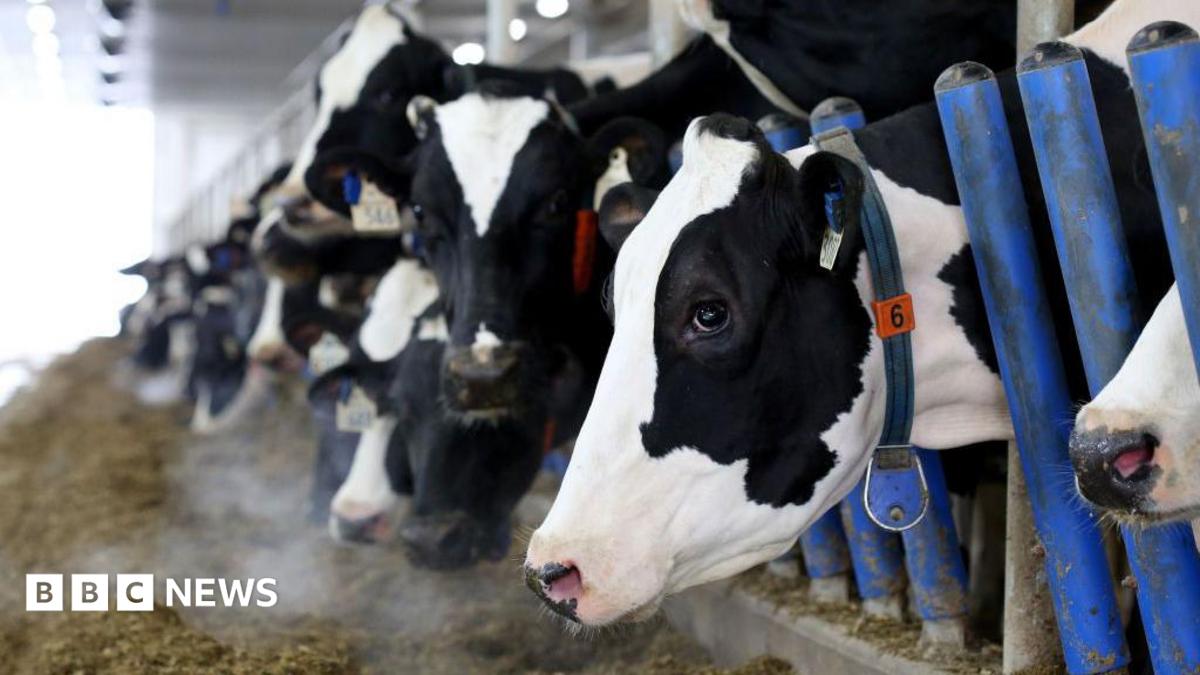
President Donald Trump has escalated trade tensions with Canada by placing a 50% tariff on Canadian goods, singling out the country’s dairy system as a primary trade irritant. Canadian Prime Minister Mark Carney condemned the move as a violation of the existing trade agreement as officials from both nations prepare for intensive negotiations.
The 50% Tariff Proclamations and White House Grievances
The White House outlined its grievances through three separate proclamations signed by President Trump on July 20, setting an additional 50% tariff on Canadian goods valued at $20bn to take effect on August 19. The White House put an additional 50% tariffs on Canadian goods, citing Canada’s treatment of U.S. cheese, alcohol and motor vehicles. The measures target hundreds of goods, including some covered by the trade agreement, such as dairy items, molasses, nonalcoholic beer, peppermint oil, paper products, and hockey sticks.
Administration officials pointed to long-standing trade imbalances and retaliatory measures taken by Canadian provinces. The cheese proclamation accused Canada of giving preferential treatment to European cheese at the expense of U.S. dairy farmers, noting that Canadian retailers can buy duty-free cheese from Europe while they can’t buy directly from U.S. cheese makers. The alcohol proclamation responded to Canadian provinces last year taking U.S. alcohol off store shelves to retaliate against other U.S. tariffs, which caused beer, wine, and distilled spirit sales to Canada to drop by 81% over the following year according to the White House. The vehicle proclamation responded to a 25% tariff on U.S. vehicles imposed by Canada in 2025. U.S. Trade Ambassador Jamieson Greer stated that Canada, unlike other partners and allies, continues to retaliate against the United States for its efforts to rebalance trade.
Inside Canada’s Sacrosanct Dairy Supply Management System
At the center of the dispute is Canada’s dairy supply management system, which has been in place since the early 1970s and is among the most politically sacrosanct policies in the country. The mechanism relies on production quotas that limit how much dairy farmers can produce, fixed pricing set by marketing boards in each province to provide a predictable income, and strict import quotas on dairy, eggs, and poultry to guarantee a consistent domestic supply.
While a small amount of foreign dairy is able to enter Canada tariff-free or at low tariff rates under set quota limits, quantities exceeding the limit face a levy of 200% to nearly 300%, making it prohibitively costly for both foreign producers and consumers to sell in Canada. As a result, U.S. producers have tariff-free access to only 3.5% of the Canadian market, despite the United States Department of Agriculture noting that Canada is among the top importers of U.S. dairy, buying $1.3bn worth of products in 2025.
Political Stakes and Hardened Stances in Ottawa and Washington
Canadian politicians face intense domestic pressure over the supply management system, which David Clement, a Canadian policy director at the international advocacy group Consumer Choice Center, described as the most powerful political lobby in the country that stretches across all of the major political parties. Dairy farmers have also been known to stage protests complete with tractors and cattle on Parliament Hill when faced with possible concessions in trade talks. Quebec Premier Christine Fréchette, whose province is home to Canada’s largest dairy industry, declared on Tuesday that supply management was non-negotiable. Last week, US-Canada Trade Minister Dominic LeBlanc defended the framework to BBC News, emphasizing that the system is a cornerstone of Canada’s economy and our rural communities that ensures that Canadians have access to high-quality dairy products made by Canadian dairy farmers.

U.S. dairy organizations strongly endorsed the administration’s aggressive posture. Dairy Export Council praised the retaliatory tariffs, noting that Canada has failed to follow the U.S.-Mexico-Canada trade agreement negotiated during Trump’s first term. Gregg Doud, export council CEO and president, argued in a statement published by Capital Press that Canada simply cannot continue to discriminate against U.S. dairy farmers by effectively blocking negotiated access to its market, adding that today’s assertive action by the administration makes clear to Canada that their dairy trade practices will no longer be tolerated. Last year, the dairy industry said in written comments to trade officials that U.S. dairy farmers have been cheated out of the market access benefits promised to them.
Escalating Lumber Threats and Market Uncertainty
The dairy friction compounds broader bilateral trade disputes involving lumber, alcohol, and motor vehicles. President Trump remarked on Friday that Canada has been ripping us off for years on tariffs for lumber and for dairy products, threatening identical reciprocal tariffs as early as today, or we’ll wait till Monday or Tuesday unless Ottawa drops its restrictions. Trump added in an interview with Fox Business that tariffs could go up as time goes by.
While the United States-Mexico-Canada Agreement provides some exemptions, a White House official confirmed that 62% of Canadian imports and 50% of Mexican imports will still face new levies, mainly on energy resources. White House trade advisor Peter Navarro addressed the resulting market volatility, noting that the uncertainty is created by the fact that people don’t take President Trump at his word. Economists warn that broad tariffs could weigh on U.S. growth and consumer sentiment, but Trump remains firm on his stance, stating that it’s not fair, never has been fair, and they’ve treated our farmers badly.
Renewed Trade Deal Negotiations Amid Immediate Deadlines
Prime Minister Mark Carney countered that the 50% tariffs violated the trade agreement. Following a conversation with President Trump where they agreed to intensify negotiations to renew the trade deal, Carney told reporters that we’ll begin that right away, asserting that we don’t want a partial agreement.

Sources: bbc.co.uk.
Related reading
- Venus and Crescent Moon to Align in September 2026 Sky
- Worker Dies After Being Struck by Compressed Air Hose at Jurong Port Road
- Canada Explores EU “Associate Member” Status Amid US Trade Tensions (archyde.com)
- Trump calls on Ukraine to halt strikes on diesel, saying attacks are causing a shortage (newsarchyuk.com)

Venus and Crescent Moon to Align in September 2026 Sky
Stargazers caught a striking view on the evening of September 13, 2026, when Venus shone brightly beside a...

Worker Dies After Being Struck by Compressed Air Hose at Jurong Port Road
A 35-year-old worker died at a Jurong Port Road construction site on September 11, 2026, after being struck...

Singapore Police Investigate Three Traffic Officers Over Unsafe Riding Footage
The clip, which surfaced online, shows the outriders cutting across lanes and forcing sudden braking near the Traffic...

Justice Department Deports Legal Resident to Afghanistan in First ATRC Case
The Justice Department deported a 47-year-old legal U.S.