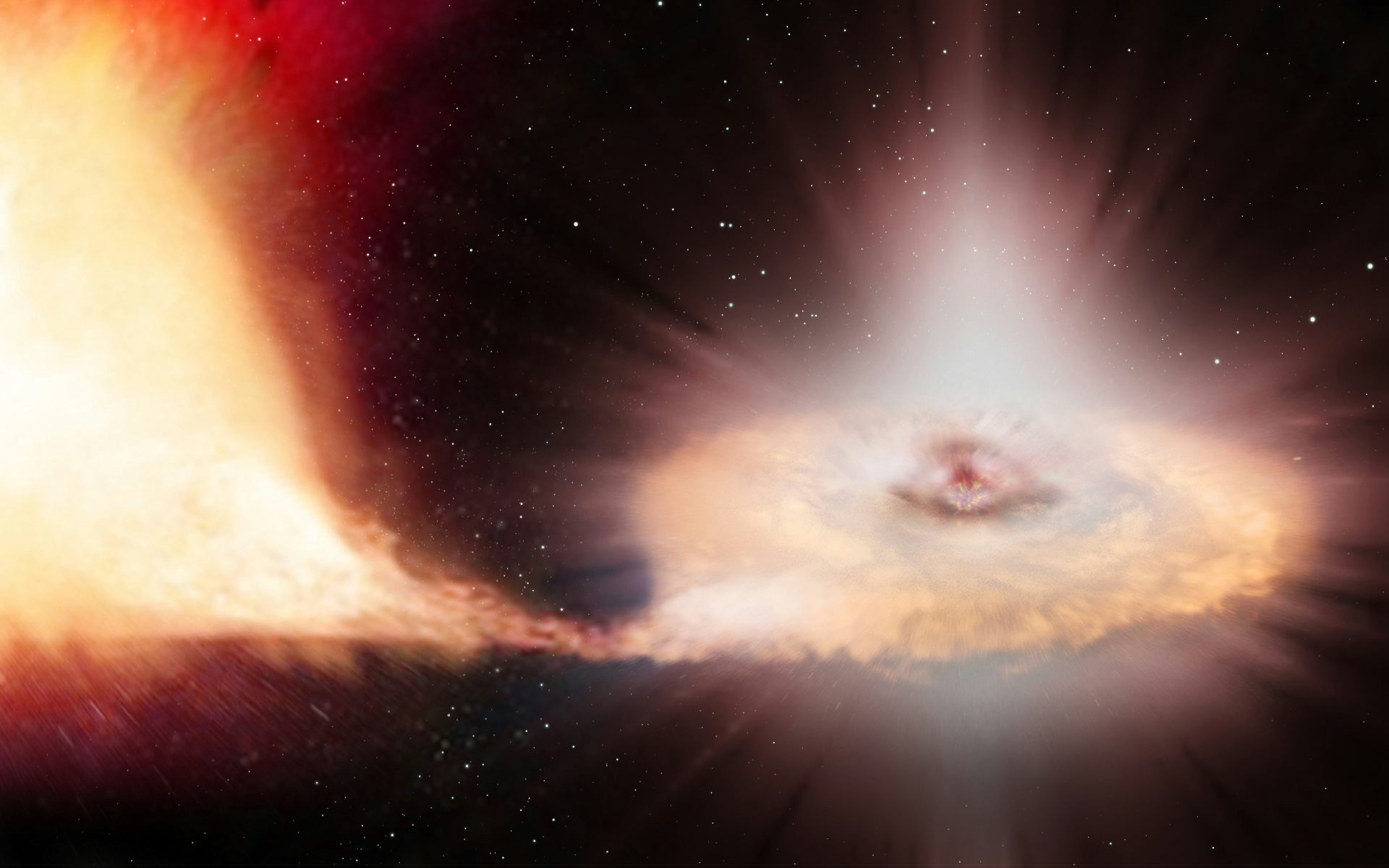
Physicists have experimentally confirmed that darkness inside light waves can move faster than light without violating relativity, while a separate study reveals the universe may be lopsided, challenging standard cosmological models of dark energy.
Measuring Superluminal Darkness via Optical Singularities
Physicists have experimentally confirmed a strange prediction: the dark holes inside light waves can appear to move faster than light itself according to reporting on the breakthrough. This darkness is called a phase singularity, which is a point where the wave cancels out and the field goes dark.
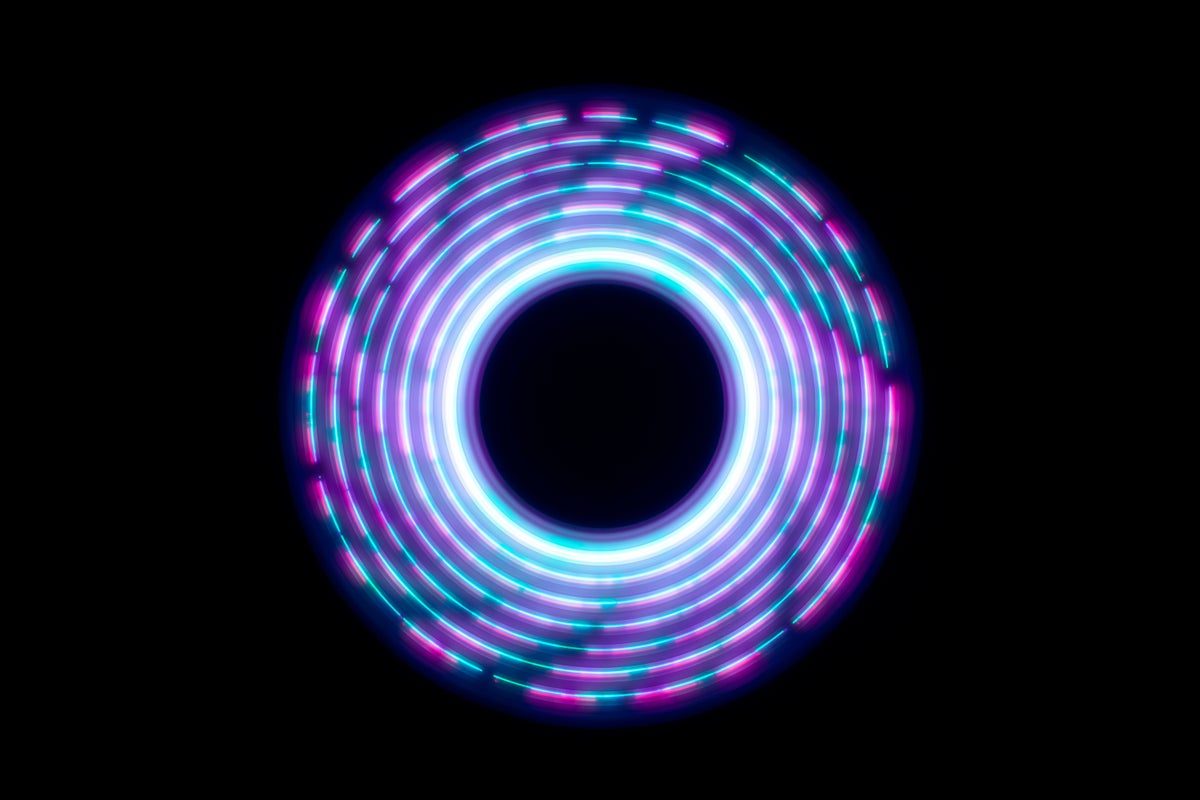
Inside the boron nitride membrane, light couples to vibrations of atoms to form hybrid waves of light and matter called polaritons. These polaritons move roughly 100 times slower than light, allowing the research team to track the singularities as they were born, moved, and annihilated. The team observed that just before annihilation, some singularities appeared to accelerate past the speed of light, reaching about 1.04 times faster than the speed of light as detailed in experimental measurements.
The research confirms a prediction dating back to the 1970s. Because phase singularities do not carry mass, energy, or information, their superluminal motion does not violate Einstein’s theory of relativity or break causality as published in Nature.
Cracks in the Standard Model of Cosmology
While optical singularities push the boundaries of wave dynamics, the foundational framework of modern cosmology is facing its own scrutiny. The standard model of cosmology, known as the lambda cold dark matter (ΛCDM) model, relies on dark energy to explain the accelerating expansion of the universe. However, a recent study has presented evidence that the universe is asymmetric, or lopsided, presenting a fundamental challenge to standard analyses.

This observation is known as the cosmic dipole anomaly. Instead, the signal from supernovae is mainly aligned with a temperature difference in the cosmic microwave background known as the CMB dipole anisotropy.
Rather than dark energy driving uniform acceleration, researchers suggest the signal is an illusion caused by Earth’s specific location in the cosmos, where neighbouring galaxies participate in a large-scale streaming motion called the bulk flow.
Theoretical Frameworks for Warp Speed and Time Dimensions
At the intersection of fiction and theoretical physics, scientists continue to explore whether space-time distortion can allow interstellar travel.
“If you wrap your ship in the fabric of space-time and then that fabric goes faster than light, carrying you with it, that’s actually not breaking any laws of physics.”
Erin MacDonald, Star Trek science adviser and astrophysicist, via Indiatimes
While early models required energy equivalent to the mass of the Sun or Jupiter, newer theoretical variations continue to examine stable warp bubbles. Meanwhile, separate theoretical work published in Classical and Quantum Gravity by Andrzej Dragan and Krzysztof Turzyński proposes extending special relativity to include superluminal observers, suggesting that a superluminal world would require three dimensions of time and one dimension of space.
Worth a look

Female Athletes Criticize Sydney Sweeney’s Sexualized Novig Ad Campaign
Actress Sydney Sweeney faces widespread internet backlash following her nearly nude promotional campaign for sports prediction app Novig,...

Ryan Garcia Defeats Conor Benn via Second-Round TKO in Las Vegas
Ryan Garcia ruthlessly defeated Conor Benn by second-round technical knockout on Saturday night at T-Mobile Arena in Las...

Jeremy Thomas, Oscar-Winning British Film Producer, Dies at 77
Oscar-winning British film producer Jeremy Thomas, celebrated for championing international auteurs and independent cinema on classics including The...

Vijay Deverakonda Launches Skincare Brand Unhype for Young Indians
Actor Vijay Deverakonda has co-founded Unhype, a functional skincare brand built for young Indian consumers aged 18 to...