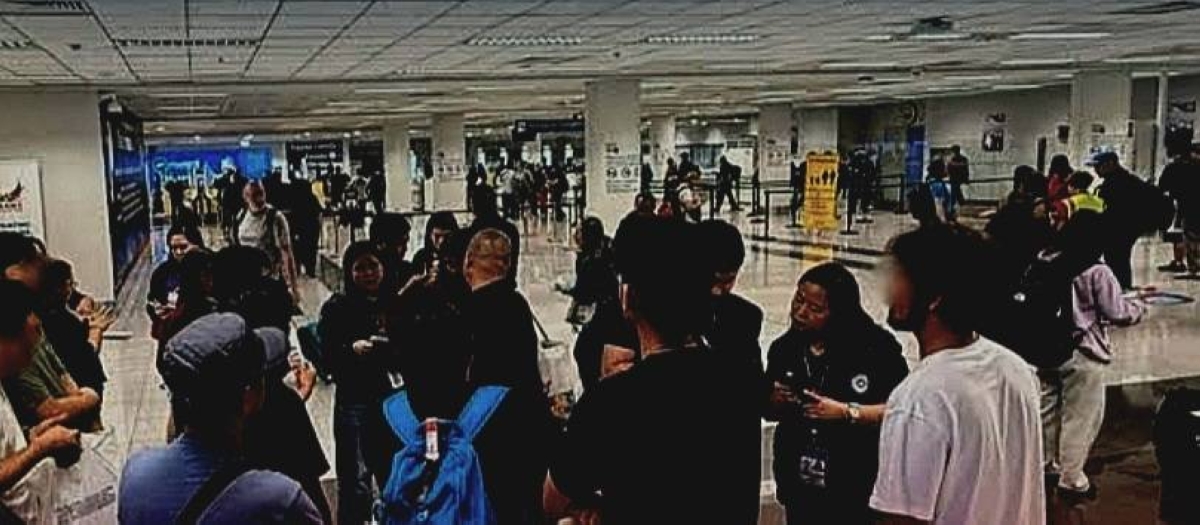
Following drone strikes that killed two Filipino seafarers and injured twelve others in the northern Black Sea, the Department of Migrant Workers reissued stringent high-risk safety advisories and reporting mandates. Authorities launched investigations into licensed manning agencies and shipowners to verify compliance with war zone protocols and the mandatory right to refuse sailing.
Escalating Black Sea Attacks Prompt Urgent Safety Admonitions
The waters of the northern Black Sea have turned increasingly perilous for international shipping crews, driven by the ongoing Russia-Ukraine conflict. Maritime routes near southern Ukraine and Russian ports have experienced mounting aerial assaults, exposing merchant vessels to wartime threats including drone strikes, missile attacks, and naval mines.
These dangers culminated in a series of fatal incidents involving Filipino crew members. The Department of Migrant Workers confirmed that the first fatality occurred on July 6, followed by a second death on Sunday, July 19, during drone attacks in the southern Ukrainian sector.
A total of nine commercial vessels carrying 139 Filipino seafarers have been affected by the hostilities. Alongside the two recorded deaths, twelve crew members sustained injuries and one remains missing, while the remaining 124 individuals escaped unharmed.
Repatriation Efforts and Medical Recovery for Surviving Crew
Twelve Filipino crew members who survived dual drone strikes on their vessel returned home on Friday night, July 24, landing at Ninoy Aquino International Airport Terminal 3 aboard Turkish Airlines Flight TK084. The repatriated workers were crew members of the M/V Gas Aura, which sustained heavy damage when it was struck while anchored near Kavkaz, Russia, on July 12 and July 15.
The attacks resulted in burns and other injuries for the vessel’s Filipino personnel, necessitating immediate evacuation. Of the twelve total injured seafarers recorded across various incidents, four have now returned to the Philippines for specialized medical care, while eight others continue undergoing medical recovery abroad.
“The 12 Filipino seafarers of the M/V Gas Aura are now set to be reunited with their families.”
Overseas Workers Welfare Administration
Upon arrival, the returning crew received comprehensive post-arrival assistance from the Overseas Workers Welfare Administration, including food, financial grants, domestic travel facilitation, and temporary lodging. Welfare administrators also pledged ongoing psychosocial support, livelihood programs, and reintegration assistance.
“We want to ensure that every OFW is not only brought back home but also helped to get back on their feet and move forward with their lives.”
Overseas Workers Welfare Administration
Strict Manning Agency Obligations and Mandatory Pre-Transit Rules
In response to the mounting casualties, DMW Secretary Hans Leo Cacdac announced the formal reissuance of the agency’s high-risk safety advisory to all licensed manning agencies and accredited foreign principals. The updated directives reinforce existing government policies, including Department Order No. 01 and Department Order No. 03 from 2024, alongside Advisory No. 21 from 2025.
These regulations enforce designations set by the International Bargaining Forum and the International Transport Workers’ Federation. Under the operational mandates, employers must complete mandatory pre-transit risk assessments before any ship enters war-risk zones in the northern Black Sea.
Furthermore, manning agencies are legally barred from deploying any Filipino seafarer without obtaining voluntary written consent. This consent is valid only after workers receive a comprehensive security briefing. Agencies must also uphold the absolute right of crew members to refuse sailing in hazardous zones without facing retaliation, blacklisting, discrimination, or adverse employment action.
Government Investigations Into Potential Agency Liabilities
The Department of Migrant Workers initiated formal inquiries to evaluate whether shipowners and manning agencies fulfilled their mandatory reporting obligations before sending crews into volatile waters. Secretary Cacdac emphasized that regulatory compliance serves as the primary benchmark for determining institutional accountability.

“Right now we’re investigating the matter kasi titignan muna natin kung nag-comply sa mga regulasyon natin, which mainly would include reportorial requirement.”
Hans Leo Cacdac, Department of Migrant Workers Secretary
Under current DMW reporting rules, agencies must provide advance notice through the Overseas Workers Monitoring System before any vessel carrying Filipino nationals enters the Black Sea. Submissions must outline the ship’s itinerary, transit duration, crew count, adopted security measures, and the specific consent or refusal status of every individual worker.
“Kung naiulat nila sa atin at nabalita ang impormasyon na merong mga seafarers na dadalhin don sa Northern Black Sea, these are the things that we will look at and [we will] have a finding whether or no may liability ‘yung manning agency saka yung ship owner.”
Hans Leo Cacdac, Department of Migrant Workers Secretary
As diplomatic and welfare agencies coordinate efforts to locate the missing crew member and support bereaved families, the exact timeline for concluding the liability investigations remains unannounced by government regulators.
Related reading

Rachida Dati and Carlos Ghosn Face Trial in Paris Over Renault Payments
Former French culture minister Rachida Dati went on trial in Paris alongside fugitive former executive Carlos Ghosn, facing...

NBC4 News Helicopter Crashes in Chatsworth Killing Three
Three people were killed when a news helicopter used by NBC4 and Telemundo affiliates crashed and burst into...
China’s Defence Minister Dong Jun Urges Cooperation in AI and Outer Space
Chinese Defence Minister Dong Jun used the opening of the 13th Beijing Xiangshan Forum on September 16, 2026,...
Nepal Targets 275 Recruitment Agencies Over Malaysia Labor System
Nepal's Department of Foreign Employment is investigating 275 recruitment agencies after Malaysia authorized a restricted framework for hiring...