
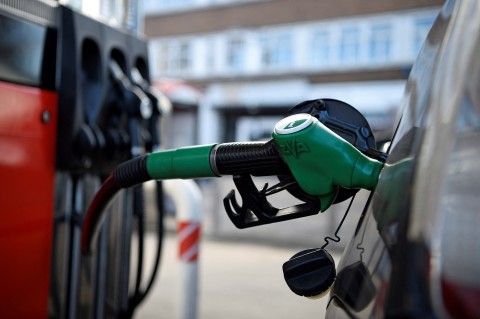
Motorists across South Africa are facing a mixed bag of fuel adjustments as the Department of Mineral and Petroleum Resources (DMPR) implements its official pricing changes on Wednesday, 5 August 2026, according to ENCA. While drivers using both grades of petrol will receive some relief at the pump, diesel consumers are confronting sharp cost increases following a short-lived reprieve during the previous two months when prices had fallen from historic highs, as detailed by Moneyweb.
Official Fuel Price Adjustments Bringing Relief to Petrol Motorists and Hikes for Diesel Users
Overview of August Fuel Price Changes
The price of both 93 and 95 octane petrol will decrease by 52 cents per litre, though inland and coastal prices will remain above the R25-per-litre mark. In contrast, diesel users face steep hikes, with wholesale prices rising by between R1.23 and R1.38 per litre depending on the grade. Illuminating paraffin is also set to increase by R1.52 per litre at the wholesale level and more than R2 per litre at the retail level. Meanwhile, the maximum retail price for liquefied petroleum gas (LPGas) will decrease by R4.41 per kg countrywide and by R5.03 per kg in the Western Cape, according to businesstech.co.za.
The official inland and coastal price shifts reflect the following adjustments:
- 93 Petrol (Inland): Decreases from R25.94 to R25.42
- 95 Petrol (Inland): Decreases from R26.10 to R25.58
- Diesel 0.05% Wholesale (Inland): Increases from R24.78 to R26.17
- Diesel 0.005% Wholesale (Inland): Increases from R25.67 to R26.90
- 93 Petrol (Coastal): Decreases from R25.15 to R24.63
- 95 Petrol (Coastal): Decreases from R25.23 to R24.71
- Diesel 0.05% Wholesale (Coastal): Increases from R23.91 to R25.30
- Diesel 0.005% Wholesale (Coastal): Increases from R24.41 to R25.64
Global Market Pressures and Currency Weakness
The department explained that the adjustments were driven by higher international diesel prices, a weaker rand against the US dollar, and renewed geopolitical tensions that disrupted global oil markets. During the period under review, the average Brent crude oil price decreased from $86.53 to $82.37. However, renewed US-Iran tensions briefly pushed oil prices toward $100 a barrel before being offset by earlier declines and weaker global crude demand.
While average international product prices for petrol decreased during the review period, diesel and illuminating paraffin prices rose. This divergence stemmed from supply shortages caused by the Russia-Ukraine conflict, which resulted in diesel export restrictions by Russia, compounded by Middle East refineries operating below capacity. These factors resulted in lower contributions to the basic fuel prices (BFP) of petrol by 6.08 cents per litre, and higher BFP contributions for diesel and illuminating paraffin by 182.62 cents per litre and 143.32 cents per litre, respectively.
Additionally, the rand depreciated slightly on average against the dollar, moving from R16.34 to R16.46 during the review period, contributing higher costs of 6.37 cents per litre to petrol, 8.14 cents per litre to diesel, and 7.89 cents per litre to illuminating paraffin.
The Role of the Slate Levy Mechanism
Fuel users were partially shielded from even heavier increases by adjustments to the self-adjusting slate levy mechanism. The cumulative slate recorded a negative balance of R7.418 billion for petrol and diesel at the end of June 2026. In response, the department implemented a slate levy of 61.38 cents per litre, which decreased by 52.56 cents per litre down from 113.94 cents per litre. The reduction in the slate levy served to cushion petrol prices and limit what could have been a much larger increase for motorists.
Keep reading
Singapore Airlines Named World’s Best Airline for 2026
Singapore Airlines has claimed the title of the world's best airline for 2026 in the annual Skytrax World...

Pakistan Taliban Faction Claims Suicide Bombing at Kohat Police Mosque
A suicide bomb attack and subsequent gun battle at a mosque located at a police headquarters in northwestern...

Sikh Truck Driver Stabbed 17 Times at Wyoming Rest Stop
A 28-year-old Sikh truck driver from Sacramento, California, was stabbed 17 times at a Wyoming rest stop early...

Salman Rushdie and Rachel Eliza Griffiths Document Recovery in New Film
Following the August 2022 stabbing that left Sir Salman Rushdie fighting for his life in upstate New York,...