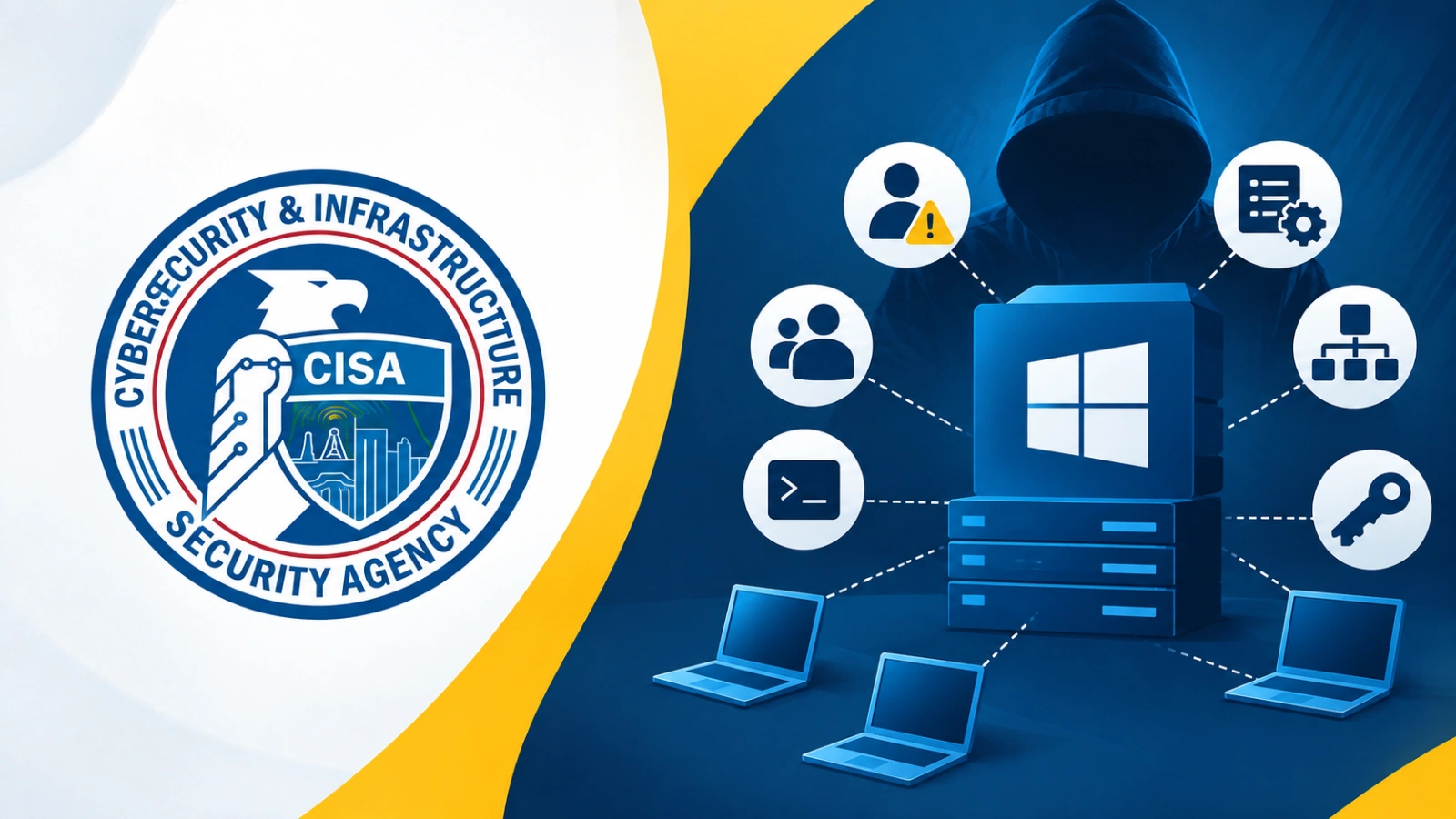
Global cybersecurity agencies have released joint guidance detailing 17 common techniques attackers use to compromise Microsoft Active Directory. The technical document, developed by international authorities including CISA and the NSA, outlines adversary methods for escalating access, moving laterally, and maintaining persistence inside enterprise networks.
Enterprise networks rely heavily on identity management systems to control access to workstations, servers, email, and cloud applications. Because Active Directory sits at the center of this authentication and authorization infrastructure, it remains a prime target for malicious actors seeking deep network penetration. A successful domain compromise grants attackers broad capabilities across connected systems, making defense a critical priority for modern organizations.
International Coordination and Threat Identification
The guidance was developed by the Australian Signals Directorate’s Australian Cyber Security Centre in cooperation with the U.S. Cybersecurity and Infrastructure Security Agency and National Security Agency. Additional contributions came from the Canadian Centre for Cyber Security, the UK National Cyber Security Centre, and New Zealand’s National Cyber Security Centre.
When adversaries gain initial entry into a network, they begin by enumerating the directory environment. This enumeration process maps out organizational structures, objects, configurations, and complex trust relationships. Attackers frequently develop a deeper understanding of the directory layout than the owning organization itself possesses, allowing them to locate unpatched weaknesses and misconfigurations that facilitate privilege escalation and lateral movement toward full domain control.
Core Directory Exploitation Techniques
The technical documentation outlines 17 specific methods adversaries use to compromise environments, targeting everything from legacy protocols to certificate services.
- AS-REP Roasting: Adversaries obtain encrypted authentication responses for accounts that do not require Kerberos pre-authentication, cracking them offline to recover passwords.
- Password Spraying: Attackers test a limited set of common passwords against numerous accounts to avoid triggering account lockouts.
- MachineAccountQuota Compromise: Unprivileged users exploit domain quotas to create computer objects, leveraging inherited permissions for movement.
- DCSync: Attackers with directory-replication rights impersonate domain controllers to request sensitive password hashes, including the KRBTGT hash.
- Golden Ticket and Silver Ticket: Adversaries forge Kerberos tickets using compromised credential hashes to bypass normal authentication processes and maintain persistent access.
Assessing Directory Exposure and Misconfigurations
Defending against these varied attack vectors requires organizations to maintain complete visibility into their directory configurations. Multiple commercial and open-source assessment tools help administrators evaluate their security posture. BloodHound provides a graphical user interface to identify hidden paths and misconfigurations, while tools like PingCastle and Purple Knight generate comprehensive security assessment reports for enterprise environments.
The guidance notes that Active Directory stores data as objects representing resources such as users, computers, groups, and organizational units. Attackers specifically focus on high-privilege targets such as Domain Admins and Enterprise Admins. Because service accounts and lower-privileged objects can also open pathways to lateral movement, securing privileged access across the entire domain is essential for preventing total network takeover.
Frameworks for Securing Privileged Access
To counter these escalating threats, organizations can implement structured security models designed for modern hybrid environments where on-premises infrastructure connects with cloud services like Microsoft Entra ID. Microsoft’s Enterprise Access Model establishes a tiered framework that strictly separates administrative privileges.

Under this model, highly privileged Tier 0 accounts and computers are isolated so their credentials never become exposed to lower tiers. Enforcing this hierarchy, alongside implementing phishing-resistant multi-factor authentication, privileged access workstations, and zero-trust policies, makes common directory attacks significantly harder to execute and forces adversaries toward riskier, more detectable methods.
- Sam Altman Validates AI Fears but Urges Trust in Developers
- Hyosung Heavy targets global top three amid U.S. AI power boom
- New State Requirements Give Chief Compliance Officer Leverage To Boost Local Cybersecurity (world-today-news.com)
- Why Some Federal Agencies Never Close During a Shutdown (daybreakwire.com)

Sam Altman Validates AI Fears but Urges Trust in Developers
OpenAI chief Sam Altman acknowledged public fears surrounding artificial intelligence at a San Francisco conference, arguing the world...

Hyosung Heavy targets global top three amid U.S. AI power boom
Big Tech companies this month, capitalizing on surging artificial intelligence data center demand.

Espionage Groups Use BlueMoon Exploit Kit to Target Chrome and Windows
Multiple state-aligned espionage groups, including a Beijing-backed crew, began exploiting a zero-day chain targeting Google Chrome and Microsoft...

Apple Launches iOS 27 With Siri AI and Enhanced Parental Controls
Making Apple Products More Personal and Useful Than Ever Siri AI is an entirely new version of Siri...