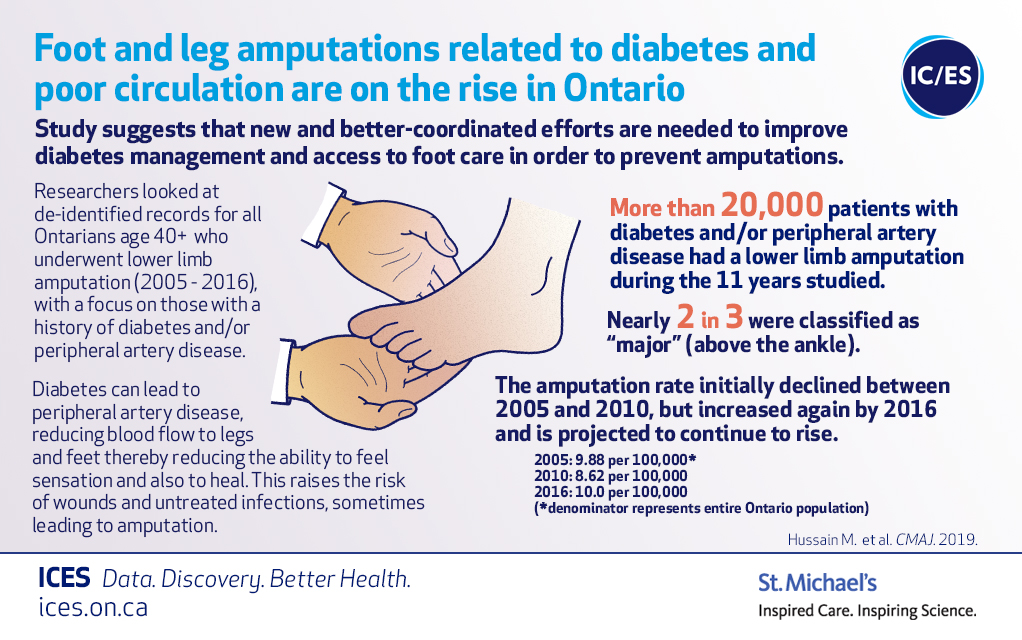
Patients with diabetes in England undergoing below-knee amputation face enduring mortality rates of 23.5% at one year and 82.3% at ten years, according to a nationwide cohort study published on September 14, 2026. Despite a decline in overall procedural rates over a 25-year period, long-term postoperative survival outcomes have shown no improvement since 2012.
The stark reality facing patients requiring major lower-extremity surgery highlights an ongoing public health challenge across England. Researchers tracked 25,176 patients with diabetes (23.31% female individuals) who underwent 28,232 below-knee amputation procedures between 1998 and 2023. Once patients underwent the procedure, however, their long-term survival prospects remained remarkably bleak.
Survival Rates and Leading Causes of Mortality After Surgery
Postoperative mortality accumulates rapidly in the months and years following a transtibial amputation. The mean follow-up duration among survivors was 6.15 years after their procedure. The risk of death reaches 11.32% by 90 days, climbs to 23.53% by one year, hits 60.04% by five years, and peaks at 82.28% by a decade. Ischaemic heart disease, respiratory illness, and sepsis linked directly to the surgical wound account for the majority of these deaths.
Beyond the primary procedure, patients face heavy immediate post-surgical hurdles. Within 90 days of discharge, the 90-day readmission rate for any cause was 20.25% (95% CI, 19.78%-20.72%). Common complications in that window included reoperation, myocardial infarction, acute kidney injury, and lower respiratory tract infection.
Demographic Risk Factors and Comorbidity Burdens
Adjusted analyses reveal that specific demographic traits and underlying health conditions heavily compound post-surgical mortality risks. Female sex is linked to higher mortality, showing hazard ratios of 1.06 at one year and 1.04 at five years when compared to male patients.
A heavier burden of coexisting illness — measured using the Charlson Comorbidity Index score — raises the one-year risk for mortality by 4% for every additional point on the score.
Funding, Limitations, and the Call for Multidisciplinary Care
The nationwide study was led by Conor Hennessy, Nuffield Orthopaedic Centre, Oxford University Hospitals, Oxford, England, and published online on September 14, 2026, in Diabetes Care. Financial backing came from the Royal College of Surgeons, England, and the British Orthopaedic Foot and Ankle Society. The researchers also could not separate outcomes by diabetes type or the reasons behind each amputation.
Conor Hennessy, Nuffield Orthopaedic Centre, Oxford University Hospitals
Related reading

UC Riverside Researchers Identify Brain Protein Driving NeuroHIV Damage
Researchers at the University of California, Riverside, identified MAPK14 as a critical brain protein driving inflammation and memory...

Silent Spring Institute Study Finds Breast Cancer Chemicals in Consumer Goods
Researchers reveal that hundreds of chemicals linked to breast cancer, including petrochemicals and pesticide ingredients, are ubiquitous in...

US Alcohol Use Drops Among Youth While Heavy Drinking Rises for Older Adults
Alcohol consumption in the United States dropped nationwide between 2022 and 2024, driven primarily by younger adults in...

UK Researchers Develop Non-Invasive Test to Help Rule Out Womb Cancer
Researchers at the University of Manchester and Manchester University NHS Foundation Trust have developed a non-invasive test using...