
“The good thing is, if people have concerns about it being on their property, all they have to do is hose that off, and it’s gone,” said Justine Barati, an Army spokesperson.
Acting Secretary of the Army Adam Telle announced on November 19 that the controlled detonation of 68 drums of degraded lead azide at the Iowa Army Ammunition Plant will be postponed until November 23, pushing back a noon blast originally set for Friday, November 20. The delay comes after a cascade of bipartisan outrage, a lawsuit from environmental groups, and revelations that state leadership learned of the plan only days before the scheduled explosion.
Public safety is the Army’s top priority, and I have directed Army Materiel Command to postpone tomorrow’s controlled detonation at the Iowa Army Ammunition Plant in Middletown, Iowa until Monday, November 23. This will delay the detonation until the latest possible moment prior…
The stockpile — roughly 11,000 pounds of a primary explosive used in detonator caps — has sat at the Middletown plant for more than 20 years, and the Department of Defense flagged deterioration concerns for an Iowa-based lead azide cache as early as 2004.
In March, the Army determined the material had suffered “severe chemical degradation and crystallization,” making it too unstable to move. The U.S. Environmental Protection Agency issued an emergency permit on November 13 under the Resource Conservation and Recovery Act, declaring the cache an “imminent threat.”
Residents of Middletown, a community of about 320 people, received roughly a month’s notice to evacuate two neighborhoods due to the risk of window damage from the blast overpressure.
But the lead dust plume modeled by the Army could travel 100 miles north and east into Illinois, putting thousands of people and vast agricultural land in the deposition zone. Iowa Governor Kim Reynolds said her office was not informed until November 16. Illinois officials warned residents in Mercer County, 55 miles downwind, that they could be affected.
Is the Army about to unnecessarily poison Iowa and our Nationwide food supply? If the Army's own research center proved on this exact plant that a biopolymer crust reduces respirable dust and held an explosion-protection berm stable for over three years, why did that same…
The Communication Breakdown
The Iowa Environmental Council and the Sierra Club’s Iowa chapter filed suit on November 19 to halt the detonation, arguing the Army failed to provide adequate public notice or environmental review. Representative-elect Lindsay James, a Democrat whose district sits in the plume path, said on social media: “If basic requirements for safety are not being met, this detonation should not go on as planned Friday.”
Republican state Representative Gary Mohr told the Des Moines Register on November 18 that his office was “swamped with messages from confused and scared constituents.” “The Army is doing it for their benefit, but I’m not sure they are looking at it for the safety of Iowans,” Mohr said.
Senator-elect Josh Turek, a Democrat, framed the issue through personal history: “As someone who was born with spina bifida due to my father’s exposure to Agent Orange — an airborne toxin — I am deeply concerned about Friday’s planned detonation in Middletown.” Governor-elect Rob Sand, a Democrat, called the communication “unacceptable” in a post on X. Senator Chuck Grassley, a Republican, confirmed the postponement to November 23 on November 19.
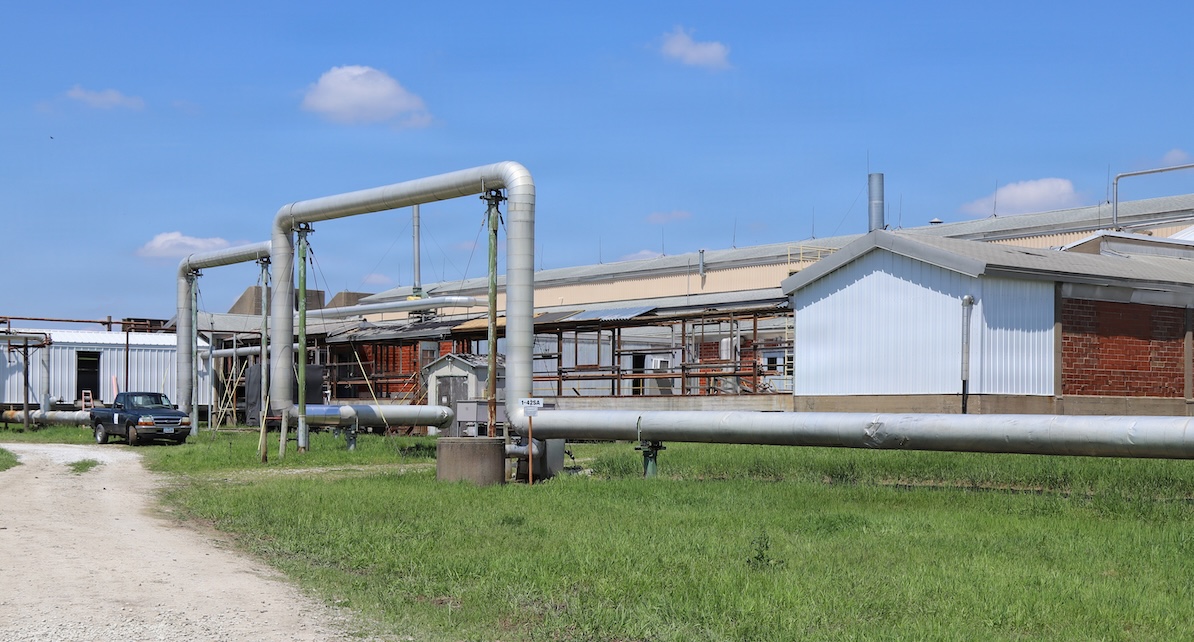
What the Science Says
Lead azide detonates at high heat, and the Army maintains that proper ignition incinerates the explosive material, leaving minimal residual lead. Virgil Schmitt, an Iowa State University field agronomist, said the Army’s 100-mile map represents a worst-case scenario assuming all lead in all barrels becomes airborne, which he said will not happen. The Army plans updated plume maps six hours before detonation based on real-time weather.
Dr. Sameer Vohra, director of the Illinois Department of Public Health, countered in a news release: “There is no safe level of lead in the body, and when inhaled or swallowed, it can pose serious health risks,” particularly for children under six and pregnant women.
The Army’s own guidance, detailed in a public PDF reported by KWWL, advises residents within the potential exposure zone to shelter in place, seal HVAC systems on recirculation, and wet-clean high-contact surfaces — play equipment, windowsills, handrails — after the plume passes.
The Army is responding to the questions and concerns I’ve shared from Iowans. I’ve emphasized the need for increased communication. The Army is delaying the controlled detonation until Monday to further educate the public. https://t.co/yAX22Xx2aK
A Pattern of Toxic Legacy
This is not an isolated incident. The military remains the single largest institutional emitter of greenhouse gases globally and carries a domestic contamination ledger spanning decades. At Camp Lejeune in North Carolina, an estimated one million service members, families, and civilians drank contaminated water from the 1950s through the 1980s.
At the Radford Army Ammunition Plant in Virginia, Citizens for Arsenal Accountability founder Alyssa Carpenter told The War Horse earlier this month: “They’re constantly being cited for putting excessive levels of lead into the water, or other toxic releases into the air, or burning more chemicals than they’re supposed to.”
Post-detonation, the Army says environmental teams will test the area, remove contaminated soil, and dispose of it per EPA regulations. The next plume maps drop six hours before the rescheduled blast on November 23.
The safety of Iowans now and in the future should be government’s top concern. An unacceptable lack of communication and clarity has made Iowans understandably concerned and angry about this situation. The public deserves to know, if this is the safest option, why other options…
More on Justine Barati

Dane County DA Announces No Charges in Corey Ruiz Shooting; DOJ Releases Dashcam Footage and Files
Dane County District Attorney Ismael Ozanne announced Thursday that no criminal charges will be filed against Madison police...

Vermont Defends Five Straight Titles at Harold Anderson Invitational; Stonehill Posts Relay Times
Vermont arrives at the Harold Anderson Invitational on Thursday defending five straight titles, a streak built on margins...

Erin Napier painted her own 1930s kitchen in Sherwin-Williams Netsuke
Erin Napier painted her own 1930s kitchen in Sherwin-Williams Netsuke, a neutral yellow with khaki undertones she describes...

Zatarius Young Arrested After Victim Disarms Him in Attempted Armed Facebook Marketplace Robbery in Augusta
A Facebook Marketplace meetup on Broad Street turned into an armed confrontation Wednesday when the buyer pointed a...