
Sixty-eight barrels of unstable lead azide have sat in Iowa bunkers for more than twenty years, and the Army planned to blow them up Friday at noon — until Acting Secretary Adam Telle ordered a delay to Monday, November 23, hours before the scheduled detonation.
The reversal came after Iowa and Illinois lawmakers, environmental groups, and a federal lawsuit challenged an EPA emergency permit that approved the controlled detonation. The material, roughly five tons of a World War I-era explosive used in detonators, had recrystallized into a state so sensitive that moving the containers risked an accidental blast, the EPA determined.
“Public safety is the Army’s top priority, and I have directed Army Materiel Command to postpone tomorrow’s controlled detonation… until Monday, November 23,” Telle wrote on X Thursday evening. “This will delay the detonation until the latest possible moment prior to a forecasted temperature drop, which would risk further destabilization of the material.”
“The American people deserved better than this. This whole operation was poorly planned and poorly communicated. Families were abruptly told to avoid the area, unsure if they would return to broken homes and whether their air and water could be at risk due to toxic lead exposure. This was unacceptable and a failure of leadership of epic proportions.”
U.S. Senator Tammy Duckworth, Democrat of Illinois, posted on X after the postponement was announced.
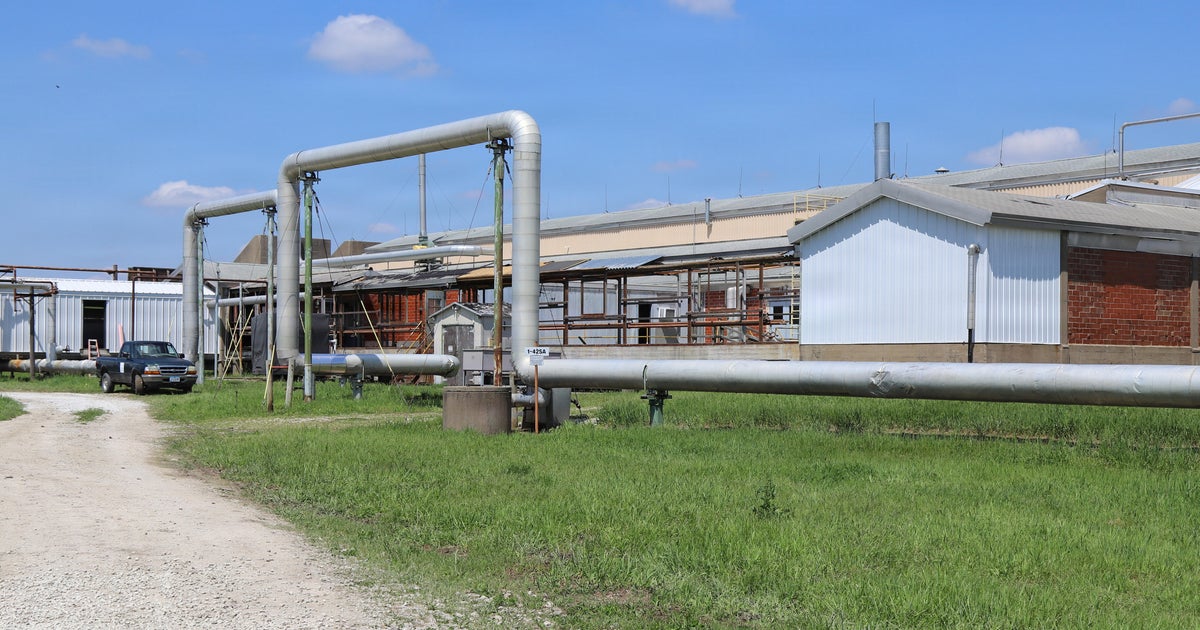
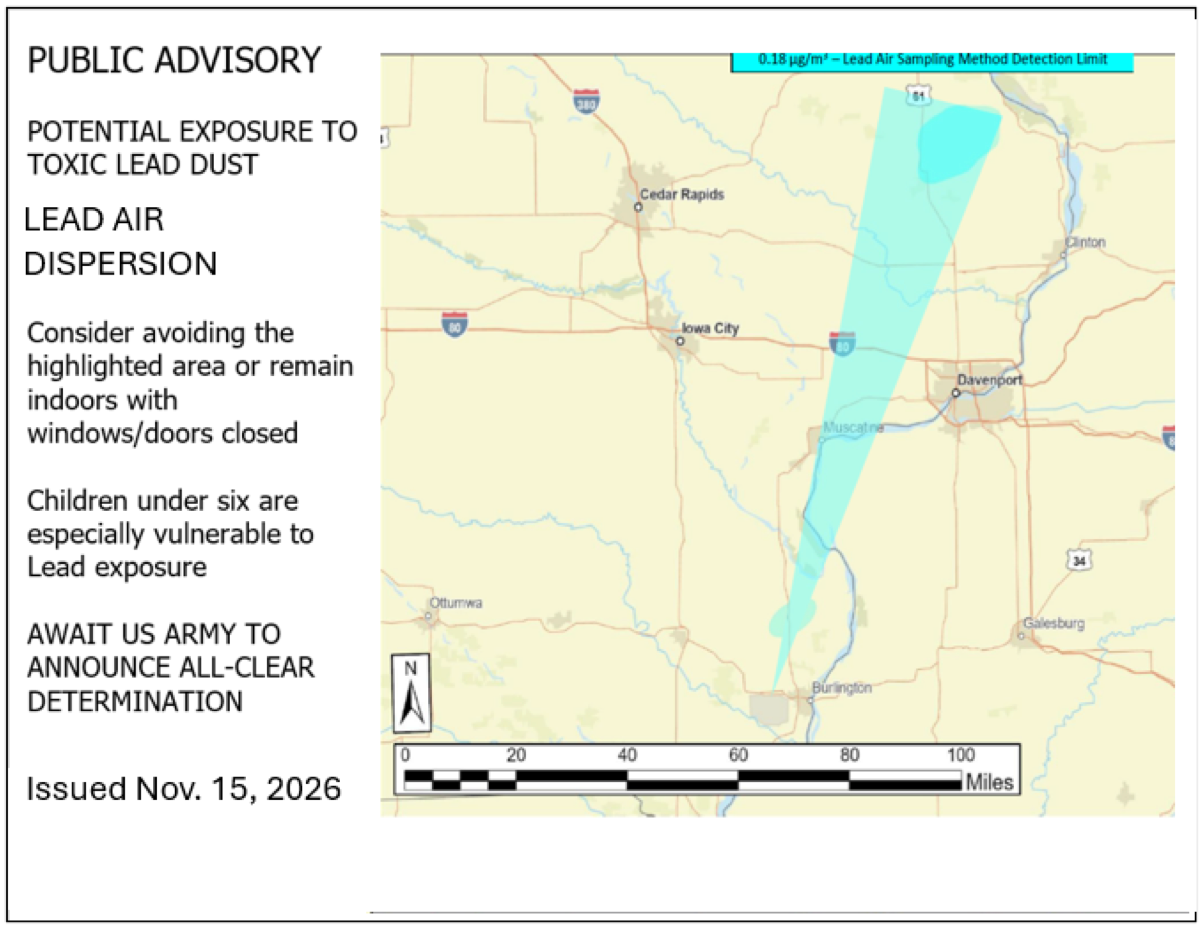
Army air-dispersion modeling showed a potential airborne lead plume extending close to 100 miles downwind from the Iowa Army Ammunition Plant near Middletown, a community of about 360 people along the Mississippi River.
That plume covers southeastern Iowa and northwest Illinois — farmland, playgrounds, and residential neighborhoods — but Army maps do not list Michigan among the impacted zones. The Michigan Department of Environment, Great Lakes, and Energy did not immediately respond to questions about whether contaminants could reach the state, roughly 400 road miles from the plant.
Lead azide is a primary explosive. The EPA’s emergency permit said that “recrystallization of the stored lead azide has increased the material’s sensitivity to friction and shock, and disturbing the containers of lead azide could create an unacceptable risk of unintentional detonation.” The Army argued that a controlled detonation inside concrete, earth-covered magazines — surrounded by two-story Hesco barriers, with soil saturated and water misters running — was the least-bad option.
David Cwiertny, director of the University of Iowa Center for Health Effects of Environmental Contamination, pushed back on the mitigation plan. “Hosing off the dust doesn’t mean it’s magically gone,” he told the Des Moines Register. Iowa state Representative Gary Mohr, Republican of Bettendorf, said his office had been overwhelmed with constituent messages and called the planning “handled terribly.”
Jennifer Sample, a medical toxicologist, told the Des Moines Register that lead remains particularly dangerous for young children because it can cause irreversible neurological damage. “The state of Iowa should close all schools in the plume path,” she said. Some districts had already canceled classes for Friday; the Monday delay resets that calculus.
Earthjustice filed suit in the Eighth U.S. Circuit Court of Appeals on behalf of the Iowa Environmental Council and the Sierra Club Iowa Chapter Thursday afternoon, challenging the validity of the EPA emergency permit. “The EPA itself admits that there is no safe level of lead exposure for humans,” said Michael Schmidt, general counsel at the Iowa Environmental Council.
“When our federal government makes decisions that result in a potentially toxic plume of lead dust that could cover much of southeastern Iowa, Iowans deserve to know that every available alternative was considered before choosing this method of disposal.”
The Army recommends that residents in the Middletown City Park neighborhood evacuate temporarily. The Armed Forces Reserve Center at 16815 DMC Highway 34 opened as a shelter for those with nowhere else to go, pets welcome. For anyone staying put, officials advise sheltering in place: close windows and doors, set HVAC to recirculate with maximum filtration, and wet-clean high-contact surfaces — toys, play equipment, handrails, patios — afterward.
Lead exposure was attributed to more than 3.5 million deaths globally in 2023, primarily from cardiovascular effects, the World Health Organization estimates. The CDC maintains there is no safe blood lead level in children.
Acting Secretary Adam Telle, a native of Northport, Alabama, entered federal service as a National Merit Scholar from Tuscaloosa County High School and later served as student body president at Mississippi State University, where he earned degrees in computer science and communication.
He spent a decade on the staff of Senator Thad Cochran, working on Hurricane Katrina recovery and water resources legislation, and led the Senate team in the White House Office of Legislative Affairs during the first Trump administration.
Senator Dick Durbin, Democrat of Illinois, called for a community town hall Saturday before the rescheduled Monday detonation. The barrels were originally moved to the plant for munitions production, but not all were used, Army Sustainment Command Deputy Chief of Public and Congressional Affairs Justine Barati told the Des Moines Register. They have sat in storage since.
Worth a look

Indiana Senate Democrats Tie IPS School Closures to State Funding Priorities
Indianapolis voters agreed to tax themselves more for public schools two weeks ago. Today, nearly 1,450 students face...

Ravens Bench Marlon Humphrey for ‘Criminals’ Comment After Internal Talks
Baltimore Ravens cornerback Marlon Humphrey was deactivated Thursday for Sunday’s game against the Carolina Panthers after saying on...

A 14-year-old boy was struck and killed
A 14-year-old boy was struck and killed on June 11 while riding an electric motorcycle on a dark...
Wyoming Woman Hauls Roadkill Moose by Tractor After Medical Emergency Sidelined Hunt
Lacelynn Seibel drove a tractor 15 miles per hour down Teton Pass with a cow moose strapped to...