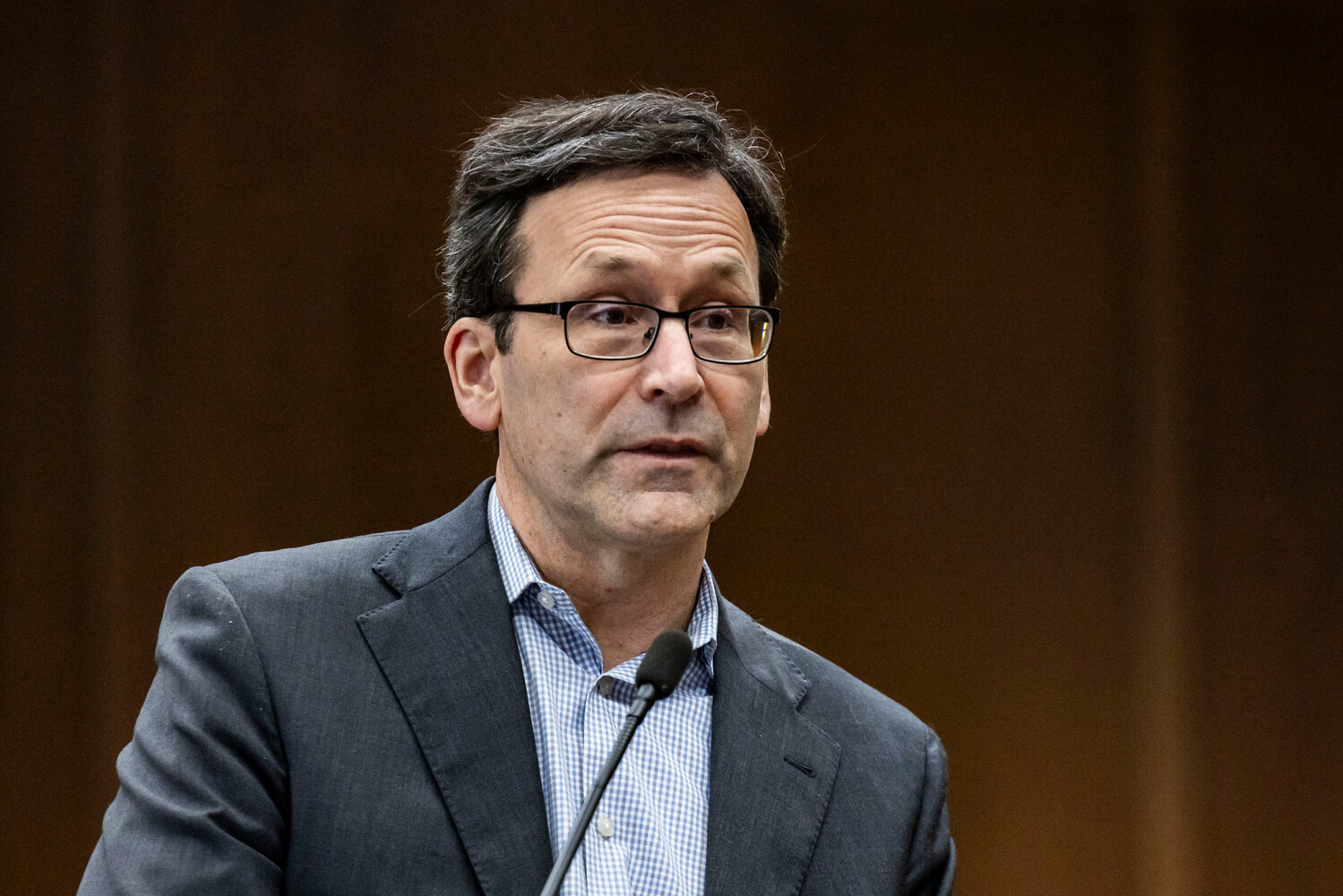
Washington agencies faced a deadline this week to submit plans cutting 10% and 15% from their budgets by 2028, while critics warn Gov. Bob Ferguson will ultimately raise taxes to cover a projected $4 billion shortfall next fiscal year, The Center Square reported.
Ferguson’s Office of Financial Management directed agencies to find savings without shifting costs to other programs, prioritizing reductions in the current fiscal year and fiscal year 2028, according to a Nov. 16 memo from Director K.D. Chapman-See. The governor’s office did not respond when asked whether all agencies met the deadline.
“After dealing with billions of dollars in draconian cuts imposed by the Trump Administration, voters have elected a new Congress that will help return us to budget sanity. Ferguson has said he will not propose new taxes in his 2027–2029 budget, but he has not pledged to veto tax increases passed by the Legislature. GOP Chair Jim Walsh predicted the governor will fold.
“He will fold. He will collapse,” Walsh said in a Nov. 23 interview with The Center Square. “Maybe a so-called corporate income tax, maybe an expansion of the state income tax, maybe an expansion of car registration fees…Lord knows what they’ll come up with. He will very unconvincingly whine about how he doesn’t want to sign them. And then he’ll sign them.”
Republican Rep. Ed Orcutt of Kalama, a member of the Economic and Revenue Forecast Council, said the pattern of proposing painful cuts is a setup for tax hikes.
“They always cut where it hurts…so the public sentiment says we can’t do this.
They’d rather we raise taxes and that’s kind of the way they’ve been doing things for years,” Orcutt told The Center Square.
Ferguson signed a $78 billion two-year budget in his first session that included billions in new and higher taxes. In 2026 he championed a 9.9% tax on income above $1 million annually, which voters upheld on Nov. 3. A legal challenge remains, with a Feb. 5 hearing set in Klickitat County Superior Court.
If the tax survives, it takes effect in January 2028 with first payments due in 2029, generating an estimated $3 billion to $3.5 billion in its first year. Ferguson has said the budget will stabilize beginning July 1, 2028.
Walsh argued drastic cuts are unnecessary if spending is held flat.
“We’ve got to get some grownups in the room and slow the spending.
Honestly, what we need to do is we need to hold our spending at the current levels for a few years; a couple of budget cycles,” Walsh said. “Let the state economy catch up with the irresponsibly fast growth of government spending in Olympia. If we hold for a while, the state’s economy will catch up.”
The 2027 legislative session begins Jan. 11 and is scheduled to last 105 days.”
Agency directive details cost‑shift ban and timing priority
Office of Financial Management Director K.D. Chapman‑See told agency leaders in a Nov. 16 memo not to submit proposals that create savings for one program but increase Near General Fund costs for another, The Center Square reported. She also instructed agencies to weigh how long reductions would take to implement, saying cuts in the current fiscal year and the next biennium — especially fiscal year 2028 — are the priority.
The memo framed the directive as a response to federal reductions and rising costs that have created a grim budget outlook, according to the same reporting. Agencies were asked to find ways to reduce costs and pare expenditures without shifting the burden to other state funds.
Governor cites stability from high‑earner tax amid legal challenge
The governor’s office did not respond when asked whether all agencies met this week’s deadline to submit proposed cuts, the outlet added.
Keep reading

Jonalee Archer, Trenton Resident, Dies at 79
“Jonalee Rae Archer, a longtime Trenton, Missouri resident, died Friday at 8:28 a.m. at her home. She was...

Kentucky Must Limit Louisville’s Explosive Plays to Reclaim Governor’s Cup
Kentucky faces Louisville on Saturday in the Governor's Cup with the Wildcats at 7-4 after three straight losses,...

Two Austin Neurotech Companies Reach Clinical Milestones
Two Austin neurotechnology companies have reached clinical milestones that a founder says confirm the city's status as a...

OHA Reopens Homeownership Program for Native Hawaiians After Funding Replenishment
The Office of Hawaiian Affairs reopened its Access to Homeownership program Friday after replenishing funding that had forced...