
Alaska Airlines rebooked two passengers from a canceled Oakland flight to San Francisco at no additional cost after invoking a co-terminal airport rule buried in its Contract of Carriage, saving the travelers $1,040 in fare differences.
The disruption began Friday, November 20, when the passengers — who write for the travel site Beat of Hawaii — discovered their nonstop first-class itinerary from Lihue to Oakland for early April had disappeared from both Google Flights and Alaska’s own booking site.
Their reservation displayed a notice that “Due to flight schedule changes, manual assistance is required on this reservation,” though Alaska had not automatically rebooked them or sent an explanation. The nonstop service had been pushed back until at least mid-April, well after their scheduled departure.
The pair had originally paid $600 each for the tickets, a fare they considered a strong value after the same flight climbed to $875 per person in first class.
With the Oakland route gone, Alaska’s first-class nonstop into San Francisco was showing $1,120 per person — $520 more each, or $1,040 total. Even economy options were more expensive: three Main Cabin seats, a strategy they sometimes use for extra space, were quoted at $1,614, already $414 above their original two-ticket cost.

Prepared to pay the difference, they called Alaska Airlines on November 22. Instead of collecting the higher fare, the agent changed their arrival airport from Oakland to San Francisco at no charge. The agent explained that Alaska considers Oakland and San Francisco interchangeable for certain rebooking purposes when the airline changes or eliminates a flight, a provision known as co-terminal airports.
After the call, the passengers reviewed Alaska’s Contract of Carriage, which specifically lists Oakland, San Francisco, and San Jose as co-terminal airports. Their original ticket references, confirmation number, and $600 per-person pricing remain unchanged.
Related reading

Alvin Stanley “Sonny” Kelley, 87, Dies After Parkinson’s Battle
Alvin Stanley “Sonny” Kelley died November 9, 2026, in Council Grove, Kan., at age 87 after a long...

North Little Rock Couple Hosts 15th Annual Inclusive Thanksgiving Potluck
A community potluck dinner in North Little Rock will mark its 15th year on Thanksgiving, continuing a tradition...
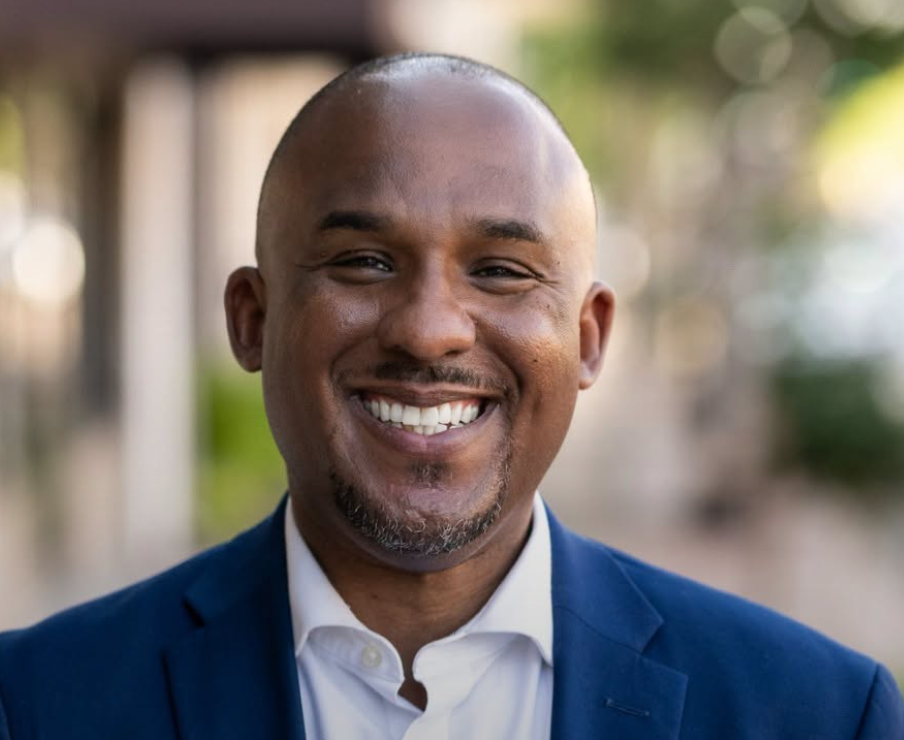
Scott Colom Wins Mississippi Senate Race, First Black Senator Since Reconstruction
"Mississippi, we are done going slow!" said Scott Colom in his victory speech after the state elected its...

Nvidia Board Reinstates Huang as CEO After Conduct Investigation
Nvidia's board reinstated Jensen Huang as chief executive on Monday after concluding his conduct was "inconsistent with the...