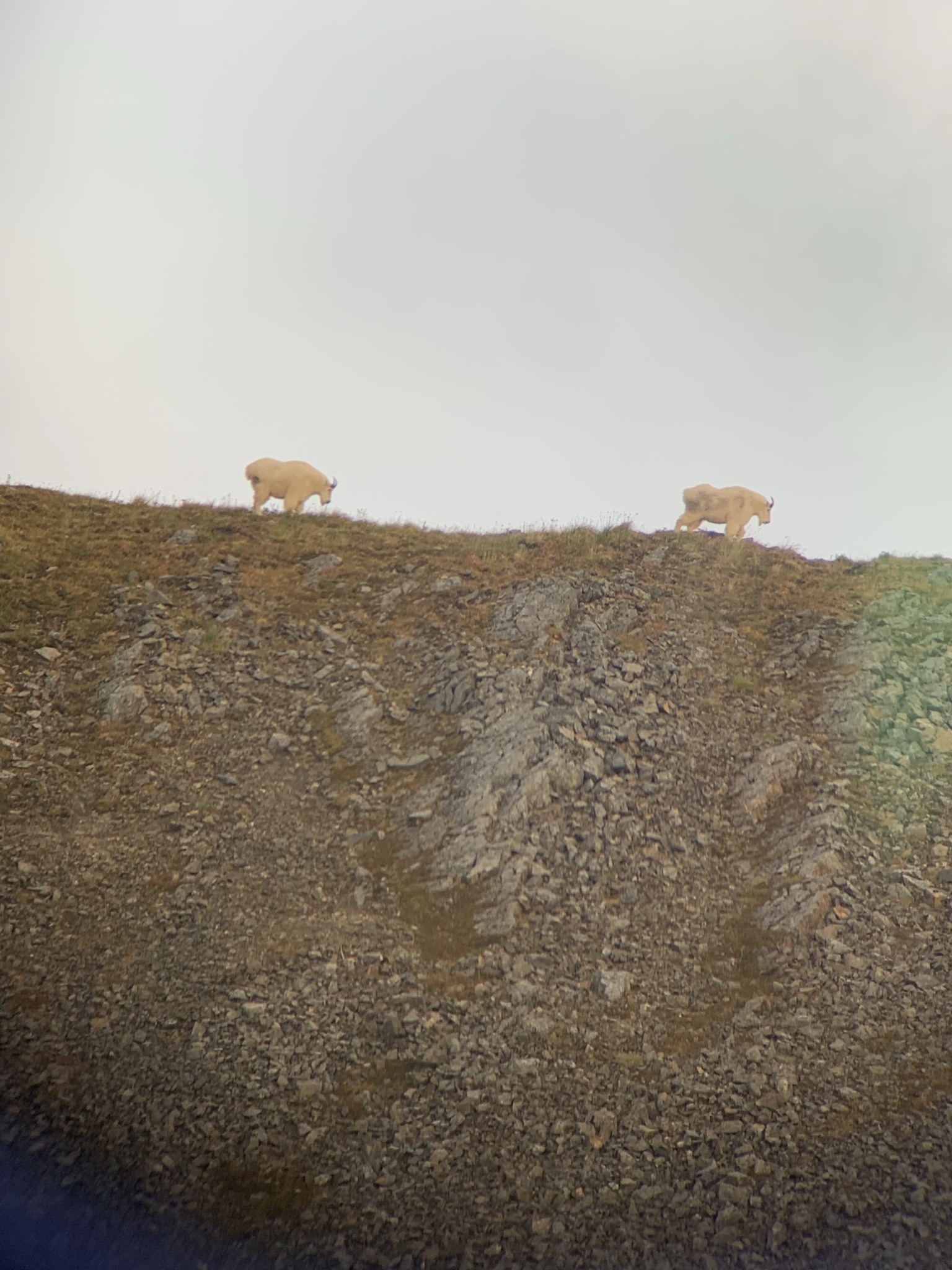
Mountain goat hunting near Skagway closes at 11:59 p.m. on Wednesday after hunters reached the harvest guideline level of one point in a portion of the RG024 hunt.
The emergency order (R1-21-26) issued by the Alaska Department of Fish and Game applies to the area bounded by the White Pass and Yukon Railroad on the west, the East Fork of the Skagway River on the south, and the Canadian border to the north and east. Hunters took one male goat there, which met the area’s harvest objective.
Additional harvest “may be detrimental to the sustainability of this population of goats,” the department said in its announcement.
Mountain goats do not give birth until they reach 4 years of age, typically have a single kid, and rarely have twins, based on the wildlife notebook. Populations remain small, isolated, and slow-growing, and taking females strongly limits population growth.
Adult males average approximately 260 pounds while females average about 180 pounds, and both possess black horns of similar length. According to the hunter guide, billies feature thicker horns at the base that curve gradually, whereas nannies bend sharply near the tip.
The two-month season opened on September 15 for registration permit holders with a limit of one goat per hunter, and taking a nanny with a kid was prohibited. In 2014, the department closed the area on September 27 after a hunter took one nanny, following a 2013 aerial survey that counted 21 adults and four kids. The season closed on September 23 in 2020 after hunters took two billies.
Alaska Department of Fish and Game biologists established a harvest guideline of one point for the area after conducting aerial surveys, according to the department’s announcement. The guideline was reached as of Tuesday, November 24, 2026, prompting the emergency order that closed the season the following night.
The department uses a point system where a male goat counts as one point and a female counts as two, meaning the single billy taken by hunters met the area’s entire harvest objective. Biologists encourage hunters to target billies to allow for a higher sustainable harvest while leaving more nannies to produce kids.
These factors keep populations small, isolated and slow-growing, according to the same source.
Taking females “can strongly limit population growth,” the notebook says, which is why the department emphasizes targeting males.
Other portions of Unit 1D remain open until harvest guidelines are reached or seasons conclude. Hunters with questions can contact Hannah Manninen at 907-465-4329 or [email protected].
Worth a look

NC Lieutenant Governor Awards Medal of Valor to Concord Officers, Stanly Chief, Fire Chiefs
Three Concord police officers received the North Carolina Medal of Valor on Monday for rescuing a shooting victim...

High Winds and Rain to Ground Balloons at Philadelphia Thanksgiving Day Parade
High winds and incoming rain will ground all giant balloons for the Philadelphia Thanksgiving Day Parade on Thursday,...
EPA Reports Zero Airborne Lead After Controlled Detonation at Iowa Army Ammunition Plant
A controlled detonation of crystallized lead azide at the Iowa Army Ammunition Plant in Middletown concluded Wednesday morning...
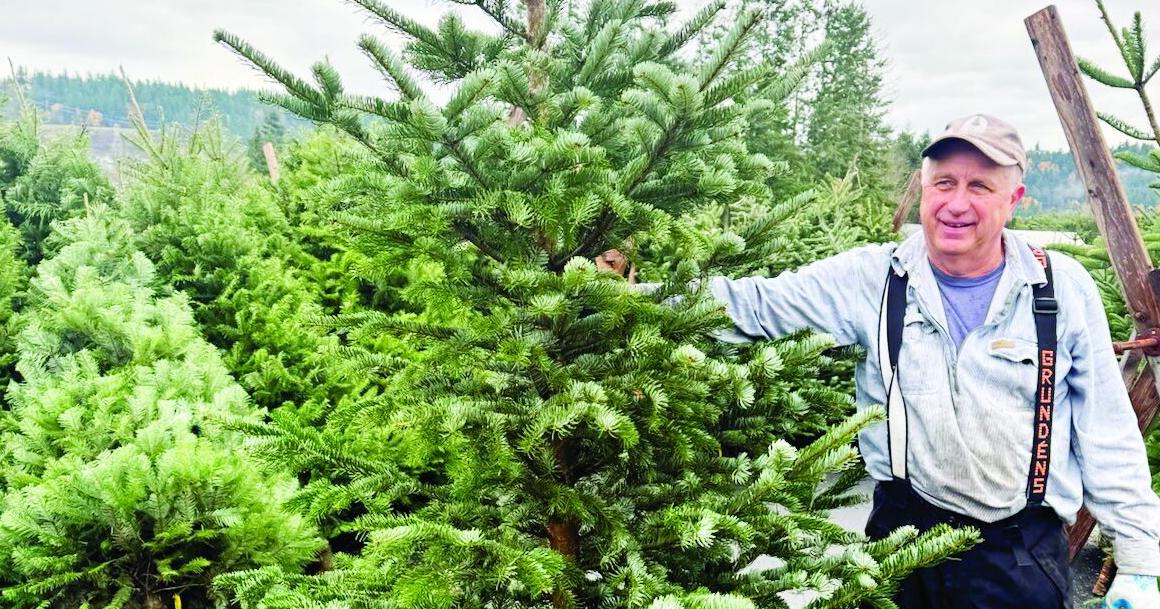
South Sound Christmas Tree Guide: 5 Local U-Cut Farms & Gifford Pinchot Forest Permit Details
South Sound Magazine published its holiday guide to Christmas tree farms and national-forest cutting options across the South...