“The industry cannot survive on just-in-time timber sales,” said Gretchen Axelson, executive director of the Alaska Forest Association.
She said uncertainty for Southeast Alaska timber operators began before the current Forest Service planning process started, not after.
Axelson said the core problem with the current Tongass management plan is not a debate over old growth versus young growth but a failure by the Forest Service to deliver promised volume. She identified two specific shortfalls: the agency missed a 45-million-board-foot timber target and did not keep enough timber sales cleared through environmental review to have projects ready when current operations end.
“All of our members are small businesses,” Axelson said, “many of which are multi-generational family businesses.” She pushed back on characterizations of the industry as an “industrial corporate complex of logging,” saying members need durable, predictable supply. “Alaska Forest Association has been requesting durable supply prior to the issuance of the orders,” she said.

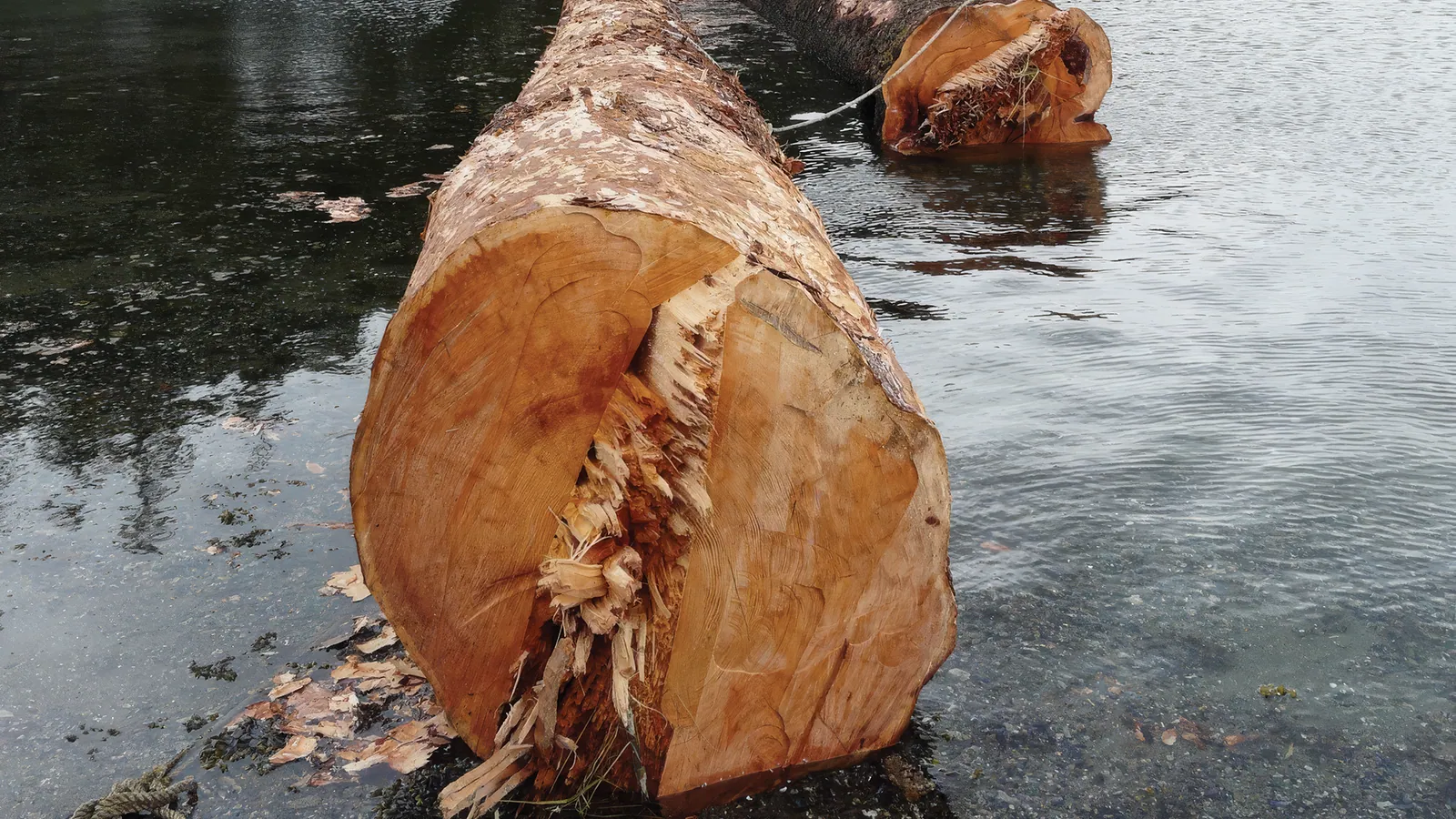
On the question of substituting young growth for old growth, Axelson said the two are not interchangeable. She cited soundboards for Steinway & Sons pianos, which are made from old-growth Sitka spruce harvested in the Tongass, and said young growth lacks the necessary characteristics. She added that Southeast Alaska has little large-scale manufacturing capacity and that shipping young-growth logs to the Lower 48 is expensive.
Until the agency actually delivers volume, Axelson said her members cannot make long-term decisions about investment, equipment, or hiring. “Uncertainty existed before the process began,” she said.
Alaska Forest Association, as a plaintiff in a March 2025 federal lawsuit alongside Viking Lumber Co. and Alcan Timber Co., contends the Forest Service violated the law by announcing the Southeast Alaska Sustainability Strategy in 2021 without offering enough large old-growth timber sales to meet government-estimated market demands.
The group argues the agency failed to deliver a 45-million-board-foot timber target and did not keep sufficient sales cleared through environmental review, leaving operators without projects ready when current operations end.
Executive Director Gretchen Axelson said the association represents small, multi-generational family businesses that need durable, predictable supply and cannot make long-term investment, equipment, or hiring decisions without it.
The association submitted its own proposal, called the Seven Generations Alternative, which outlines industry volume needs alongside a proposed 250-year timber rotation.
That rotation horizon aligns closely with the 150- to 250-year range advocated by Robert Venables through the Tongass Collaborative, a stakeholder group drafting its own “citizens’ alternative” for the Forest Service to consider. Axelson noted the convergence between the timber operators’ group and the broader regional economy represented by Southeast Conference.
Keep reading
- Georgia Strengthens Hold on No. 1; UCLA, Indiana Tumble in Coaches Poll
- Indigenous Women’s Club Expands Cultural Programs at Eddie Warrior Correctional Center
- Royal Dutch Dental Association Provisionally Suspends Dentist After Zembla Documentary (archyde.com)
- Capita shares plunge 70% as boss quits after civil service pensions failure (newsarchyuk.com)

Georgia Strengthens Hold on No. 1; UCLA, Indiana Tumble in Coaches Poll
Georgia strengthened its hold on the No. 1 spot in the US LBM Coaches Poll on Sunday after...

Indigenous Women’s Club Expands Cultural Programs at Eddie Warrior Correctional Center
"We aren't the Native Club; we are the Indigenous Women's Club," said Stacie Jones of the Seminole Nation....

Eagle Lincoln Delays Return Three Minutes Before Steelers Game
Philadelphia Eagles bald eagle Lincoln took an unscheduled three-minute flight around Lincoln Financial Field before Sunday's game against...

Ithaca to Play for Sixth Title; Greater Lansing Champions Since 2000 Listed
Ithaca will play for its sixth MHSAA football state championship since 2010 when it faces Ottawa Lake Whiteford...