
Alaska is asking the U.S. Supreme Court to uphold its seizure of a pilot’s seaplane, a case challenging the asset forfeiture system.
- Alaska seized Ken Jouppi’s seaplane in 2012 over beer.
- Jouppi, 83, faces a $150,000 forfeiture for a misdemeanor.
- The Supreme Court heard arguments on Tuesday.
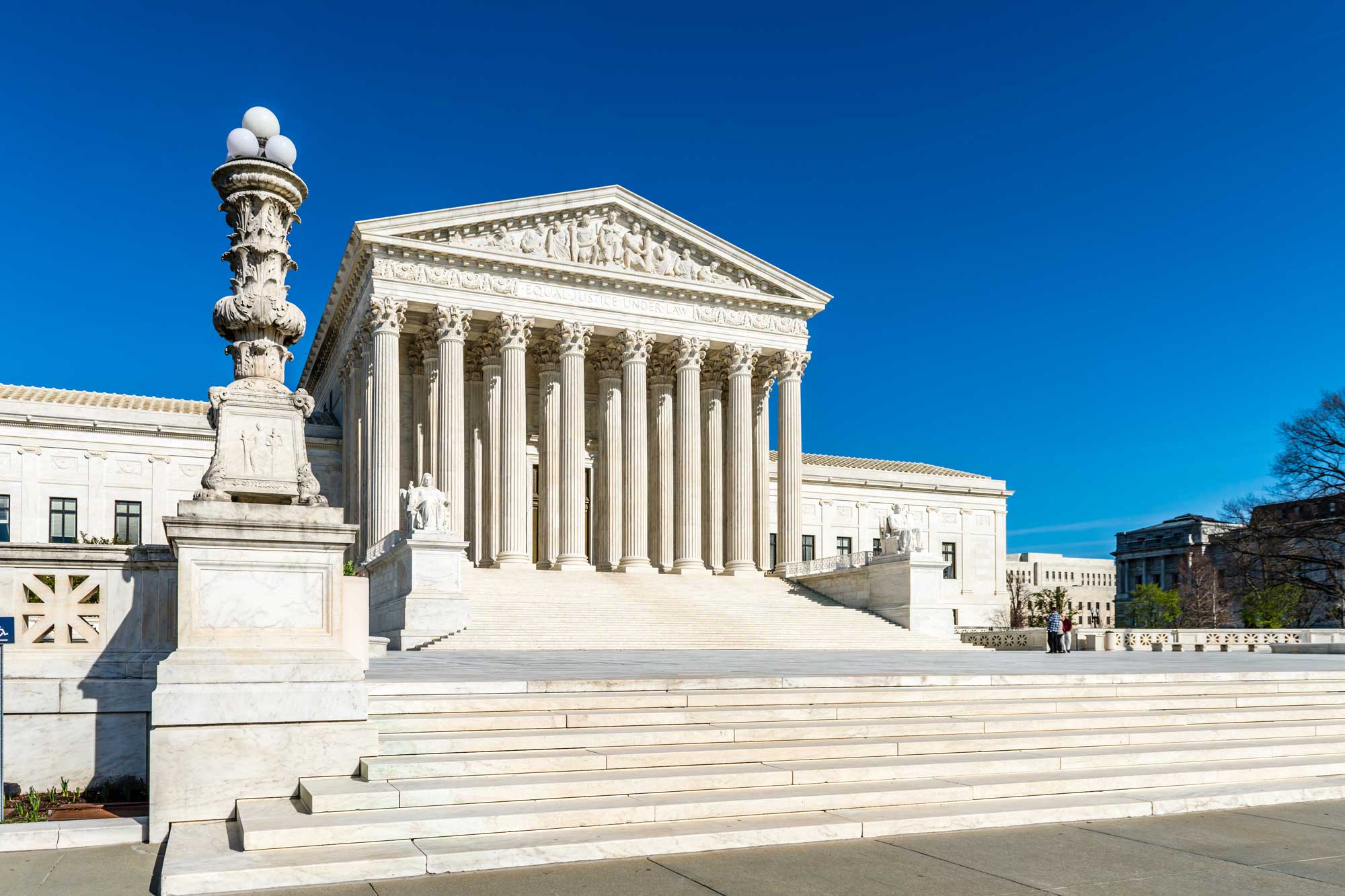
In 2012, the state of Alaska took possession of pilot Ken Jouppi’s 1969 Cessna U206D after a passenger he was transporting attempted to bring Budweiser beer into a community that prohibits alcohol. The legal contest has now reached the Supreme Court, which heard oral arguments on Tuesday.
The pilot, with legal representation from the libertarian nonprofit Institute for Justice, contended that confiscating his aircraft was a wildly excessive penalty. A lower court had previously appraised the aircraft at $95,000, whereas Jouppi estimated its present-day worth to be approximately $150,000.
Seizure Over 72 Cans of Beer
During April 2012, Alaska state troopers carried out a warrant to search Jouppi’s plane as he was preparing for a departure from Fairbanks with a passenger bound for Beaver, a remote settlement of roughly 50 people where alcohol is forbidden. Within the passenger’s luggage, authorities discovered three cases of beer—72 cans, totaling about 9 gallons.
Jouppi has stated he did not observe the beer cases and would not infringe upon a customer’s privacy by searching their belongings. “Looking through somebody’s underwear for a bottle of whiskey that’s contraband—that just did not appeal to me at all,” Jouppi told Reuters.
Law enforcement reported that at minimum one six-pack was plainly visible in a plastic grocery bag. A jury determined Jouppi was guilty of knowingly conveying alcoholic beverages into the dry village.
Legal Battle
Subsequent to his conviction, a judge assessed $3,000 in fines and sentenced him to three days in jail, although he was never actually jailed. Alaska also took his Cessna under a state law requiring the forfeiture of aircraft utilized for alcohol-related offenses.
A judge in 2013 prevented the forfeiture, enabling Jouppi to reclaim the plane, but Alaska has continued its effort to seize it once more. The Alaska Supreme Court ruled in 2025 that the forfeiture was constitutional and did not breach the Excessive Fines Clause, even under the scenario where Jouppi had only noticed the single six-pack.
Following that decision, the Institute for Justice’s Gedge reached out to Jouppi’s attorney. Regarding the assessment of whether a fine is excessive, “Alaska has adopted a flawed legal framework rejected by most other jurisdictions,” Gedge said. “The result of that error speaks for itself: an airplane, forfeited for a sixpack.”
Government Stance
The state of Alaska responded that it is well within its rights to require the forfeiture of vehicles knowingly used in the commission of crimes. “The state believes its position is supported by the law and the record in this case,” the Alaska Office of the Attorney General said in a statement.
The U.S. government, which collects billions in revenue from asset forfeitures, submitted a brief backing Alaska. “If anything, the forfeiture here is more moderate than others that have historically been permitted,” the Justice Department said, adding that a vehicle used to illegally transport alcohol “is forfeitable whether it is a snowmobile or a luxury jet.”
Alaska contended its law was targeting “the substantial costs on public health” caused by widespread alcohol abuse in rural villages. “Within this context, it is clear that the illegal importation of even a six-pack of beer causes grave societal harm,” the ruling said.
Implications
A Supreme Court decision in Jouppi’s favor could simplify the process for individuals and corporations to recover property taken by law enforcement. “Governments have tried to magnify small offenses into big offenses for the purpose of imposing massive fines on ordinary people and padding their own budgets,” Gedge said.
The U.S. government filed a brief supporting Alaska’s arguments, saying the forfeiture was more moderate than others historically permitted, and Institute for Justice lawyer Sam Gedge said a Supreme Court ruling in favor of Jouppi could make it easier for individuals and companies to reclaim seized property.
“The facts of this case are obviously sympathetic,” Devi Rao said. “That the court granted his case does suggest maybe they think something went wrong in the Alaska court system.”
The Institute for Justice, a libertarian nonprofit public interest law firm, has litigated thirteen cases before the U.S. Supreme Court as of 2026, winning eleven, including Timbs v. Indiana in 2019, which ruled that the Eighth Amendment’s Excessive Fines Clause applies to the states.
The organization also advocates against civil asset forfeiture, challenging laws like Alaska’s in 2012 that allow seizure of property used in alleged crimes, arguing such penalties are grossly disproportionate. As of 2023, it employed 157 full-time staff members, including 64 attorneys, across seven offices, focusing on issues like economic liberty and property rights.
Jouppi, now retired and residing in Idaho, awaits the verdict. “If we do win,” he said, “it would be just tremendous and good for the whole country.”
Keep reading

Saint Joseph’s Hawks Face No. 20 Illinois in Baha Mar Championship
Saint Joseph's women's basketball faces No. 20 Illinois on Sunday in the Baha Mar Championship, the Hawks' first...

Charleston Tri-County Warming Shelters Activate Dec. 1 as Cold Weather Arrives
Charleston Tri-County Warming Shelters activate Dec. 1, operating through March whenever overnight temperatures drop near freezing. "We try...

No. 19 Ohio State Matches Program Three-Point Record in Win Over VCU
No. 19 Ohio State matched its program record with 18 made three-pointers and received double-doubles from three different...

Wales Defeat Japan 40-10 to End Nations Championship Campaign
Wales finished their Nations Championship campaign with a commanding 40-10 victory over Japan at Allianz Stadium, Twickenham on...