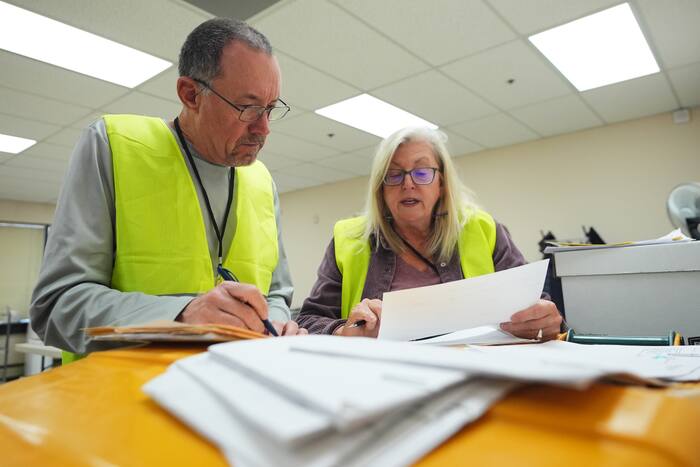
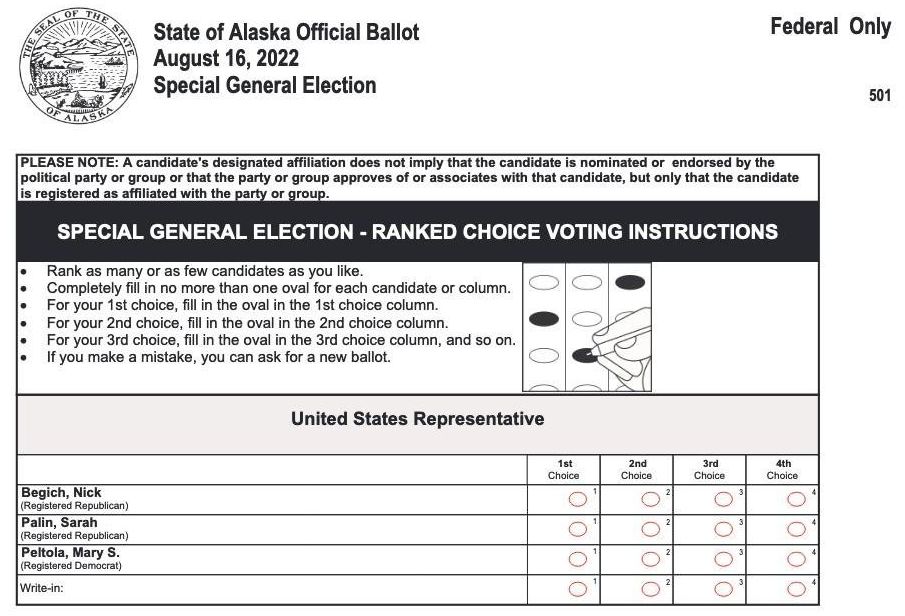
Alaska voters have officially rejected a ballot measure to repeal the state’s open primary and ranked choice voting system, cementing the electoral structure for the second time in two years.
The decision, finalized following the Nov. 3 election, keeps the current system in place after a high-stakes campaign to revert to traditional partisan primaries and single-choice general elections.
The state first adopted the current system in 2020 after a narrow vote, implementing it during the 2022 election cycle. Under these rules, all candidates appear on a single primary ballot, with the top four vote-getters advancing to the general election. This structure has coincided with a state Legislature operating under bipartisan coalitions, a trend supporters argue is encouraged by the need for broader voter appeal.
The repeal effort attracted significant national attention and financial backing. Opponents, including President Donald Trump, frequently criticized the system as confusing. Elon Musk was among the donors trying to the repeal effort. Despite this pressure, the push to return to the previous system failed to gain sufficient traction with the electorate.
“When Alaskans say we want the freedom to choose the best person for the job, regardless of party affiliation, and the right to know who is spending in our elections, we mean it,” said Ruth Hall, deputy campaign manager for the successful No on 2 campaign.
said Ruth Hall, deputy campaign manager for the successful No on 2 campaign. Hall said the win was decisive, showing a clear public preference to maintain the existing framework.

The current system has introduced new strategic pressures. Major political parties and campaigns have sometimes put pressure on candidates who placed lower during the primary to drop out of the general election in hopes of clearing a better path for the candidates with the highest profiles.
The rejected ballot measure also sought to repeal some campaign disclosure rules. Proponents of the current system argued that the repeal would have reduced transparency in state politics. With the measure’s defeat, these disclosure requirements remain in place, preserving existing visibility into election spending.
While the repeal campaign has not provided further comment on the loss, the results confirm that Alaska’s experiment with ranked choice voting remains in place for future election cycles. The state’s departure from the partisan primary methods used in most of the country persists, with the recent vote suggesting a majority of Alaskans are satisfied with the current approach.
Keep reading

UMBC Defeats Morgan State 85-50 to Advance to 410 Invitational Final
The lopsided victory sends the Retrievers straight to the tournament championship game. They will face Towson on Sunday...

Kentucky Escapes Northern Arizona After Wilkins Buzzer-Beater
Kentucky Basketball fans watched their team, a 30.5-point favorite, nearly collapse against an 0-3 Northern Arizona squad. The...

DA Says No Charges for Driver in Wichita Stryker Sports Complex Tragedy
The Sedgwick County District Attorney’s office announced Thursday that no criminal charges would be filed against the woman...

Texas Longhorns Resume Travel to Baton Rouge After FAA Ground Stop
The Texas Longhorns are scheduled to depart Austin for Baton Rouge at 10:17 p.m. CT on Friday, following...