
The state owes Albany $15 million annually for the plaza until 2031, a multi-million dollar lifeline ending with no replacement plan.
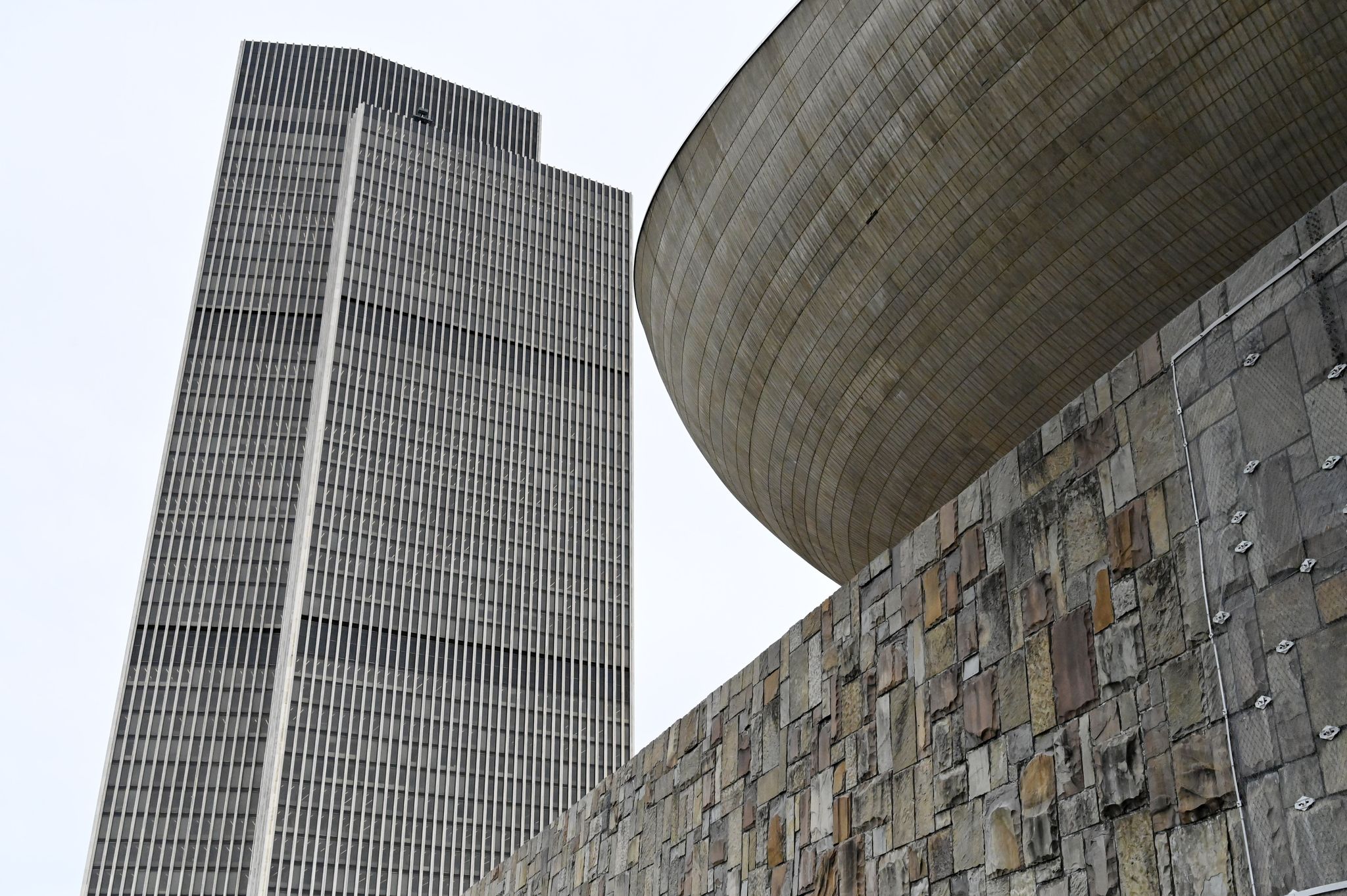
The Empire State Plaza, a 40-block high-modernist complex built through eminent domain, is at the center of a financial dilemma for the city. The state pays the city millions of dollars annually for the plaza under a payment-in-lieu-of-taxes arrangement, known as a 19-a PILOT. This deal, established under section 19-a of the state’s Public Lands law, is set to expire in 2031, potentially removing millions of dollars from the city’s budget.
The city’s precarious fiscal position is long-standing. It cannot levy property taxes on around 60% of its land, including state-owned property and buildings owned by major nonprofits like Albany Medical Center and the NY Creates Albany Nano Tech complex.
The Plaza’s Contested Origin
The plaza's creation cost many lives. In 1959, then-Gov. Nelson A. Rockefeller, embarrassed by the city’s appearance while escorting Princess Beatrix of the Netherlands, initiated the project. The plan to build the plaza on nearly 100 acres of land in a neighborhood known as “The Gut” was leaked to the press in 1962.
Construction began in 1965 and was completed in 1976 for $2 billion. The project resulted in the demolition of 1,500 homes and apartment buildings, 350 businesses, four churches, and 29 taverns. The displaced community of nearly 10,000 people included Italian immigrants, as well as communities of Jews, Germans, Irish, Armenians, and French Canadians. A raised arterial highway built as part of the project is widely seen as ushering in an era of disinvestment in the area.
The End of a Financial Lifeline
Between now and 2030, the state owes Albany $15 million per year for the plaza. However, the final year of the deal sees that payment drop to just $1.8 million. This sharp decline is due to previous mayoral administrations negotiating advances on the PILOT payments.
Former Mayor Jerry Jennings received advances of $7.85 million in 2012 and 2013. Former Mayor Kathy Sheehan later sought and received a $12.5 million advance in 2016. “You could also argue that by moving the money from the back up to the front, the dollar value in current years was going to be higher than what it would be 15 years later,” former Common Councilmember Richard Conti explained.
Gabriella Romero Proposes New $35 Million Annual PILOT Revenue
No new agreement has been formulated to replace the expiring PILOT revenue. Assemblymember Gabriella Romero, whose district includes the plaza, has made finding a new deal her top priority for the next legislative session.
Her bill, introduced in the last two sessions, would set the annual payment at $35 million and tie future payments to inflation. “I hope that leadership and my colleagues will understand and support a measure that makes sense,” Romero said. “It has become time-sensitive and urgent.”
Her proposal more than doubles the current annual payment and includes a “reparative-type concept,” acknowledging the plaza’s history of displacing struggling residents.
The challenge is large. The state would need to agree to pay more than double its current payment. While Gov. Kathy Hochul has been described as a “greater friend to Albany than any prior governor” by Romero, a substantial portion of the state aid the city receives is restricted to transformational downtown projects, not operational costs like street paving or police salaries.
“Governor Hochul has continued to invest in the look, feel, and economic vitality of downtown Albany through a number of transformative projects,” Mayor Dorcey Applyrs said in a statement. “The administration looks forward to continuing to build this strong relationship with the state as we go into the upcoming legislative session.”
The original PILOT deal came into force in the early 2000s, replacing a contract hammered out by Rockefeller and former Albany Mayor Erastus Corning 2nd. Under that earlier deal, Corning directed the county to issue 40-year bonds for the project, and the state oversaw construction.
The state paid roughly $35 million over 40 years, a deal Corning once claimed was a victory. “What do I want to be remembered for the most? That I had Nelson by the balls,” Corning said, according to the Times Union.
The Common Council is set to vote on the city’s 2027 budget on Monday night, with the future of the PILOT payments remaining a critical and unresolved issue.
Keep reading

Indiana Hoosiers Drop to No. 14 in Playoff Rankings After Washington Loss
Indiana dropped six spots to No. 14 in the College Football Playoff rankings released Tuesday after a 27-24...

Tips for a Satisfying Winter RV Trip in Florida
Winter RV travelers in Florida gain more satisfying days by planning around daily rhythms rather than destination checklists,...

Man Arrested Over Murder Of 16-Year-Old Girl In Newham
A 48-year-old man has been arrested on suspicion of murdering a 16-year-old girl whose body was found at...

Oklahoma Sooners Face Missouri Tigers on Saturday in Season Finale
The Oklahoma Sooners will face the Missouri Tigers on Saturday at 3:15 p.m. CT from Faurot Field in...