
A federal appeals court ruled Monday that Virginia can enforce limits on local law enforcement cooperation with federal immigration agents, but cannot restrict those agents from wearing face masks, The Washington Post reported.
The U.S. Court of Appeals for the Fourth Circuit lifted a preliminary injunction that had blocked the state law governing 287(g) agreements, allowing Virginia to set conditions on how state and local resources assist Immigration and Customs Enforcement. In the same 2-1 decision, the court upheld a separate injunction preventing the state from applying its new mask and identification restrictions to federal officers, according to WJLA.
Writing for the majority, Judge Toby Heytens concluded the federal government cannot require Virginia or its localities to provide officers for federal immigration enforcement, RoyalExaminer.com reported.
The court rejected the Justice Department’s argument that the state law improperly interfered with existing contracts, noting the agreements allow state or local agencies to terminate participation without cause.
“[Monday's] decision upholding Virginia's new law governing 287(g) agreements is a significant victory for Virginia and reaffirms the Commonwealth's authority to determine whether and under what conditions state and local resources may be used to assist federal immigration enforcement efforts,” Virginia Attorney General Jay Jones said.
The appeals court kept in place the injunction against the state’s face-covering rules as applied to federal agents. The court said the law does not prevent federal officials from using private contractors to perform enforcement work.
The law, signed by Gov. Abigail Spanberger in April, required existing 287(g) agreements to comply by September 1 or be considered void. Monday’s ruling removes the injunction on those provisions, allowing enforcement to resume.
Worth a look
- A Message From Our President: Gratitude and Reflection – Historic Annapolis
- Plane Crash Off Mississippi Coast Kills 6, Including 2 Children
- Trump Urges DOJ to Speed Federal Executions, Targets Newsom Commutations (archyde.com)
- Thomas Markle indicted on two federal child sex abuse charges in Los Angeles (newsarchyuk.com)

A Message From Our President: Gratitude and Reflection – Historic Annapolis
Historic Annapolis marked its Annual Meeting and Preservation Awards on November 12 with an Americana and baseball theme...

Plane Crash Off Mississippi Coast Kills 6, Including 2 Children
"We are grateful for the strong interagency coordination that enabled us to swiftly locate those aboard the aircraft...

Omaha Police Arrest Suspect at Minneapolis Airport After Fatal Stabbing
Omaha police arrested a suspect at a Minneapolis airport as he waited for a France-bound flight after a...
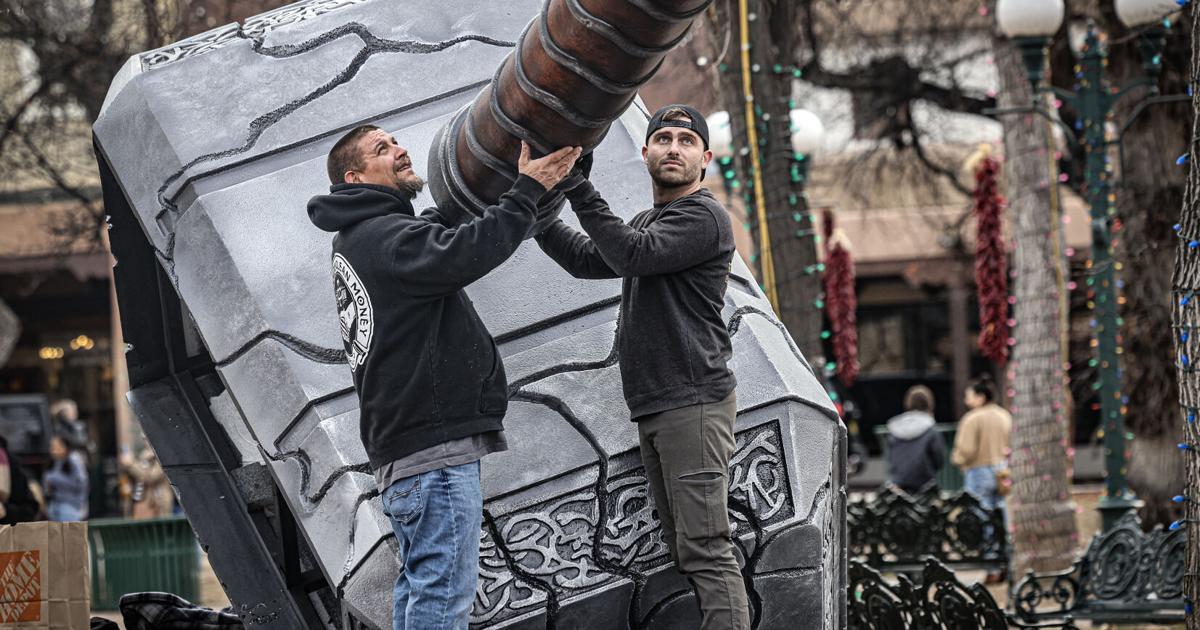
Giant Thor’s Hammer Replica Installed on Santa Fe Plaza
A giant replica of Thor's hammer, Mjölnir, arrived on the Santa Fe Plaza on Monday as the centerpiece...