“We will be keeping the public informed every step of the way,” the U.S. Army Corps of Engineers said in a statement Nov. 20, hours after the Ninth Circuit Court of Appeals denied a last-ditch request to halt the Detroit Lake deep drawdown.
The decision clears the way for the reservoir east of Salem to drop to 1,425 feet above sea level — its lowest level on record — sometime in late November or early December. The Corps will hold that depth for two weeks before refilling, targeting a return to the normal winter level of 1,450 feet by February 1.
Marion County and the City of Salem sued to stop the operation, arguing that flushing the reservoir could send sediment into the North Santiam River and clog drinking water intakes serving 220,000 people in the Salem and Stayton area.
U.S. District Judge Mustafa T. Kasubhai rejected their request for an injunction on Nov. 4, writing that the plaintiffs showed irreparable harm was possible but not likely. The Ninth Circuit affirmed that ruling Nov. 20.
Salem leaders declined to comment on the denial, citing the ongoing litigation. The City Council will vote Nov. 23 on whether to extend an emergency declaration — first approved unanimously in July 2025 — through December 31, 2027, to address drawdown impacts that city officials say could persist for years.
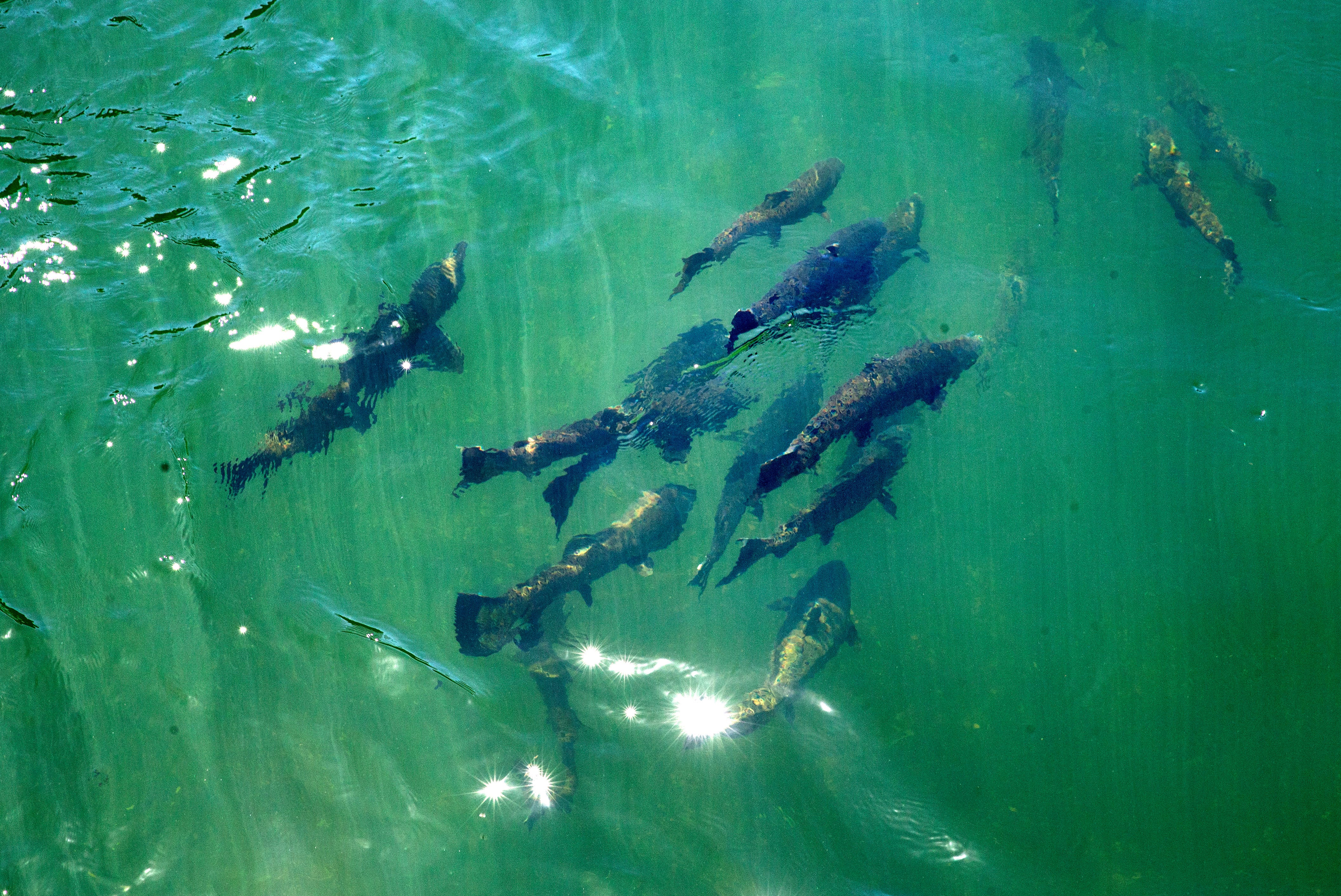
The Corps says the drawdown is mandated by the Endangered Species Act to aid spring Chinook salmon. Currently, adults are trucked above Detroit Dam to spawn, but juveniles heading to the ocean are often blocked by the dam. Lowering the reservoir allows young fish to pass through an outlet at the base of the structure, effectively turning the reservoir into a river for a few weeks.
Similar deep drawdowns have been implemented at four other Upper Willamette Basin reservoirs: Fall Creek, Cougar, Green Peter and Lookout Point. The Corps plans to take Detroit Lake to 1,425 feet this first year and eventually to 1,395 feet in future years.
“It has not resulted in major impacts to Salem or Detroit, and they fully expect to be able to refill the reservoir to its normal winter water level by Feb. 1.”
the Corps said at a Nov. 18 public meeting, referencing past drawdowns to the same elevation.
The agency also pushed back on reports that the drawdown would begin this weekend, saying the timeline remains late November or early December.

The Corps maintains it has a plan to halt the drawdown if water quality deteriorates.
Detroit Lake was created in 1953 with the completion of Detroit Dam as part of the Willamette Valley Projects, originally intended for flood control and power generation.
The 9-mile-long reservoir sits atop the former Oregon Pacific Railroad grade, a transcontinental line proposed by Colonel T. Egenton Hogg that ended in Idanha before tracks were removed for the reservoir’s installation. It is one of 32 lakes federally designated for recreation and managed by the United States Forest Service.
The underlying lawsuit returns to district court for a potential trial on the merits at a later date.
Related reading

No. 8 Iowa Erases Deficit, Hands Montana State First Loss 76-60
Iowa City — No. 8 Iowa erased a five-point deficit and handed Montana State its first loss of...

Jazz Host Suns on New NBA Cup Court at Delta Center
The Utah Jazz returned to Salt Lake City on Friday with a two-game winning streak that felt heavier...

Missouri Board Names Sen. Cindy O’Laughlin Interim Education Commissioner
"I understand this is an interim assignment and that the State Board is undertaking a national search for...

Blue Jackets Snap Five-Game Skid, Beat Blackhawks 4-2 for Second Road Win
Columbus snapped a five-game skid Thursday night, beating Chicago 4-2 for just its second road win of the...