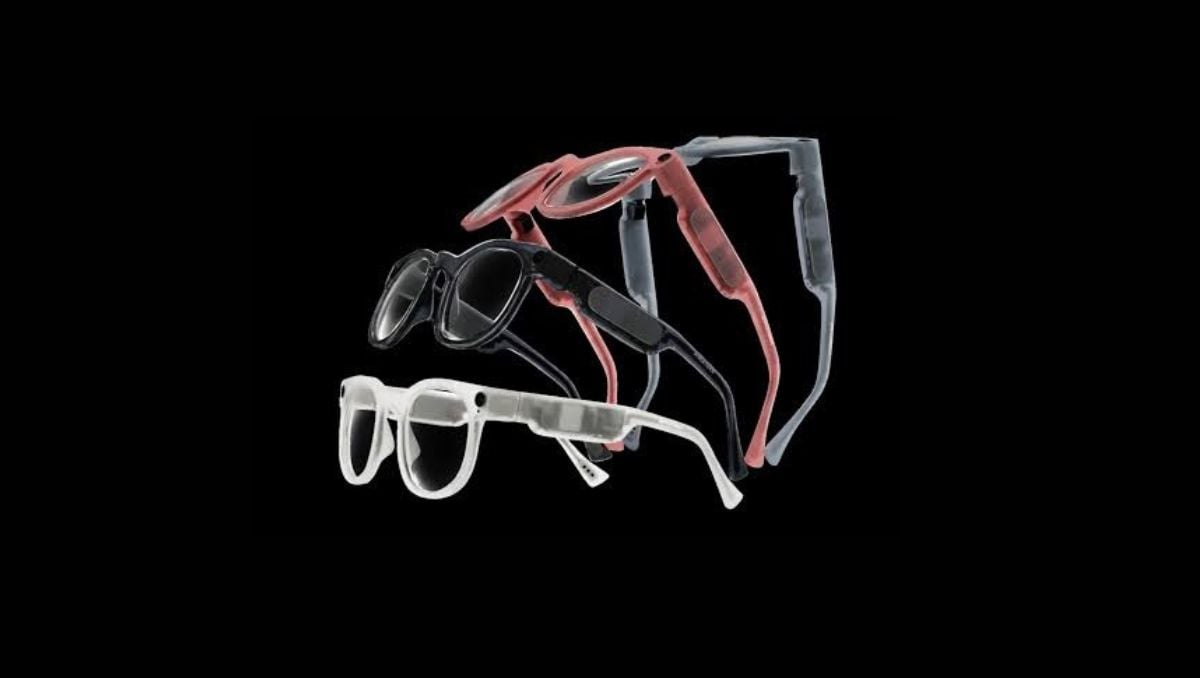
Apple is preparing to enter the AI eyewear market in June 2027 by unveiling displayless smart glasses codenamed N50 that rely on Siri voice control and iPhone app integrations.
The upcoming wearable aims to challenge Meta’s dominant position in the category by routing third-party app actions through the iPhone rather than running software natively on the frames.
Third-Party App Integration Through Siri AI
Instead of requiring developers to build standalone software for a new screen, Apple is working on a compact design that leans entirely on Siri and existing smartphone software. Wearers will be able to perform everyday tasks by speaking directly to the assistant.
Voice commands will let users book restaurant tables on OpenTable, summon rides on Uber and Lyft, order coffee from Starbucks, and purchase movie tickets on Fandango without pulling their phones from their pockets.
Apple introduced more granular Siri app controls in the iOS 27.3 developer preview, allowing any application to bring its content and actions into the assistant using App Intents. The company plans to support its own apps with the final iOS 27.3 release in December 2026, while opening up third-party developer support in 2027.
The functionality was first demonstrated in 2024 and has since been rebuilt using newer AI models. To assist developers, Apple ships tools including a Siri Integration Advisor in Xcode and a Siri Evaluations framework designed to script conversations and catch when intent handling changes.
Hardware Design and Privacy Features
Current internal prototypes of the N50 are slightly thinner than Meta’s second-generation Ray-Bans, featuring oval camera openings set flush into the frame rather than protruding modules.
The project has been under development since the early 2020s, and the hardware is believed to be nearing completion with the company having largely settled on the physical design. Apple is also testing different frame designs and colour options, prioritizing a lightweight construction and comfort.
The first-generation device will omit an augmented reality display to prioritize a lightweight frame, extended battery life, and comfortable all-day wear. Apple employees have reportedly nicknamed the hardware “AirPods for your face.”
To address privacy concerns surrounding camera-equipped eyewear, prototypes feature front-facing indicator lights that signal when the cameras are active. Apple is also experimenting with a proprietary three-pin magnetic charging connector positioned near the end of the left temple arm.
The flat, rectangular connector is roughly the size of a Tic Tac, designed to let users charge the glasses while still wearing them. For audio, the wearable includes built-in speakers for phone calls, music playback, and FaceTime audio communication, with employees describing the sound quality as industry-leading.
Processing Architecture and Offline Wi-Fi Capabilities
Because the glasses have limited memory and processing power, third-party software runs on a paired and compatible iPhone nearby. The hardware runs a reduced version of visionOS 28 and contains a processor derived from older Apple Watch chips alongside custom wireless and image-processing components.

Wi-Fi connectivity allows certain functions outside of third-party apps to remain active when the iPhone is out of range. Users can theoretically continue listening to audio over Wi-Fi after walking away from their phones, though the eyewear requires a paired phone for full functionality and does not support Android devices.
Competition in the Smart Glasses Market
The planned late 2027 launch puts Apple in direct competition with Meta Platforms, which controls roughly 94% of the AI eyewear category through its $299 Ray-Ban collaboration models. Google and Samsung are also entering the space with competing intelligent eyewear.
Apple is betting that the breadth and depth of its existing developer ecosystem will set its wearable apart. However, internal software development and AI integration remain behind schedule, which could affect the target timeline for WWDC in June 2027 and shipments before the end of that year.
Earlier coverage: Google and Samsung Open Preorders for AI Eyewear, Samsung Says
Worth a look

Aztecs Wear Down New Mexico State, Win Ugly in Oceanside – San Diego Union-Tribune
They couldn't shoot. They couldn't make free throws. Their leading scorer got two quick fouls, went to the...

Delaware Defeats American University Despite Archer’s 12 Rebounds
Playing on Sunday afternoon at the Bob Carpenter Center, the American University women's basketball team was defeated 83-61...

Northern State Wolves Edge Nebraska Kearney 62-59 in Crossover Win
The Northern State Wolves closed strong on Saturday night at the Health & Sports Center, getting double-doubles from...

Nixon Signed the Trans-Alaska Pipeline Authorization Act Into Law
On November 16, 1973, the Trans-Alaska Pipeline Authorization Act was signed into law by President Richard Nixon, greenlighting...