
People began living in what is now Minnesota roughly 12,000 to 13,000 years ago as glaciers retreated, leaving behind spearpoints and the remains of mammoth and ancient bison hunts, archaeologists and historians say.
The oldest human remains found in the state — and among the oldest in the United States — belong to a man who lived about 10,000 years ago near the present-day town of Browns Valley on the South Dakota border.
Radiocarbon dating in the early 1990s showed he was a right-handed man between 25 and 40 years old who stood about 5 feet 5 inches tall and likely hunted bison, according to Minnesota’s Office of the State Archaeologist.
Browns Valley Man found by chance in 1933
A local artifact collector named William Jensen uncovered the skeleton in a gravel pit beside a grain elevator he managed. Scientists eventually returned the bones to Jensen, who displayed them to visitors until, the Star Tribune reported in 2021, he grew paranoid, hid the skeleton and told no one its location before his death in 1960.
Decades later, Jensen’s son-in-law found the remains in a box in the house’s basement fruit and vegetable cellar. Browns Valley Man has since been quietly reburied on reservation land in northeastern South Dakota.
Ancient bison kill site uncovered in Granite Falls
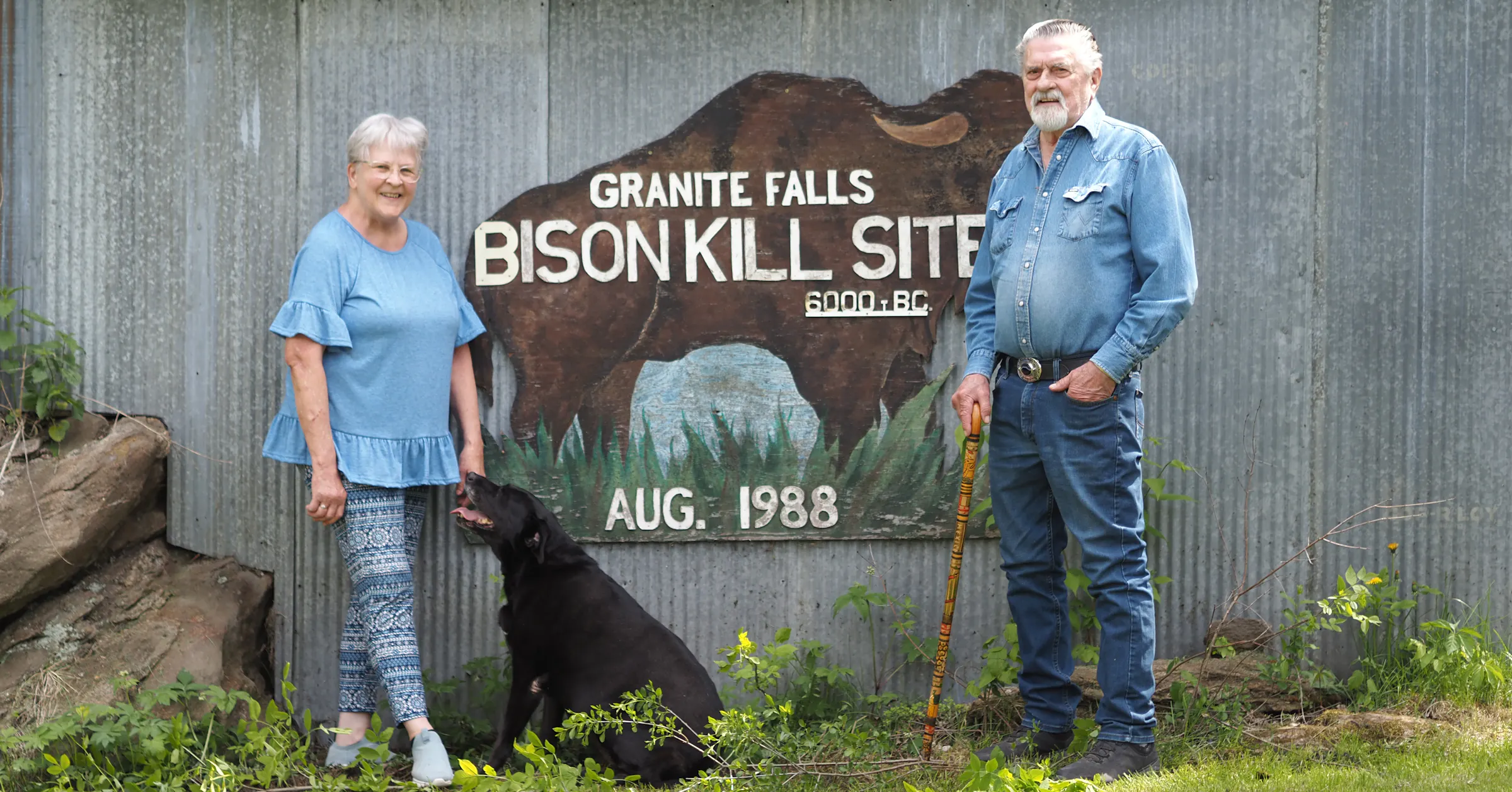
At a site in Granite Falls, early hunters — ancestors of today’s Indigenous people — ambushed a herd of massive, now-extinct bison between 7,700 and 8,000 years ago. The bison bones and stone tools lay buried in the Minnesota River Valley until 1988, when a Granite Falls man named LeRoy Peterson found the site while excavating a garbage pit in his pasture.
Indigenous origin stories differ from migration theories
The scientific theories hold that early humans entered North America via the Bering Land Bridge or a coastal route down the Pacific archipelago. Those ideas clash with Dakota oral history. “Generations have shared that same message — this is where we come from, this is where the Creator made us,” said Vernon LaPlante, vice president of Tribal Relations and Native American Initiatives at the Minnesota Historical Society. He said one widely held Dakota creation story describes spirits coming from the stars of the Milky Way and the Creator shaping people from clay at Bdote, where the Minnesota and Mississippi rivers meet.
LaPlante advocates for an equal place for Indigenous histories alongside archaeological timelines at the society. “It is a very interesting topic, something that need to look at,” LaPlante said. “Not only the original inhabitants, but how we conclude or how we define the original inhabitants.” The state’s earliest inhabitants were “members of the two-legged people,” he said, before they were ever given labels like Dakota or Minnesotan.
Greater Sudbury Police Arrest Four After Pepper Spray at Santa Claus Parade
Greater Sudbury Police arrested four people Saturday after pepper spray was deployed during the city's Santa Claus Parade...
UCLA, Indiana Overtime Losses Scramble Big Ten Title Race; Oregon, Iowa Rise
No. 4 UCLA and No. 8 Indiana both lost in overtime Saturday, scrambling the race for the Big...
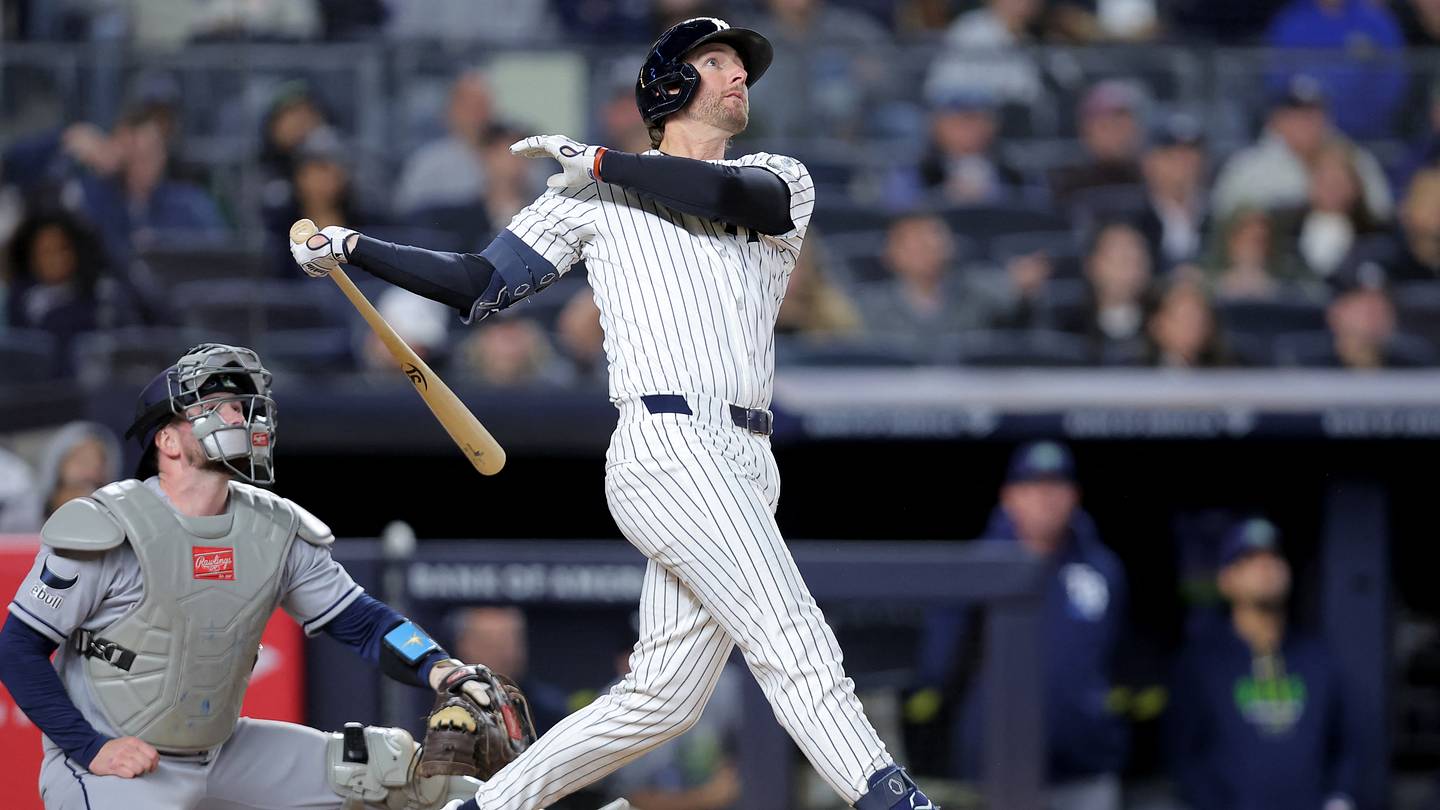
Sports Illustrated Names Three Potential Trade Partners for Yankees’ Ryan McMahon
Ryan McMahon hit .213 with 11 home runs and 41 RBIs in 124 games during his first full...

Woman Dies at MDC, Pushing Jail’s Annual Death Toll to Record High
A woman died Thursday at the Metropolitan Detention Center after weeks in custody on a drunken-driving charge, pushing...