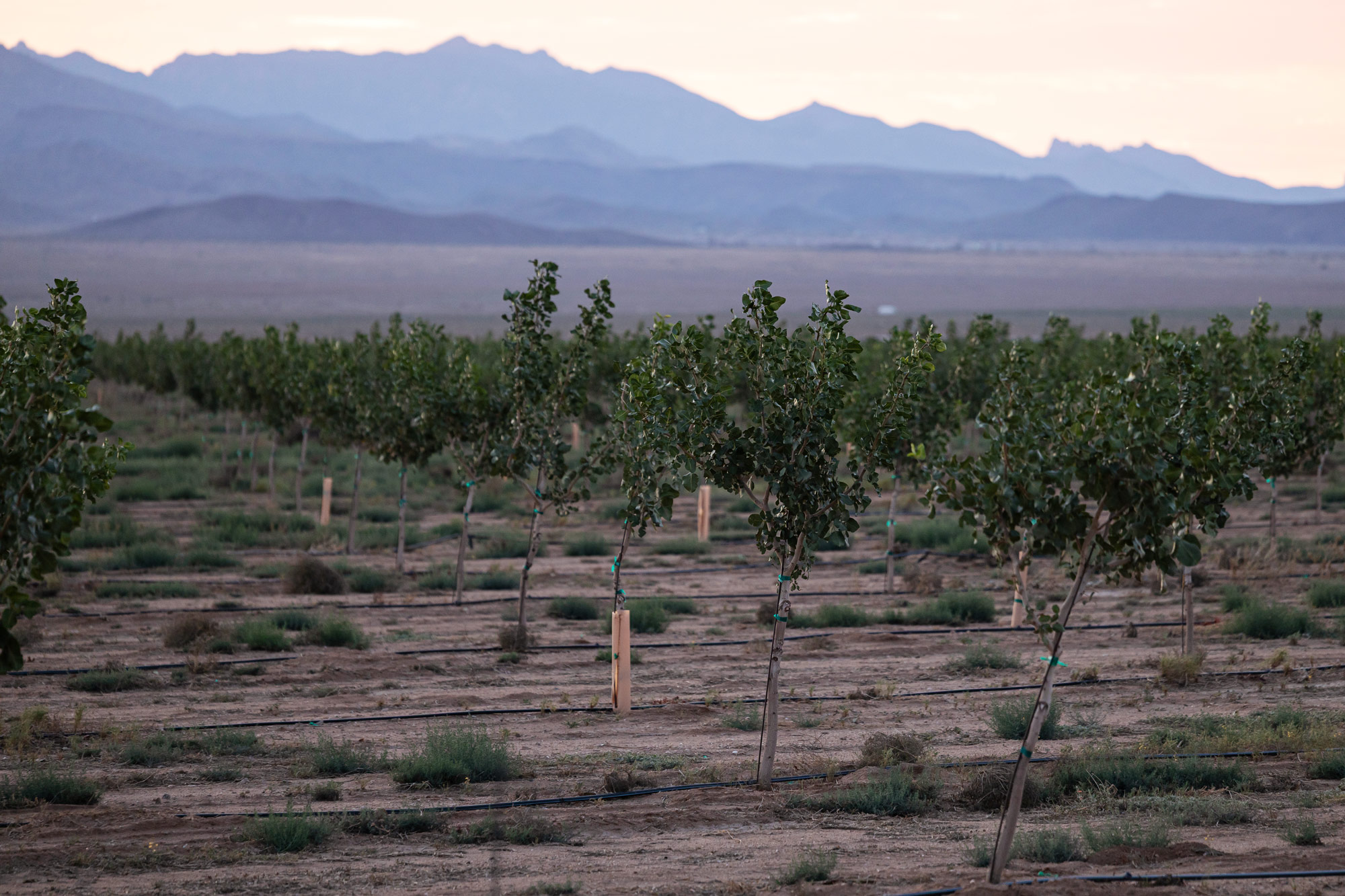
An Arizona appeals court reversed a ruling that would have invalidated groundwater protections in the Hualapai Valley on Wednesday, preserving a tool the state uses to curb agricultural expansion where supplies are dwindling.
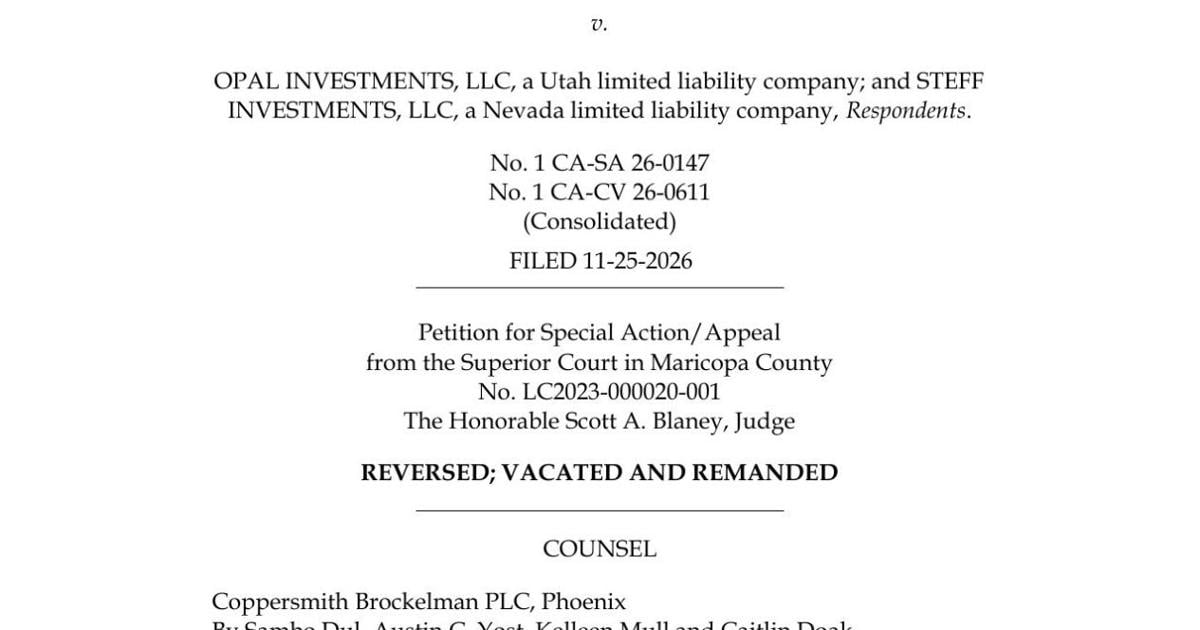
- The Court of Appeals sided with the Arizona Department of Water Resources, rejecting a challenge by two out-of-state investment firms.
- The decision keeps the 2022 Irrigation Non-Expansion Area designation in place in the Mohave County basin.
- The court found ADWR was applying existing law — issuing “a ruling, not a rule” — and did not need to follow standard rulemaking procedures.
- The case returns to Superior Court for unresolved claims over ADWR’s authority and groundwater data.
Court rejects procedural challenge
The Court of Appeals found that in establishing the Irrigation Non-Expansion Area, ADWR was applying existing law — issuing “a ruling, not a rule” — and therefore did not need to take additional procedural steps under the state’s Administrative Procedures Act. The majority described the process lawmakers established for designating INAs as “comprehensive, distinct, and self-contained,” Arizona Center for Investigative Reporting reported.
ADWR established the limits in 2022 under the INA designation, which prevents new farmland from being irrigated in the basin. The investors’ successful challenge in Superior Court centered not on whether the valley’s groundwater conditions warranted restrictions, but on the process ADWR used to implement them.
Investors missed grandfathered rights
Out-of-state agricultural interests now own or control 99% of cultivated cropland in the basin, according to a previous AZCIR investigation. The two investment firms that contested the designation had purchased thousands of acres but had not begun irrigating before the restrictions took effect, missing out on grandfathered rights that allow existing irrigators to continue pumping.
Missing out on those rights “eviscerated” the value of their land, attorney Adriane Hofmeyr told Arizona Center for Investigative Reporting in August. In the lawsuit, the investors argued that had ADWR followed standard rulemaking procedure, they would have had more time to dispute the state’s groundwater data and provide input before the restrictions took effect.

Agency warned of broader impact
ADWR had warned that the lawsuit could hamper its ability to create future INAs, including one recently sought by farmers in southeastern Arizona’s San Simon Valley. The agency estimated that additional rulemaking steps could extend the time needed to establish an INA from three or four months to about a year.
It insisted that a swift resolution was “necessary to avoid harms resulting from a possible rush to irrigate new lands in the Hualapai Valley Basin.” The agency also sought “clarity about how to proceed with INA designations” elsewhere in the state.
San Simon Valley process can proceed
“The ruling affirms the existing data-driven process to establish new INAs that has been in place for almost 50 years,” said Christopher Kuzdas of the Environmental Defense Fund, which filed an amicus brief in support of ADWR. “It’s incredibly important the Arizona Department of Water Resources has the tools to respond effectively to local hydrologic conditions and unique community needs.”
ADWR formally acknowledged the San Simon Valley petition in September, nearly a year after farmers submitted it, beginning a review that could lead to a permanent ban on irrigating new farmland. The appeals court ruling clears the way for that process to move forward under the state’s existing procedures.
The Hualapai Valley groundwater basin lies in Mohave County, Arizona, bounded by the Grand Wash Cliffs, Peacock Mountains, Hualapai Mountains, Cerbat Mountains and White Hills, with its watershed ending at Red Lake.
Its water supply is dwindling because ADWR determined there is an insufficient groundwater supply to provide a reasonably safe supply for irrigation at the current rate of withdrawal, a finding that supported the 2022 Irrigation Non-Expansion Area designation to prevent new farmland irrigation.
Out-of-state agricultural interests now own or control 99% of cultivated cropland in the basin, and the agency warned that without swift action a rush to irrigate new lands could cause further harm.
Legal battle not over
Wednesday’s decision does not necessarily mark the end of the legal battle over the Hualapai Valley restrictions. The Court of Appeals sent the case back to Superior Court for further proceedings, leaving unresolved other claims by the investors concerning ADWR’s authority and the groundwater data it relied on. The investors could also ask the Arizona Supreme Court to review Wednesday’s ruling.
“We look forward to resolution of this matter so that the Department can continue its work with residents of the basin to protect their groundwater resources,” ADWR said in a statement following the decision.
An attorney for the investors did not immediately respond to a request for comment.
It remains unclear whether any additional acres were irrigated in the months before the stay was granted, or whether any such land could qualify for grandfathered irrigation rights under Wednesday’s ruling. ADWR did not address questions about how it plans to handle any irrigation that occurred during that period.
Related reading
Billings Man Convicted of Carjacking, Firearm Charges; Faces 7-Year Minimum
Cody Lloyd Smith, who had a prior felony conviction in Nevada that barred him from possessing a gun,...

Six from Two Fort Myers Families Killed in Gulf Plane Crash
Six members of a Fort Myers, Florida, family died when their single-engine Cessna 210 crashed into the Gulf...

Passan Proposes Red Sox Trade for Jeremy Peña as One-Year Stopgap for Franklin Arias
ESPN's Jeff Passan proposed a trade sending Houston Astros shortstop Jeremy Peña to the Boston Red Sox for...

Illinois Employers Face Sweeping 2027 Workplace Law Changes Including Menopause Accommodations, Paid Jury Duty and Disparate-Impact Codification
Illinois employers face a wave of new workplace requirements taking effect in 2027, including menopause-related accommodations, paid jury...