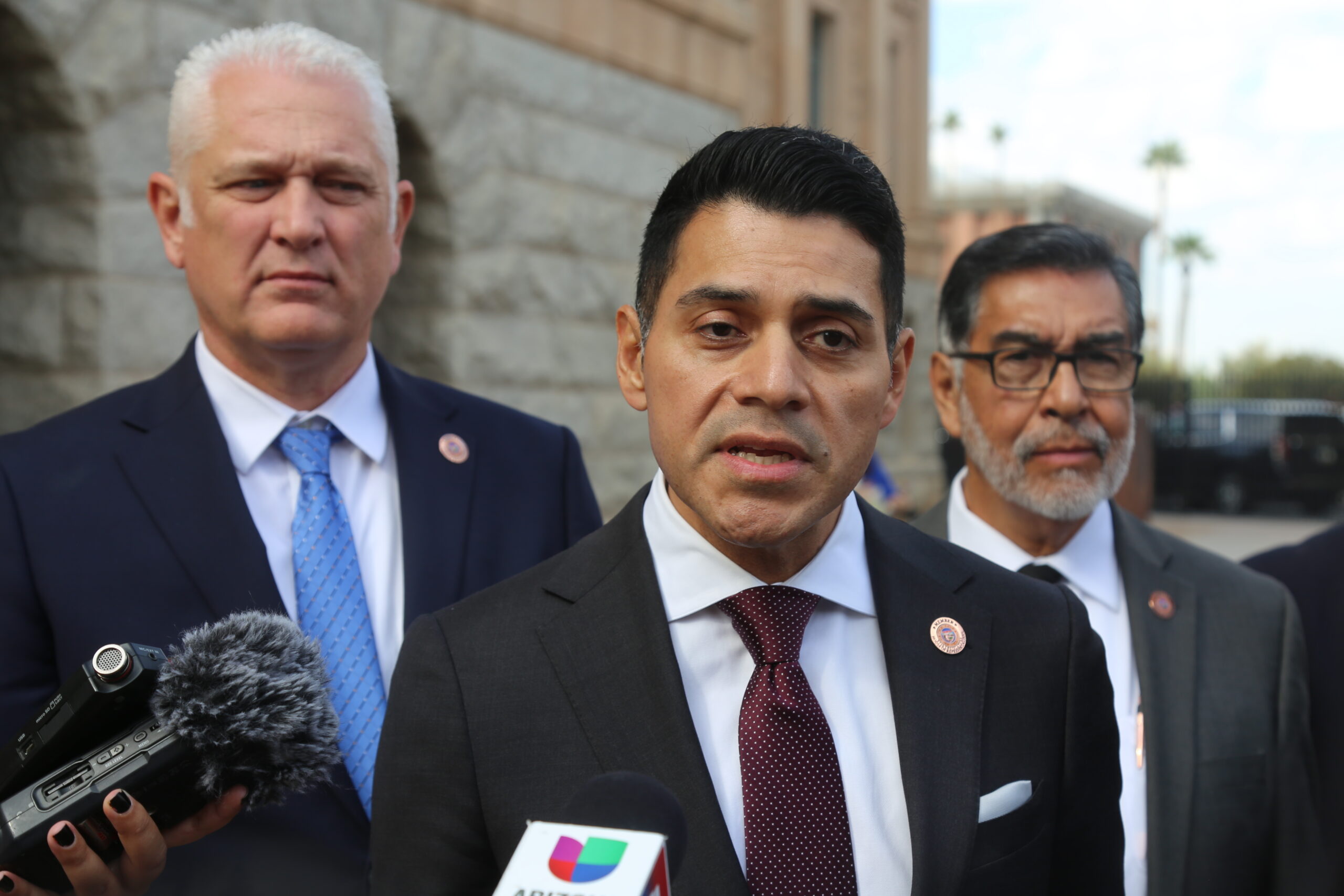
Republicans will hold minority status in both chambers of the Arizona Legislature starting with the 2027 session, according to election results that change the state power structure.
The shift marks the first time since 1964 that Democrats will control both the legislative branch and the governor’s office. For many GOP lawmakers, the transition involves more than just a change in voting math; it represents a fundamental loss of institutional influence. The party is moving from a 17-member Senate majority and a 33-member House majority to just 10 and 23 seats, respectively.
“It’s a big change for Democrats, but it’s going to be a really big change for the Republicans coming back who are used to having the best parking spots, the best offices, the best secretaries,” political consultant and former House majority communications director Barrett Marson told the Arizona Capitol Times.
With Governor Katie Hobbs entering her second term, the Republican caucus faces a reality where they have few direct mechanisms to block Democratic legislation. While leadership remains largely intact, the role of the party has shifted from driving the agenda to reacting to it.
The shift in legislative control
Republican leadership has moved quickly to organize a caucus that has never operated from the minority side of the aisle. The House Republicans elected outgoing Speaker Steve Montenegro, R-Goodyear, as the incoming minority leader, while Senate Republicans selected current Senate Majority Leader John Kavanagh, R-Fountain Hills, to lead their 10-member caucus.
Kavanagh said that the incoming Democratic majority will have total control over the legislative calendar. The scale of the potential policy reversal will affect the state's politics.
“They can dismantle everything we’ve done in the last 30 to 40 years,” Kavanagh told the Arizona Capitol Times.
To bolster their staff, Senate Republicans are bringing in outgoing Senate President Warren Petersen, R-Gilbert, as minority chief of staff. Kavanagh described the selection of Petersen as a vital move to stabilize a caucus that felt a sense of “crisis” following the election, particularly after Chief of Staff Josh Kredit decided not to return for a minority role.
The Democratic agenda for 2027 is expected to focus on cost-of-living issues. Senate President-elect Priya Sundareshan, D-Tucson, said the party intends to revisit several legislative priorities that were stalled during the previous session, specifically targeting the costs of housing, healthcare, and utilities.
Surprising results in Republican strongholds
While the statewide trend suggests a growing Democratic momentum, the election results were defined by unexpected victories in traditionally conservative areas. In Legislative District 14, a region where Republican registered voters outnumber Democrats 66,000 to 34,000, Democrats Mary Rose and Stephanie Walsh secured legislative wins that caught analysts by surprise.
The vulnerability of Republican incumbents was further highlighted by the performance of Senator T.J. Shope, R-Coolidge, in a swing district. Shope, who was once considered a potential leader for Senate Republicans, conceded to Democrat Elaine Aldrete after receiving 39,000 votes. This was a notable decline from his previous performances in the district.
| Candidate / Election Year | Vote Count |
|---|---|
| T.J. Shope (2024) | 58,000 |
| T.J. Shope (2022) | 41,000 |
| T.J. Shope (Current Election) | 39,000 |
| Warren Petersen (2024) | 76,000 |
| Warren Petersen (2022) | 64,000 |
Political science professor Samara Klar from the University of Arizona said that while the scale of the Democratic sweep was unexpected, the results align with a decade-long trend of shrinking Republican majorities. Klar suggested that voters in smaller, traditionally safe districts may be holding the party accountable for dissatisfaction regarding Donald Trump and the rising cost of living.
Chuck Coughlin, CEO of HighGround Public Affairs Consultants, suggested that the results may be tied to voter participation. His firm’s findings indicated that Republican turnout was lower than in previous years and that independent voters broke away from the GOP by significant margins.
Republicans are now looking to defend core policy achievements, such as the Empowerment Scholarship Account program. The program, which Republicans expanded in 2022 to make Arizona the first state with a universal school voucher program, remains a top priority for the minority caucus.
“We’ll have time to take a look at what happened,” House Minority Leader-elect Steve Montenegro told reporters, adding that the caucus is currently focused on unity heading into January.
The pressure to perform now falls heavily on the new Democratic majority to address the economic anxieties of the electorate. Rep.-elect Julia Gusse, a Democrat from Maricopa, emphasized that the party’s recent gains are fragile and tied directly to economic outcomes.
“We have to deliver [on affordability],” Gusse said, adding, “We have to deliver for the people of our communities; otherwise, this blue wave is going to turn into a blue puddle.”
Related reading

Tornado Confirmed Near Bordentown in Burlington County
A tornado was confirmed in Burlington County near Bordentown around 4:20 p.m. on Thursday, according to the National...

Indiana Hosts Tennessee Tech as Hoosiers Look to Maintain Perfect Start
Indiana hosts Tennessee Tech at Simon Skjodt Assembly Hall on Thursday evening as the Hoosiers look to maintain...

USA Climbing Announces 2027 National Championships in Utah
“Hosting both of these championships in our home community is an exciting opportunity to welcome athletes, coaches, and...

Texas Standard Columnist Says Cane Sugar May Drive Mexican Coke Popularity
A columnist for Texas Standard suggests that the popularity of Mexican Coke in Texas may be driven by...