
Arizona state Sen. Jake Hoffman is asking a federal court to block a subpoena for his company, 1Ten, in a campaign finance investigation.
The subpoena targets 1Ten in an investigation into Ralph Heap, a failed Republican candidate for the Arizona Corporation Commission. Heap is accused of violating campaign finance laws, including failing to disclose the financial backers of his campaign materials and not revealing payments for campaign signs procured from Mesa Sign Shop.
- Arizona state Sen. Jake Hoffman seeks court block of subpoena for his company
- Ralph Heap, a failed candidate, faces campaign finance allegations
- Clean Elections Commission issued subpoena to Hoffman’s firm
Campaign Finance Probe
Heap ran as a Clean Elections candidate, agreeing to forgo large donations and money from PACs in exchange for public funds. This makes him subject to strict spending and disclosure rules. The commission decided it has “reason to believe” that Heap broke state law and began investigating him.”
The complaint against Heap was also sent by the Secretary of State’s Office to the state Attorney General’s Office for investigation. Heap attempted to withdraw as a Clean Elections candidate, but the commission denied that request.
According to the commission, Heap reported a single $644.47 payment to Mesa Sign Shop for campaign signs. However, a complaint documented 184 of his signs deployed across the state. The invoices for those signs were addressed not to Heap, but to “Jake Hoffman / 1ten.io,” and one invoice reflects a $96,500.00 payment.”
Legal Challenge
Hoffman sued the commission in federal court, arguing the subpoena would violate his company’s First Amendment rights. State Rep. Alexander Kolodin (R-Scottsdale) is Hoffman’s attorney in this case.
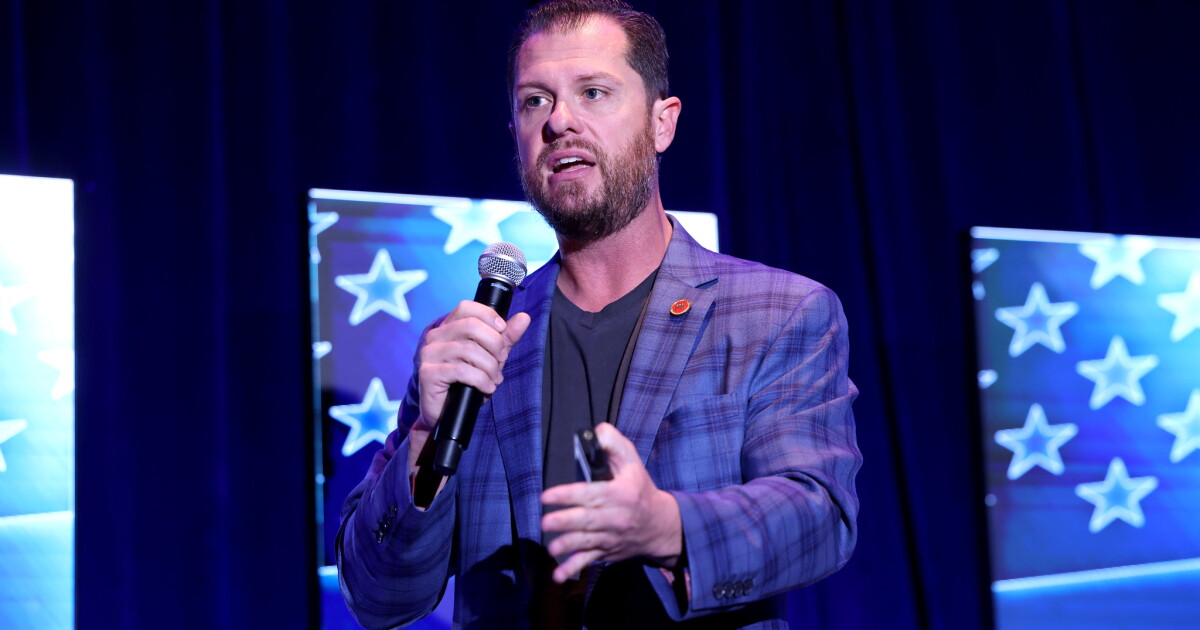
“Highlighting the chilling effect of the subpoena is the fact that the complainants in this matter are not disinterested members of the public. They are political opponents,” Kolodin wrote in the complaint.”
The complaint also includes 220 pages of screenshots of social media posts bad-mouthing Hoffman and/or Heap. Hoffman also backed Kolodin in his unsuccessful bid for secretary of state this year, and campaign finance reports show 1Ten also spent money to benefit Kolodin’s campaign.
Kolodin argues the subpoena is overly broad, demanding an account of “the giving and spending of money” that could invade privacy. He claims clients won’t work with his company if they know information will be publicly displayed.”
Court receives subpoena challenge
Hoffman sued the commission in federal court on Nov. 18, seeking to “permanently enjoin Defendants from enforcing the Subpoena,” which 1Ten received on Nov. 6 and was signed by Clean Elections Executive Director Thomas Collins.
The same federal judge previously dismissed another lawsuit by Kolodin as “sorely wanting of relevant or reliable evidence,” a fact cited in the sources. Kolodin contends the subpoena violates the First Amendment by exposing private political relationships, potentially deterring future clients, and that the complainants are Hoffman’s “political opponents,” not disinterested members of the public.
Commission defends investigation scope
The commission argues that quashing the subpoena would severely limit its ability to uphold the Citizens Clean Elections Act, which Arizona voters passed in 1998. The commission maintains the records are crucial for determining the legitimacy of Heap’s publicly funded campaign, especially given discrepancies in his reporting, such as the $96,500 invoice addressed to “Jake Hoffman / 1ten.io” for signs he only disclosed a $644.47 payment for.
Heap attempted to withdraw as a Clean Elections candidate after the investigation began, but the commission denied that request, leaving the subpoena enforcement deadline of Nov. 25 in effect as the court considers the challenge.
Commission’s Response
The commission argues that quashing the subpoena would severely limit its ability to do the job voters entrusted it with. Arizona voters passed the Citizens Clean Elections Act in 1998 to establish the commission.
The commission also dismissed the notion that payment history is a privacy violation on par with requiring a campaign to reveal internal strategies. It argues Hoffman doesn’t actually face any harm by having to release the requested business records.
Arizona’s political landscape is shaped by its rapid population growth and demographic shifts since the 1950s, making it a Sun Belt hub with diverse influences. One key detail is the state’s significant Hispanic population growth since the 1980s, driven by migration from Mexico and Central America, which has increasingly impacted its political dynamics.
Additionally, Arizona’s status as the 48th state, admitted in 1912, reflects its complex history of territorial transitions and cultural blending, from Spanish colonization to Mexican rule and U.S. statehood, factors that continue to inform its political identity and governance.
As of 4:30 p.m.
Related reading

Mizzou Flips Four-Star RB Jayden Miles From Florida State on Thanksgiving
Missouri flipped four-star running back Jayden Miles from Florida State on Thanksgiving, adding the Baton Rouge Catholic standout...

JoJo Romero Signs Three-Year $21M Deal With Padres After Brewers Re-sign Antonio Senzatela
Left-handed reliever JoJo Romero agreed to a three-year, $21 million contract with the San Diego Padres on Monday,...
Star-News Highlights Donkey Sanctuary, Graduate, Nurse, Teacher
The Wilmington Star-News highlighted three people whose stories defined 2026 across southeastern North Carolina: the founder of a...
Las Vegas Hip-Hop Club Crawl Draws Criticism From Attendees on Nov 27
A Las Vegas hip-hop club crawl, promoted with promises of two venues, a party bus with free drinks,...