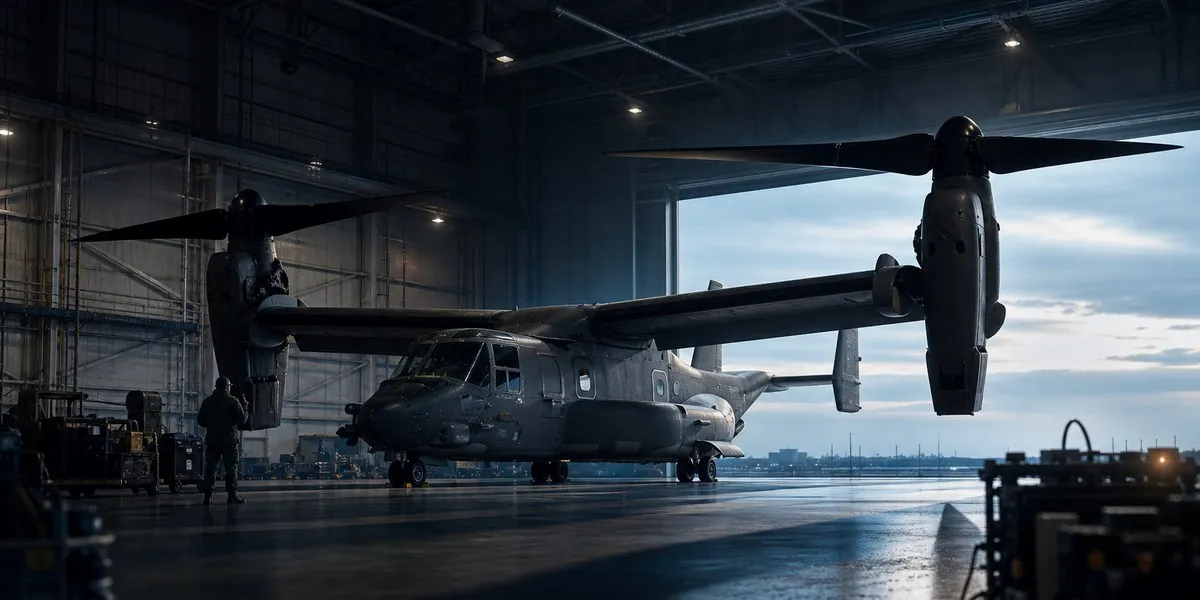
The U.S. Army will not receive the first MV-75 Cheyenne II tiltrotor for testing by the end of 2026, the service’s acquisition office confirmed Friday.
- First MV-75 delivery for testing slips past the 2026 year-end target.
- A funding shortfall halted Army–Bell communications from July until Sept. 28.
- About $300 million in reprogrammed funds covered costs already incurred by Bell and its suppliers.
- The Army has not set a new delivery date and is building a revised, resource-loaded schedule with Bell.
Funding gap froze communications
The Army spent nearly all of its available fiscal 2026 funding for the MV-75 by July, according to Textron’s quarterly filing. In response, the service requested a $350 million reprogramming to support construction and testing of eight prototype aircraft; Congress approved the shift in the third quarter, Breaking Defense reported.
About $300 million was committed through contract modifications covering costs Bell and its suppliers had already incurred, Textron chief executive Lisa Atherton said during an October earnings call.
During the gap, Bell “chose to continue certain activities at its own risk without additional funding,” an Army Acquisition, Logistics and Technology (ASA(ALT)) spokesperson told Breaking Defense. Communications between the Army and Bell halted and did not resume until Sept. 28, when the reprogrammed funds were received.
Revised schedule and FY27 uncertainty
“Once funding was received, normal contract execution and communications resumed,” the ASA(ALT) spokesperson said. “The funding gap affected the planned schedule; the Army and Bell are now assessing those effects and updating the program schedule and risk analysis to establish realistic, affordable milestones and delivery dates.”
The Army has not yet determined when the first aircraft will arrive for testing.
Separately, uncertainty around the fiscal 2027 budget could delay the first low-rate initial production (LRIP) contract. The service requested more than $2 billion for the MV-75 in FY27, all under discretionary spending.
“With the start of the fiscal year in a [continuing resolution], we’d expect a possible push in the timing of the LRIP award,” Textron chief financial officer David Rosenberg said on the October call. Previously the company had anticipated a Q4-to-Q1 award window.
Program context
Bell, a Textron subsidiary, was selected in late 2022 for the Future Long Range Assault Aircraft program. The Army says the Cheyenne will fly “twice as fast” and “twice as far” as existing assault helicopters and will gradually replace at least part of the UH-60 Black Hawk fleet.
Army Undersecretary Michael Obadal called the aircraft a “priority” for the joint force, saying it “extends the distance over which commanders can deliver, reinforce, and reposition assault forces.”
Keep reading

Topeka Community Thanksgiving Dinner Still Needs Food, $2,200 Before Thursday Meal
With Thanksgiving hours away, the 59th annual Topeka Community Thanksgiving Dinner still needs boxes of instant mashed potatoes,...

Study: New England Summer Storms Shorter, Heavier, Raising Flash-Flood Risk
Total summer rainfall held steady from 1980–2020, but heavy downpours replaced lighter, longer rains. Average thunderstorm duration fell...

Woman Who Gave Birth at 12 Sues Connecticut DCF for Ignoring Abuse Reports
A woman who gave birth at 12 is suing Connecticut DCF for placing her with Roger Barriault when...

Nebraska’s Iowa Game Will Decide If 2024 Season Is a Success, Analysis Says
Nebraska's 31-28 victory over No. 16 Ohio State on Saturday ended a 31-game winless streak against ranked opponents,...