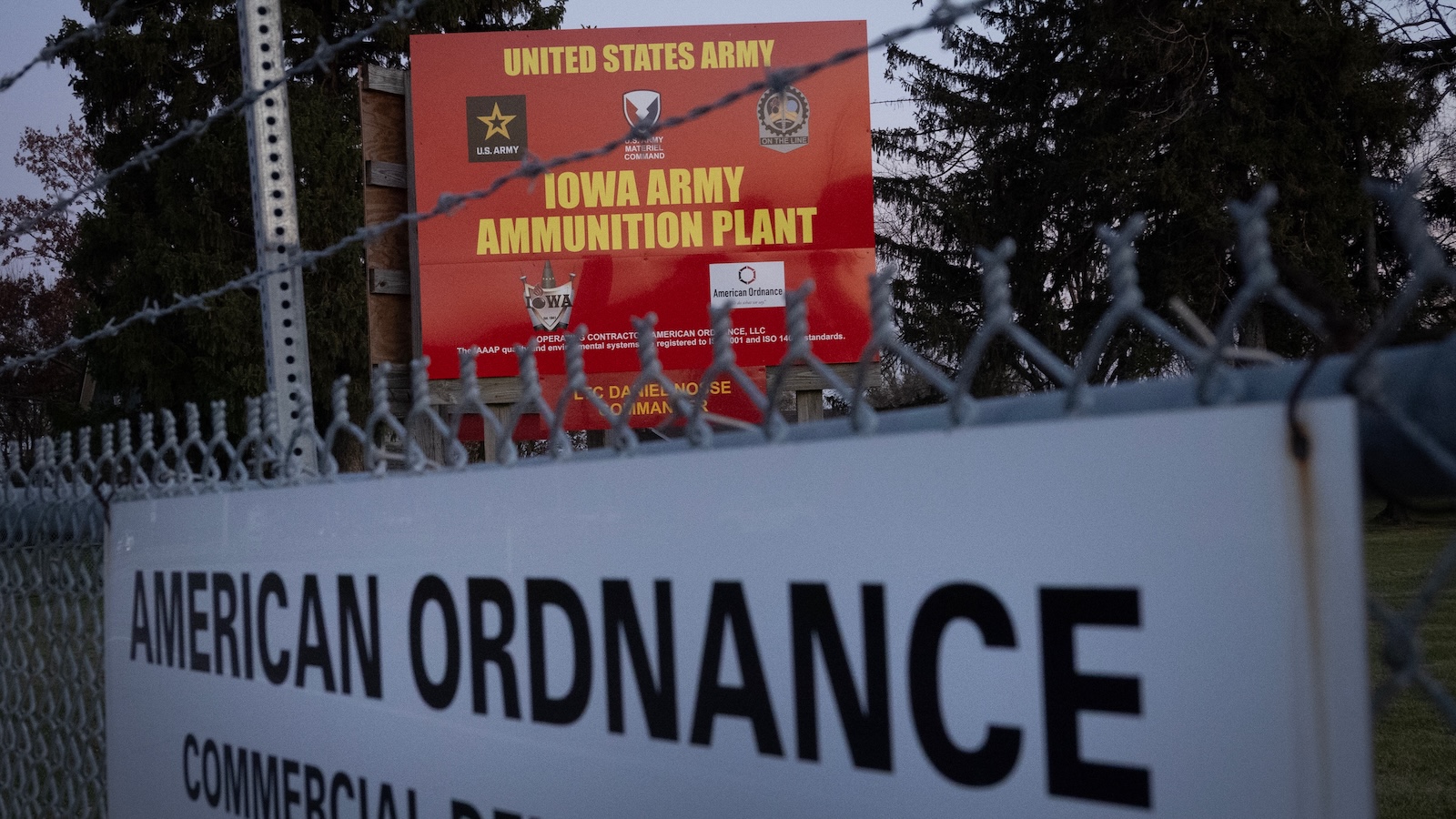
The U.S. Army detonated nearly 5 tons of unstable lead azide at the Iowa Army Ammunition Plant in Middletown on Wednesday morning, destroying the nation’s entire stockpile of the explosive compound after months of planning and legal challenges. Early EPA air monitoring detected no airborne lead, though post-blast soil and water sampling continues to determine where the neurotoxin settled.
The controlled detonation occurred around 9 a.m. local time at the 19,000-acre plant in Des Moines County, about 160 miles southeast of Des Moines and 230 miles west of Chicago, Grist reported. Two loud booms produced wispy white plumes that dissipated within minutes.
Maj. Gen. Eric Shirley, who led the operation, called it a success at a news conference afterward, saying all 9,700 pounds stored in 68 drums were destroyed and the risk to surrounding communities was “reduced as close to zero as it’s absolutely humanly possible,” the Associated Press reported.
Initial feedback from our state experts and federal partners is that the detonation at the Iowa Army Ammunition Plant was successful. We remain in close contact with authorities on the ground, while state agencies continue to monitor incoming data from the State Emergency… pic.twitter.com/l6k5xT43vq
Why the Army chose detonation
Army inspectors discovered in March that the decades-old lead azide — a compound of lead and nitrogen used in detonators — had begun to crystallize, making it increasingly sensitive to friction, vibration, and temperature changes.
“The lead azide has aged. It’s become unstable to the point where moving it or even allowing it to sit on the odd chance that it receives some sort of shock or friction could lead to a spontaneous explosion,” said Greg Domski, associate provost and professor of chemistry and biochemistry at Augustana College in Rock Island, Illinois, Grist reported.
The Army notified the Environmental Protection Agency on or about March 12 of the degraded material, according to court filings cited by CNN. A multi-agency working group had been activated as early as January to explore treatment alternatives to detonation, including a contract awarded in March to MuniRem Environmental, a Georgia-based firm that uses chemicals to neutralize munitions.
The Army canceled that deal two months later, citing safety concerns, CNN reported. After consulting with the EPA, the Army concluded that detonating the material in place was the safest option.
The Army’s controlled, mitigated detonation exceeded all expectations and was a HUGE success. The threat of an uncontrolled spontaneous detonation has been eliminated. I am so proud of our SOLDIERS for their courage, training, mitigation, and precision! They put it on the line…
Army detonates unprecedented quantity of lead azide
While the Army routinely destroys weapons and munitions, it had never detonated lead azide at this quantity. “We detonate all the time, but we have not detonated lead azide at this quantity,” said Lori McFate, public affairs specialist with the Army Sustainment Command in Bettendorf, Iowa, Grist reported.
Containment measures included concrete and sand barriers two stories high around the two bunkers, ballistic gels, foams, and more than 100,000 gallons of water intended to absorb lead dust, the AP reported. The Army attributed the white smoke visible after the blasts to foam sprayed on the blast to tamp down dust.
This evening, the Eighth Circuit Court of Appeals issued an order that allows the Army to proceed with the detonation of long-ago-placed explosives (2009) at the Iowa Army Ammunition Plant. Likewise, the current Governor of Iowa, Kim Reynolds, has given her support to go forward,…
Court clears detonation despite objections and lawsuits
The operation faced objections from elected officials in Iowa and Illinois and a lawsuit from environmental groups including Earthjustice seeking to pause the detonation. The blast was originally planned for the previous Friday but was delayed three times amid public backlash and to allow more time for safety measures and favorable wind conditions, according to court documents cited by the AP.
A federal appeals court ruled Monday that the detonation could proceed, clearing the legal hurdle. The EPA issued an emergency permit for the operation on November 16. President Donald Trump posted on social media that early reports showed the “Army’s mitigation efforts have far exceeded expectations.” Acting Secretary of the Army Adam Telle, along with the Republican governors of Iowa and Missouri, also said the explosion appeared well-contained, the AP reported.

EPA monitoring detects no airborne lead above baseline
There is no safe level of lead exposure. The neurotoxin can damage the brain and central nervous system and is particularly dangerous to children and pregnant women. “Lead is an element, and doesn’t break down,” said Robert Hirschfeld, director of water policy at the Prairie River Network. “Those health risks persist as long as the lead does,” Grist reported.
The EPA deployed 300 employees and contractors and collected more than 1,200 air, soil, dust, and water samples before the blast to establish a baseline. Real-time air monitors throughout the region detected no airborne lead more than an hour after the detonation.
However, those readings do not establish where lead from the blast may have settled. Army and EPA crews are now collecting post-blast samples along the projected plume path — which the Army said would travel southwest toward Missouri and away from Illinois — to determine whether cleanup is necessary, Grist reported.
The Administration should make this decision based on the information they have from the people they brought in to do the job months ago and have been on the ground in Middletown for weeks. Everyday Iowans are entitled to know how Middletown came to this situation, and learn…
Agricultural concerns
The Department of Agriculture said 350 farms lie in the projected path of the plume. Farmers were advised to move livestock indoors and protect hay and water supplies. Iowa agriculture officials are advising farmers to have soil and forage tested after the detonation and to monitor livestock for signs of lead poisoning, Grist reported. It is not yet clear whether agricultural land or livestock were exposed.
What residents should do
The Illinois Department of Public Health recommends staying indoors with windows closed for 24 to 48 hours after the detonation, temporarily closing fresh-air intakes on HVAC systems and switching to recirculate, using portable air cleaners, wet-cleaning potentially affected surfaces with soap and water once the Army determines the airborne exposure period has ended, avoiding sweeping, setting car ventilation to recirculate when driving through affected areas, washing hands before eating, and removing shoes when entering homes, Grist reported.
The controlled detonation at Iowa Army Ammunition Plant is now scheduled on Wednesday, November 25, 2026 to allow for optimal weather conditions and all mitigation measures to be emplaced. The Army and our interagency partners have been working around the clock to safeguard all…
Independent researchers also intend to conduct extensive environmental testing on water sources, farms, homes, and playgrounds in the days and weeks ahead, the AP reported. Government agencies plan additional testing as well.
More on Iowa Army Ammunition Plant
Keep reading
- Boise, Caldwell Turkey Day 5K Returns Thanksgiving Morning to Support Local Charities
- MSquared Breaks Ground on 134-Unit Affordable Redevelopment at 665 New York Avenue
- Median Net Worth Peaks at 75+ in the Fed's Survey, but the Lead Is Thin (daybreakwire.com)
- Lions Turn Tied Game Into 19-10 Halftime Lead Over Bears (archyde.com)

Boise, Caldwell Turkey Day 5K Returns Thanksgiving Morning to Support Local Charities
The Turkey Day 5K returns to Boise and Caldwell on Thanksgiving morning, Thursday, November 26, with both races...

MSquared Breaks Ground on 134-Unit Affordable Redevelopment at 665 New York Avenue
Construction was underway on the redevelopment of 665 New York Avenue in Prospect Lefferts Gardens, Brooklyn, with a...

NJ Appellate Court Upholds Firefighter PTSD Pension Denial Over Paperwork
A New Jersey appellate court on Nov. 20 upheld the denial of disability pension benefits for Atlantic City...

Omaha Firefighters Work Holidays Balancing Calls and Family Time
"We're here for someone else, not us," Omaha Fire Battalion Chief Kurt Theiler said. Omaha firefighters are working...