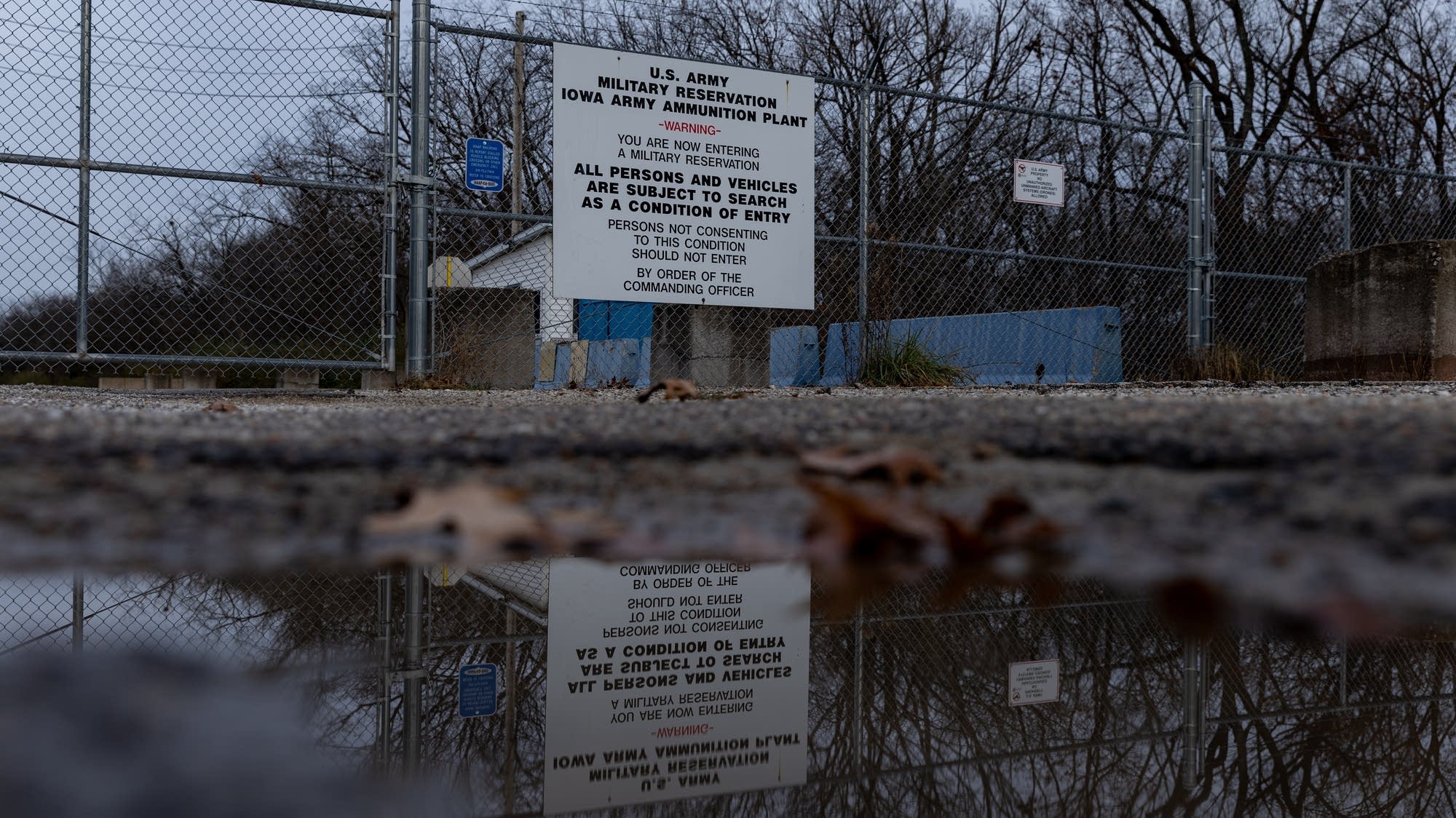
The U.S. Army detonated roughly five tons of degrading lead azide Wednesday at the Iowa Army Ammunition Plant near Middletown, a controlled blast that sent a lead dust plume south toward Missouri and away from Minnesota, PBS NewsHour reported.
Minnesota Pollution Control Agency forecasters said the state would not be downwind of the 9 a.m. detonation and no lead deposition was expected anywhere in Minnesota, MPR News reported. The agency will run additional lead testing this week at its Flint Hills and West St. Paul monitors out of an abundance of caution.
“It will be pushing everything to the south and to the west. So far, southern Iowa, northern Missouri are the areas of impact right now. Not anywhere near Minnesota,” said Matt Taraldsen, a supervisory meteorologist for the MPCA’s air modeling unit, in an interview with MPR News before the blast.
The Army had stored 68 barrels of lead azide — a primary explosive used in detonators and blasting caps — at the plant for more than 20 years. Officials said the supply could have exploded at any time, prompting the controlled detonation. Residents near the plant were advised to evacuate; those living five to 20 miles away were told to shelter in place to avoid airborne dust.
“The lead is going to fall out relatively rapidly from the plume, and that means that unfortunately, the areas that are immediately downwind from the site are going to get quite a bit of lead dust from this explosion,” Taraldsen told MPR News. “That will be over a relatively small area of southern Iowa and maybe in the northern Missouri, but it will be fairly concentrated, and that’s why there are the shelter-in-place warnings and the evacuation areas and everything.”
Lead azide is a heavy metal that falls out of the atmosphere quickly, unlike wildfire smoke, which can travel thousands of miles, Taraldsen said. Cold winter air would pull the lead down even faster, he added. It will get into the soil, and it will have to be cleaned up that way.

The EPA said its real-time air monitors detected no airborne lead more than an hour after the detonation, according to PBS NewsHour. The agency began sampling air, water and soil before the blast.
Environmental groups had sued to stop the detonation, arguing in court filings that there is no safe exposure level for lead and that the Army’s own modeling showed a large area of farmland and waterways could be contaminated. “Once lead dust is dispersed, there is no undoing the harm,” one filing stated.
The blast was originally planned for last Friday but was rescheduled twice to allow more safety measures and favorable wind conditions, winning approval from a federal appeals court, PBS NewsHour reported. Iowa Gov. Kim Reynolds called the detonation “successful.” Burlington resident Tim Brandt told The Associated Press the blast was smaller than expected: “It was nothing. It seemed like government put fear in a lot of people over nothing.”
The Army plans to hold a news conference Wednesday morning to provide updates.
Worth a look

NYC Council Members Demand CUNY Title VI Probe Into Hunter College Hillel Event Cancellation
"Imagine being a Jewish student and tucking your Star of David in your shirt or not feeling safe...

Alabama May See Thanksgiving Flurries, But No Accumulation Expected
Alabama residents could see a few snow flurries Thursday night, but forecasters say no accumulation or travel problems...

Jrue Holiday, 36, Thrives Off Blazers Bench After Daughter Said Keep Playing
Jrue Holiday asked his 8-year-old daughter J.T. whether he should continue playing in 2024; she said yes. Holiday,...

Red Bull Asked Verstappen to Consider Surrendering Lead for Energy Advantage in Las Vegas GP
Red Bull asked Max Verstappen to consider surrendering the lead on the penultimate lap of the Las Vegas...