
Southeast Asia declared space a shared economic frontier on November 15, adopting its first region-wide declaration on space cooperation as the United States moved to anchor itself in the bloc’s orbital ambitions ahead of the 50th anniversary of diplomatic ties.
The ASEAN Leaders’ Declaration on the Advancement of Space Science, Technology and Innovation Cooperation, signed at the 49th ASEAN Summit in Manila, commits the ten-member bloc to a common framework covering space safety, the commercial space economy, and workforce development, the Philippine Space Agency (PhilSA) reported.
Hours later, U.S. Ambassador to ASEAN Kevin Kim told a virtual briefing that Washington wants a formal space exploration partnership with the bloc, framing it as essential to “future economic growth” and the establishment of shared norms before other powers write them, ANTARA News reported.
“We want to be able to work with ASEAN in terms of developing and further bolstering that type of norms and values and principles that other dialogue partners will also agree to,” Kim said, explicitly citing the U.S.-led Artemis Accords as the template for those principles.
“More than a formal statement, this Declaration reflects a shared regional vision to strengthen collaboration in space science, technology, and innovation. Through this, we hope to further advance Asean’s collective capacity to harness space technologies in support of disaster resilience, environmental sustainability, economic growth, and inclusive development across our region,”
The Philippine-led initiative, a priority deliverable of Manila’s 2026 chairship, establishes mechanisms for joint research, data sharing, and the pooled use of space infrastructure. Its three pillars — space security and safety, the space economy, and workforce development — are designed to harden the region’s disaster resilience and environmental monitoring while unlocking commercial revenue, Newsbytes.PH reported.

PhilSA and the Department of Science and Technology spearheaded the diplomatic push, building on a Space Situational Awareness and Space Traffic Management seminar held in Manila last March. A virtual ceremonial launch of the declaration is scheduled for December 7 to translate commitments into concrete projects, PhilSA confirmed.
The Commercial Pitch: Manufacturing in Orbit
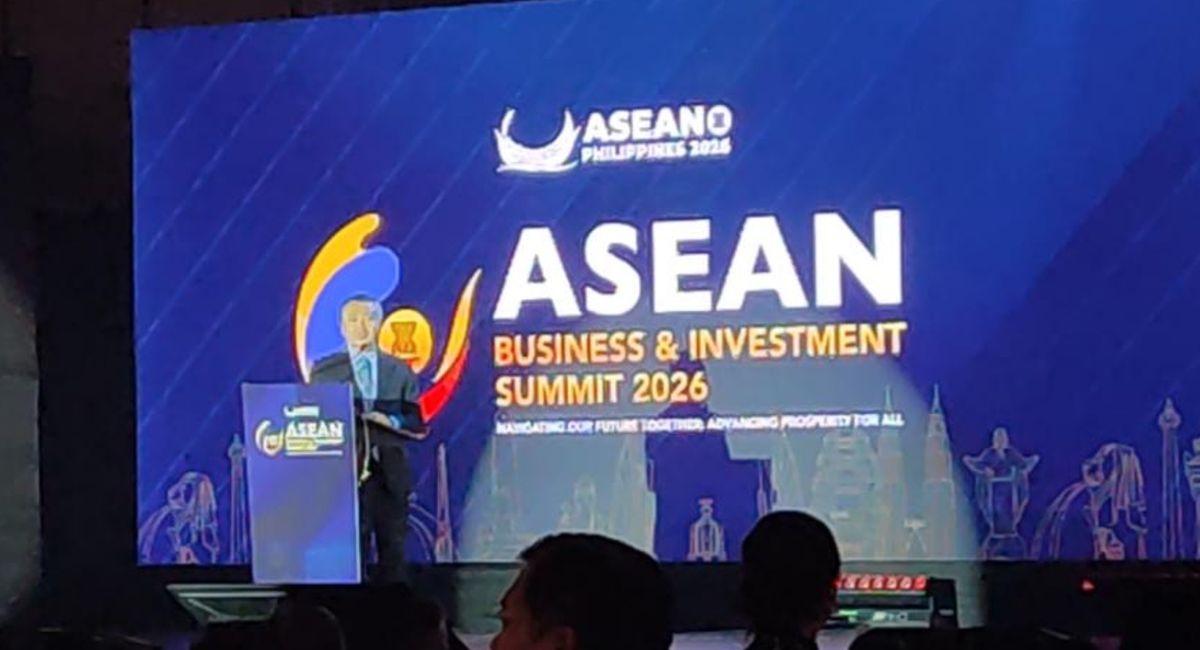
The economic argument shifted from policy to production at the ASEAN Business and Investment Summit in Parañaque City on November 15. Koichi Wakata, chief technology officer for Asia Pacific at Axiom Space and a veteran Japanese astronaut, told executives that commercial access to orbit is creating immediate opportunities in advanced manufacturing, pharmaceutical research, and human spaceflight for Southeast Asian industries, GMA Network reported.
Wakata outlined Axiom’s plan to attach a commercial module to the International Space Station before separating it into a free-flying station after the ISS retires. He cited existing Philippine research ties — including University of the Philippines experiments and the 2016 deployment of the Diwata-1 microsatellite from the Japanese Kibo module — as proof of concept for deeper regional participation.

Expanding access to space requires more than spacecraft and laboratories. Wakata emphasized the need for astronauts, instructors, engineers and ground-based support, GMA Network reported.
A PhilSA-convened panel featuring executives from Axiom Space, Space Port Japan, Kacific, Planet, and Ascend International Gateway mapped the value chain from satellite manufacturing and ground stations to data analytics and downstream applications.
Competing Declarations, Shared Domain
The U.S. push arrives amid a crowded diplomatic calendar. Days before the ASEAN summit, President Donald Trump signed the “American Declaration on Freedom in Outer Space,” asserting that the solar system is open for exploration, development, and use by all humanity, ANTARA noted.
Kim insisted Washington respects “ASEAN centrality” — the principle that the bloc leads its own external relations — but the timing underscores a strategic calculation: the U.S. wants its norms, via the Artemis Accords, embedded in Southeast Asia’s regulatory DNA before competitors offer alternatives.
ASEAN members have historically guarded strategic autonomy, preferring non-binding cooperation over alliance structures. The new declaration reflects that caution; it creates a framework for collaboration but establishes no supranational authority, no pooled budget, and no collective security guarantee in orbit. Whether the U.S. partnership evolves into technology transfer, launch access, or astronaut slots — or remains a diplomatic framework — is the open question the December 7 forum is designed to answer.
The virtual Ceremonial Launch of the ASEAN Declaration on Space Cooperation and Forum will convene member states and dialogue partners on December 7 under the theme “Navigating ASEAN’s Future in Space, Together.”

Burnham Warns He Could Walk Away From EU Brexit Deal
British Prime Minister Andy Burnham arrived in Brussels Friday warning he would abandon a reset deal with the...
Sean Cairncross Out, Kirsten A. Davies in as White House National Cyber Director
Sean Cairncross left the White House national cyber director post Thursday, ousted after a week of cascading technology...
Trump, Putin Meet at APEC; Trump Tells Europe It Could Save Money Ending War
Donald Trump, Vladimir Putin and Xi Jinping met for 90 minutes Thursday on the sidelines of the APEC...

Ukraine Live: Trump Leaves Summit With Xi and Putin With No Sign of Ending Two Wars – The Independent
"Our response will be far more painful than Kyiv’s attack on the bridge," Vladimir Putin said Wednesday at...