
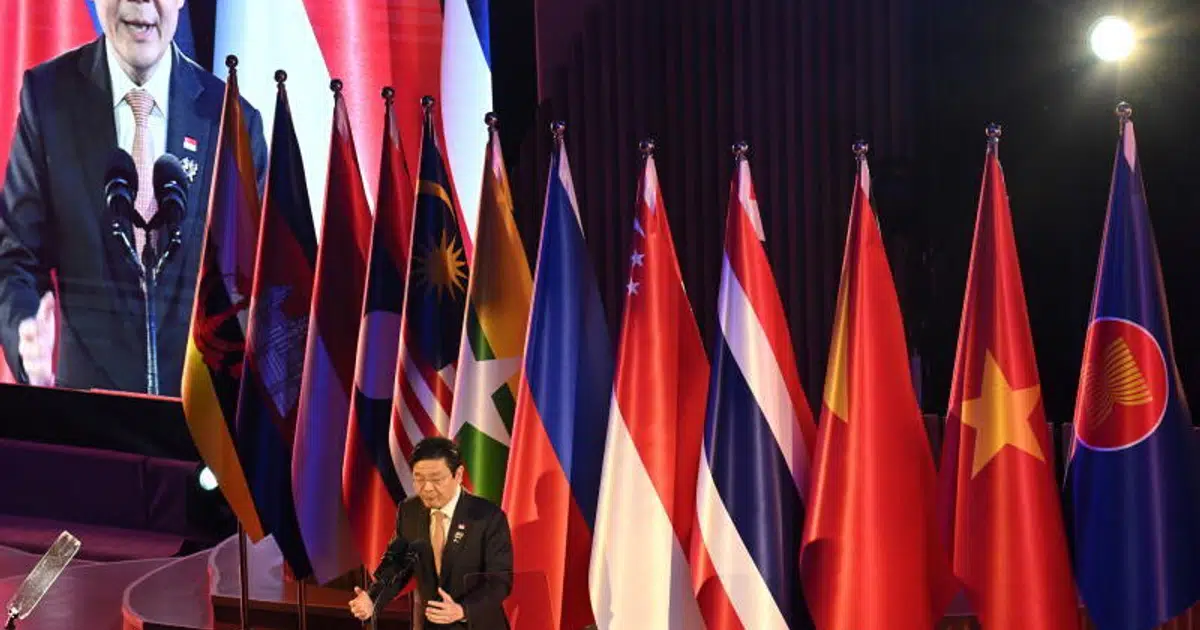
ASEAN leaders signed the Digital Economy Framework Agreement on Nov. 14, but the bloc is splitting into rival technology camps as the United States and China compete for influence over artificial intelligence infrastructure, BusinessWorld Online reported.
Singapore Prime Minister Lawrence Wong said on Nov. 17 that turning the agreement into tangible benefits will be the region’s next test, urging countries to pursue practical projects that strengthen digital and energy connectivity, The Business Times reported.
ASEAN fractures along digital lines
China launched the World Artificial Intelligence Cooperation Organization in July 2026 to court the Global South with capacity building, regional application centers and thousands of technical training slots. Cambodia, Indonesia, Laos, Myanmar and Malaysia joined as founding members; Brunei and Vietnam followed soon after, BusinessWorld Online reported.
The Western-led Pax Silica initiative, built around trusted silicon supply chains, critical minerals and strict security standards, has anchored Singapore and the Philippines, BusinessWorld Online reported.
When member states lock themselves into rival technological ecosystems, cross-border data flows, digital payments and cloud services face compliance conflicts, export-control penalties and cybersecurity vulnerabilities, BusinessWorld Online reported.
Binding framework proposed to replace voluntary guides
Leaders approved the ASEAN Responsible AI Roadmap (2025–2030) and the ASEAN AI Safety Network alongside DEFA, but the Expanded ASEAN Guide on AI Governance and Ethics remains voluntary and non-binding, BusinessWorld Online reported.
Without a binding, interoperable framework under DEFA, individual capitals will be forced to accept governance terms, surveillance norms or supply-chain restrictions dictated by their chosen patron, BusinessWorld Online reported.
Three pillars for collective action
The bloc must enforce technical and regulatory interoperability under DEFA so that cross-border data flows, digital payments and cloud services remain compatible regardless of hardware origin, BusinessWorld Online reported.
ASEAN should establish shared standards for domestic data sovereignty and critical infrastructure protection, refusing external concessions that compromise national jurisdiction, BusinessWorld Online reported.
ASEAN should use ASEAN AI SAFE as a unified regulatory clearinghouse to negotiate mutual recognition agreements with both Pax Silica and WAICO, forcing external powers to engage the bloc as a single market, BusinessWorld Online reported.
Implementation focus at summit
PM Wong said a similar push is needed on energy through the ASEAN Power Grid, targeted for full integration by 2045, and that Singapore will co-host a seminar with Indonesia and Australia next week on submarine power cables, The Business Times reported.
He cited emerging connections involving Laos, Thailand, Malaysia and Singapore; Vietnam, Malaysia and Singapore; and southern Mindanao in the Philippines and Sabah in Malaysia, The Business Times reported.
“The next test is implementation,” PM Wong said, calling for closer cooperation with external partners to improve digital connectivity and interoperability across the region.
“Well, you have got free trade agreements now, you have got the Defa, but what does it mean for me as a business? How do I make use of this?” PM Wong told Singapore journalists at the conclusion of the 49th ASEAN Summit in Manila, The Business Times reported.
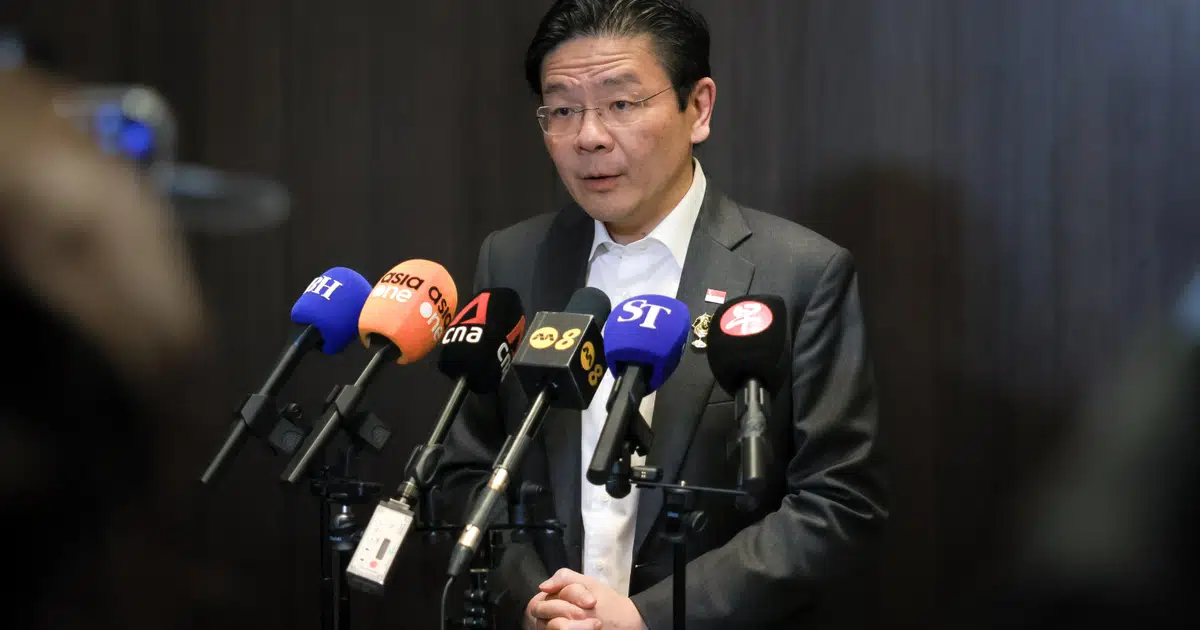
DEFA aims to reduce barriers to digital trade through common rules in electronic payments, cross-border data flows and cybersecurity, The Business Times reported.
Economic stakes
AI is projected to deliver a massive GDP uplift across Southeast Asia over the coming decade as the primary engine for productivity gains, innovation and industrial modernization, BusinessWorld Online reported.
“Collectively, we are US$4.5 trillion, which is not bad. But if we were to do even more, to integrate, to reform, to grow, then perhaps by the early 2040s we could be a US$10 trillion economy,” PM Wong said, The Business Times reported.
ASEAN will expand partnerships beyond the US and China, including with Canada, the EU and the Gulf Cooperation Council, PM Wong said, The Business Times reported.
“Not everything we do is defined by America and China and the rivalry between them,” PM Wong said, stressing the need for ASEAN to retain the ability to shape its own priorities.
Keep reading

Spaniards Vote in Snap Election as Polls Suggest Right-Wing Coalition Could Unseat Sánchez
Spaniards voted on Sunday in a snap general election dominated by housing costs and immigration, with polls suggesting...

East Asia Avoids 1980s Debt Crisis Repeat but Must Plan Subsidy Exits
East Asian economies face mounting pressure from skyrocketing energy prices sparked by the standoff between Washington and Tehran,...

Liberal-National Coalition Wins Victorian Majority, Ending 12-Year Labor Government
Ballot boxes in Bacchus Marsh sat outside pre-polling booths ahead of a Victorian state election that ended 12...

The Rock Signals Possible Retirement At WWE Survivor Series
Dwayne "The Rock" Johnson signaled a possible in-ring retirement at WWE Survivor Series 2026 on November 28, leaving...