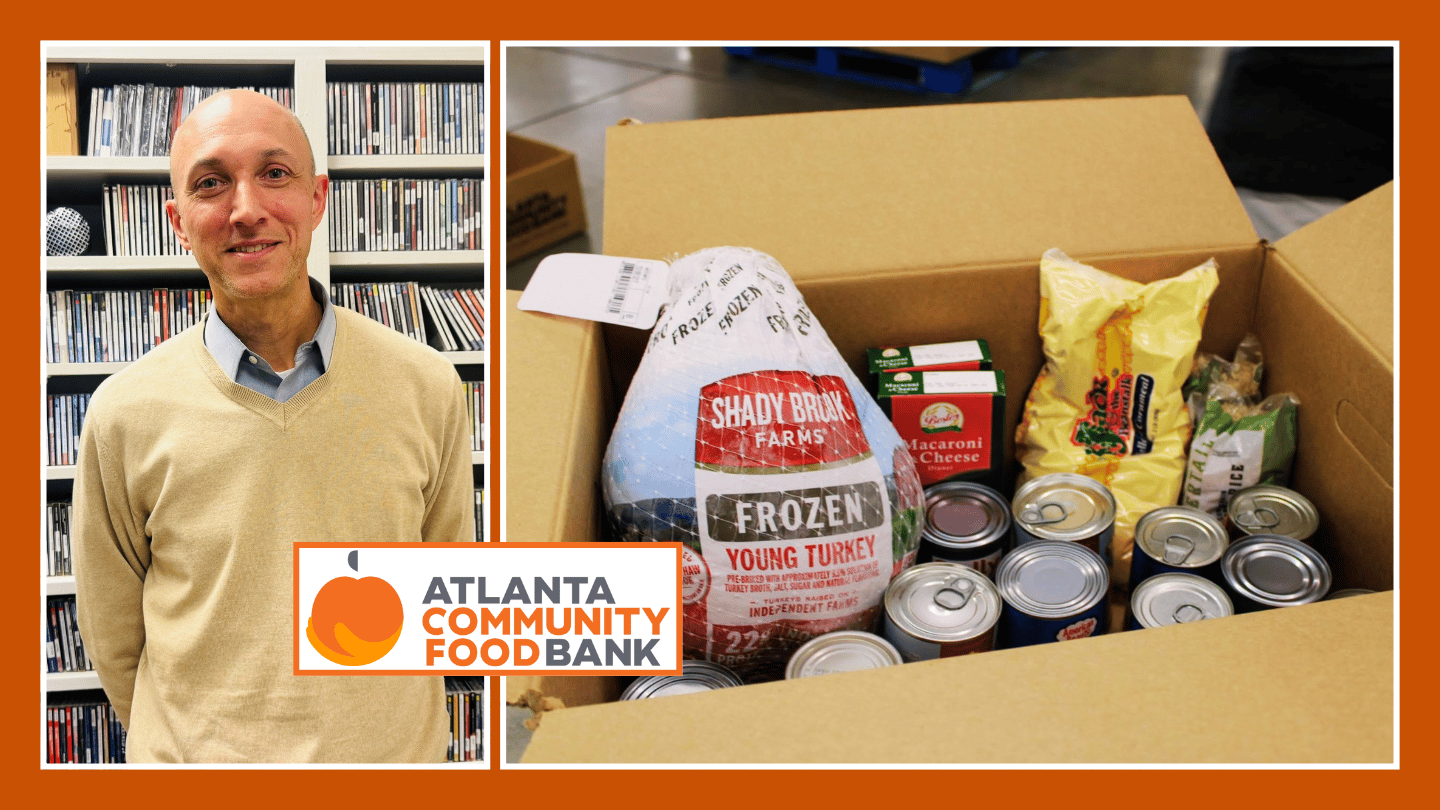
Atlanta Community Food Bank’s network will serve more than 800,000 people this year, nearly 12 percent of its 29-county area.
Atlanta’s emergency food network is feeding nearly one in eight people across its service area, and the fastest-growing line at the table belongs to households that earn too much to qualify for federal help.
Every month, the Atlanta Community Food Bank moves more than 9 million meals — roughly 10.3 million pounds — across 29 counties in metro Atlanta and north Georgia, WABE reported.
Jon West, who has spent 17 years at the organization and now serves as interim president and CEO, told “Closer Look” host Rose Scott that 60 percent of that supply comes from donated inventory. The rest is patched together with federal and state commodities and, increasingly, food the bank has to buy on the open market.
“Over 60% of what we acquire is donated — so, we’ve got great partnerships with retailers, wholesalers, manufacturers,” West said.
“We utilize some federal and state resources to add some more food on top of that… Then there’s always a gap between what we’ve got and what we need because of the demand. And we’re increasingly filling that gap by fundraising and then having to go out and buy more food.”
The gap is widening because the face of hunger has shifted. West said the “growing edge” of demand now comes from middle-income families — people earning 130 to over 200 percent of the federal poverty line — who fall into a benefits cliff. They make too much for the Supplemental Nutrition Assistance Program but not enough to absorb inflation’s hit to rent, transportation and child care.
“More people, not just low-income households, but middle-income households, are having trouble making ends meet,” West told WABE. “Right now, the growing edge of hunger for us are households that have too much income to qualify for federal programs, and so therefore, their only place they can go to find help is the emergency charitable network.”
That structural squeeze forces the food bank into a role it was never designed to play: a permanent supplemental grocery system for the employed. West said many of the people showing up at partner pantries hold jobs but struggle through a chaotic eligibility maze. “I’ll say the real pain point is if you’re a person who’s receiving some of those resources or looking for them, that’s where it really gets chaotic and confusing,” he said.
“So, a lot of work we do right now is educating neighbors who are trying to access those resources, make sure they understand what are they eligible for, and how can we… make it easy for them to get the resources that they are eligible for.”
The scale is sobering. ACFB expects to distribute more than 130 million pounds this year — the equivalent of roughly 115 to 116 million meals — through a network of hundreds of community partners. “We can’t do what we need to do without those partners,” West said. “Community is right there in our name for a reason. We’ve gotta have the community. This is a community-level solution. We need a community-level response.”
Founded in 1979, Atlanta Community Food Bank has grown into a regional hub that now partners with nearly 700 community-based agencies across the same 29-county footprint. In the twelve months ended June 30, 2022, that network distributed 80 million meals, a figure that underscores the rapid escalation in need the organization now describes.
Collectively, that network will touch more than 800,000 individuals this year, nearly 12 percent of the population across the 29-county service area.
Related reading
Alaska, Hawaiian Airlines Investigating Website Cyberattack via Optimizely Breach
"We are working with Optimizely to better understand the incident, and we continue to investigate internally," said Alex...

Texans Lean on Brotherhood, Beat Chargers After 3-6 Start Defined by Blown Leads
The Houston Texans have rallied around cornerback Kamari Lassiter and each other through a 3-6 start defined by...

Iowa Senate-elect Josh Turek Proposes New New Deal for Democrats
Iowa Senate-elect Josh Turek wants Democrats to draft their own version of the 1994 "Contract with America" —...

Churchill Downs: Kentucky Derby Week Tickets On Sale Thursday at Noon
Tickets for every Kentucky Derby Week special event at Churchill Downs go on sale Thursday at noon Eastern...