Faith, Recovery, and the Communion of Saints in a New Essay
In a recent personal essay published by the Catholic World Report, an author reflects on the spiritual and moral anchors of a life in recovery, mapping out a deeply personal “communion of saints” that guides daily sobriety and family life. The reflection spans personal milestones, including a son-in-law’s music, and historical figures like St. Thomas More to examine how invisible spiritual companions provide concrete strength.
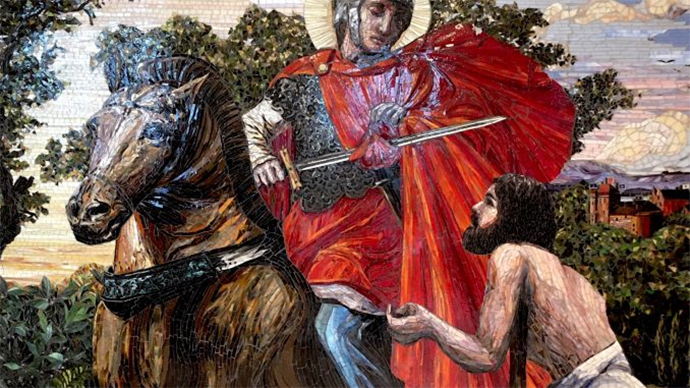
At the center of the essay is St. Martin of Tours, traditionally recognized as the patron of soldiers and horsemen. The author details a personal connection to the saint, whose feast day falls on November 11—coinciding with the author’s birthday and a historic German holiday celebrating the end of the wine harvest. While the exact historical origin of St. Martin’s patronage over recovering alcoholics remains unclear, the author invokes the saint daily for continued sobriety, one day at a time, echoing a lyric written by Kyle Swensen, a member of the band Barnweaver whose eponymous first album was released in May 2026.
From Historical Martyrdom to Silent Witness
The essay shifts from personal recovery to the concept of moral integrity, drawing on the final moments of Sir Thomas More. On July 6, 1535, More mounted the scaffold on Tower Hill outside the Tower of London, refusing to compromise his conscience or the supremacy of God’s law. His final words—“I die the King’s good servant, and God’s first”—later became the motto for Catholic attorneys and public officials following his May 1935 canonization by Pope Pius XI.
Examining More’s relationship with William Roper—who was a Lutheran before returning to the Catholic Church—the author highlights a lesson in persuasion. Roper ultimately attributed his return to the faith not to More’s tireless arguments and rhetoric, but to his virtuous witness and relentless prayer.
Expanding on the theme of unspoken devotion, the author looks to literature and sacred tradition. Drawing a parallel to Shakespeare’s King Lear, where Cordelia’s quiet, unostentatious love contrasts with the grandiloquent flattery of her sisters, the essay points to St. Joseph as the ultimate silent witness. As the earthly father of Our Lord, St. Joseph left no recorded words in the Gospels, yet his love for his family is revealed entirely through persistent constancy and faithfulness.
A Lifelong Gathering of Spiritual Companions
The essay concludes by cataloging other holy figures who form the author’s daily spiritual support network. Among them are St. John Henry Newman, who was instrumental in the author’s reception into full communion with the Catholic Church in 1989; the Madonna del Ghisallo, invoked daily during bicycle rides as the Patroness of cyclists and travelers; and Sts. Monica and Augustine, representing persistence in prayer.
The author also recalls St. John Paul II as the only saint he has personally touched, rounding out a personal pantheon of the “great cloud of witnesses” that offer solace and courage along the pilgrim’s way.
Keep reading

Mild Season Opener Brings More Hunters and Success to Much of South-Central Montana
Montana's big game general hunting season opened on Saturday, Oct. 24, under mild and sunny autumn skies across...

Springfield, Missouri voting guide for Nov. 3: What’s on the ballot
Springfield, Missouri voters head to the polls on Tuesday, November 3, 2026, for a general election featuring competitive...

Kevin O’Connell’s Classy Gesture After Frightening Injury to Lions’ Jack Campbell
Vikings Head Coach Kevin O'Connell Opens Postgame Presser With Thoughts on Jack Campbell's Injury The Detroit Lions secured...

No. 1 Michigan avoids sweep, takes down Ohio State, 5-4, in overtime
Michigan Avoids Ohio State Sweep Behind Hage's Five-Point Night in 5-4 Overtime Thriller Facing the uncomfortable reality of...