
“No more boring cars.” Toyota chairman Akio Toyoda decreed.
That single mandate birthed the next iteration of Lexus’s LFA supercar, which was unveiled in Japan last year with a very specific parting demand. Toyoda insisted that the upcoming electric sports car must “completely redefine the sound of an electric sports car,” according to Simon Humphries, the company’s head of design.
Humphries said that when this car’s finally finished, it will answer that final request. While showrooms might not see the vehicle until 2029, the obsession with acoustic engineering highlights a broader shift across the automotive industry as electric vehicle makers grapple with the inherent silence of battery-powered motors.
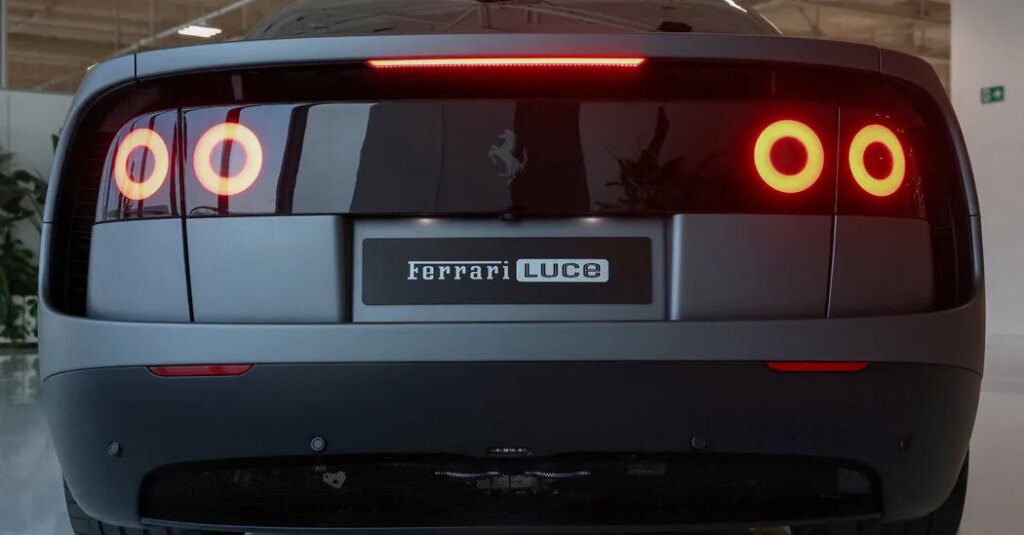
Ferrari Engineers Synthetic Growl for Luce Electric Car
Electric motors deliver instant torque and formidable power, but they lack the visceral growl of internal-combustion engines. To stand out, automakers are engineering complex acoustic identities for both the cabin and the street. Ferrari revealed its first all-electric car, named the Luce, in May.
The vehicle uses an accelerometer to pick up vibrations from the rotating components on the rear axle, which the system then amplifies and equalizes to generate a distinct growl that early reviewers note will not be mistaken for a V-12.
For mass-market electric vehicles, however, the acoustic priorities shift toward quiet comfort. Road and wind noise remain primary buyer concerns, prompting models like the Rivian R1S to emit a gentle electric-motor whir while the Chevy Equinox EV aims for near-total silence.
Jasper de Kruiff, a sound designer and co-founder of Impulse Audio Lab who has collaborated with automakers including Rolls-Royce, Hyundai, and Tesla, points out that manufacturers view sound as a vital tool for distinction.
Jasper de Kruiff, sound designer and co-founder of Impulse Audio Lab, said he thinks one of the most powerful ways brands can make themselves more distinctive is through experience, and that one of the most powerful tools for experiences is sound.
Personalized Audio Profiles Inside the Cabin
Cabin acoustics extend far beyond performance simulation. Luxury brands have long tuned interiors to reduce driving stress, utilizing active noise cancellation, acoustic glass, and quieter air-conditioning systems like those found in the Mercedes-Benz C-Class. Sound design now incorporates human memories and emotions directly into the vehicle architecture.
In the BMW iX3, which serves as a template for future electric vehicles from the brand, opening the door triggers a welcome song. This chime is composed from the voices of the car’s designers talking about the most joyful moments of their lives, remixed by BMW into a cohesive greeting.
“So whenever you open the iX3 there is a subtle whispering of layers of the designers of the car that are speaking to you,” Renzo Vitale, creative director of sound at BMW, said.
This philosophy feeds into the brand’s goal of human centricity. “I think cars are guests in cities worldwide, and they should behave,” Renzo Vitale, creative director of sound at BMW, said.
The Enduring Pull of Combustion Memories
Despite modern software integration and expansive digital displays, designers still look to historical combustion engines for inspiration. Porsche faced the challenge of eliminating frequencies that resembled dentist drills or streetcars. At the same time, designers who grew up with traditional engines often draw emotional inspiration from past racing history.
De Kruiff counts the 2003 Williams Formula 1 car, driven by a BMW V-10 engine, as his favorite automotive noise ever, while citing the original Lexus LFA V-10 as his favorite passenger car sound.
Toyota chairman Akio Toyoda mandated a radical redefinition of electric vehicle sound for the next Lexus LFA as part of his “no more boring cars” decree.
Toyoda, who transitioned from president and CEO to chairman of the board, reflects a hands-on leadership style shaped by his experience as an avid auto racing fan and test driver under the pseudonym Morizo Kinoshita, personally pushing the company to inject visceral emotion and character into its upcoming performance vehicles.
Jasper de Kruiff, sound designer and co-founder of Impulse Audio Lab, said sound is such a strong link to emotions and memories that he thinks it is absolutely inevitable that brands will dive deeper and deeper into that field and come up with some interesting solutions.
Keep reading

Alexander Murphy Says Tin Castle Reveals Traveller Stigma and Isolation
Ahead of its release in Irish cinemas, filmmaker Alexander Murphy has introduced his acclaimed new documentary Tin Castle,...

Hailee Steinfeld Confirms Return as Kate Bishop in Marvel’s ‘Avengers: Doomsday’
Delivered on a black director's chair with a green bow, Hailee Steinfeld's name confirmed her return as Kate...
Vietnam Electric Motorcycle Sales Surge 91% to 973,000 Units
Vietnam's electric motorcycle sales surged 91 percent in the first nine months of 2026, topping 973,000 units as...

Brendan O’Connor: Fatherhood Gave Me Clarity for ‘Able’ Series on Disability Employment
Broadcaster Brendan O'Connor argues in a new RTÉ interview that fatherhood gave him "massive clarity" about what matters,...