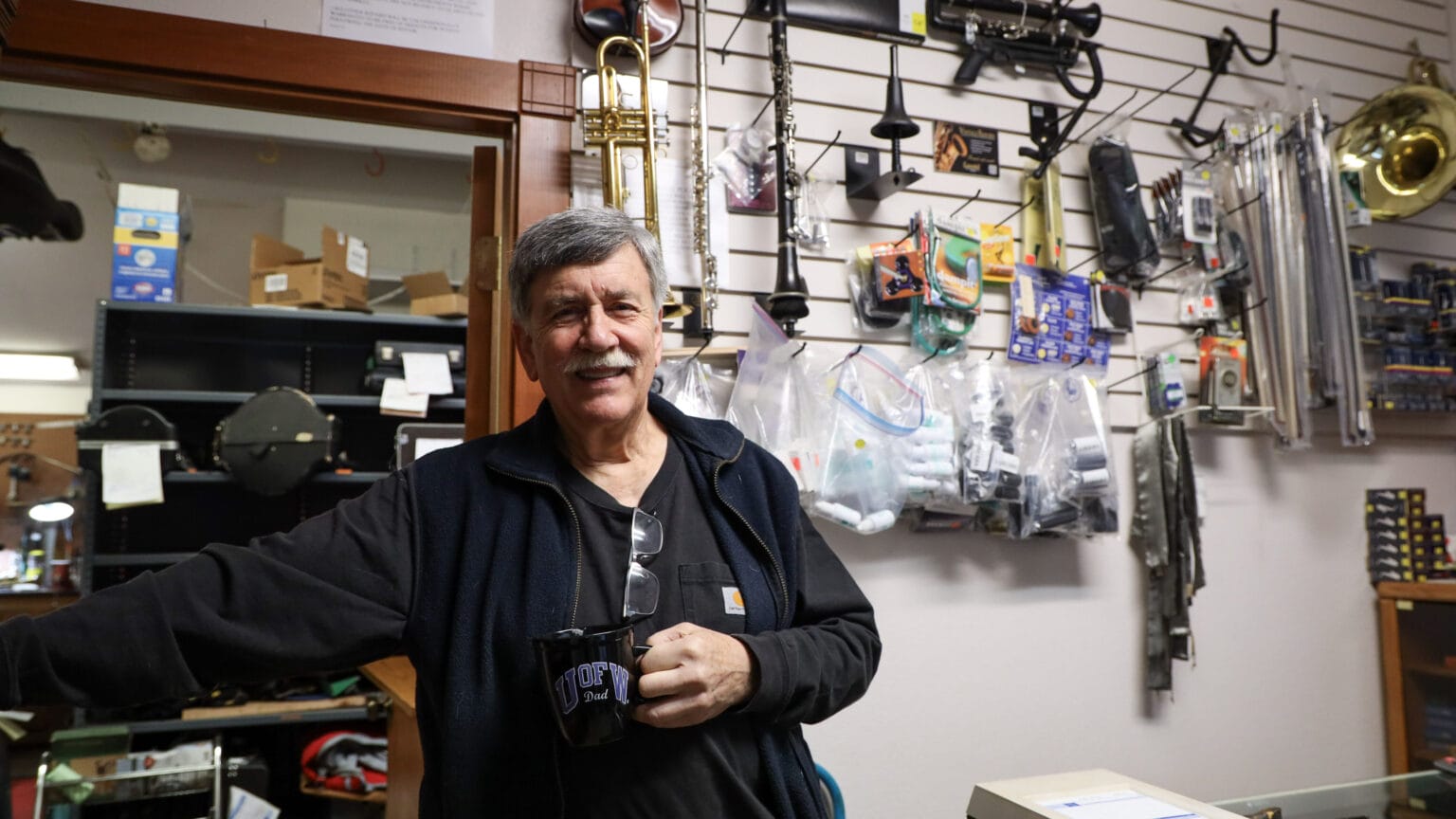
Bill Paulick finished his 14,628th instrument repair on Wednesday, a clarinet bound for Craig on Prince of Wales Island, and announced he will close Juneau Brass & Winds at the end of the year after nearly five decades, KTOO reported.
The shop has been a go-to repair stop for school districts and musicians across Southeast Alaska since 1978, saving them the cost and weeks-long wait of shipping instruments to Seattle or Anchorage.
“It may not look really pretty, but it’ll work great,” Paulick told KTOO. “That’s been my credo since we started this — we take an old instrument and make it play better than new.”
A valley operation that became a regional lifeline
Paulick started the business out of his Mendenhall Valley home while working for the state, building a reputation for resurrecting instruments others would scrap. He estimates the work has saved local musicians and districts thousands of dollars in replacements and rentals over the years.
Professional players jumping off cruise ships have detoured to his bench for same-day fixes before evening shows. Third-generation families now bring him horns he first worked on for their grandparents. “I am now working for third-generation people, where I am fixing instruments for students of students of students,” he said.
The parts yard on the fence line
Decades of holding onto “junk” created a donor network no catalog can match. Old horns are strapped to his fence; buckets of woodwinds sit in corners. When a Yamaha trumpet needs a lead pipe, Paulick walks outside with a torch and harvests one from a 1970s carcass. The system works because he knows every thread and solder joint on the property.
One repair involved a French horn lead pipe packed with K’nex bricks a younger sibling had tamped deep into the tubing. The girl had been trying to play through plastic toys for weeks. Paulick cleared it and sent her back to rehearsal the same afternoon.
What happens after December 31
The last day to drop off an instrument is Dec. 15. Paulick plans to stay in Juneau and hopes someone locally will take up the trade; he has offered to mentor a successor. Without a replacement, the nearest bench moves to Anchorage — a $200 freight bill and two weeks of silence for a student’s only horn.
“It was a piece of offshore junk. Basically, it was probably a 10-dollar garage sale, something that somebody had laying around their house for 30 years or something,” Paulick said of the clarinet he finished Wednesday. “And we made it playable.”

Terri Lyne Carrington to Curate 2027 Burlington Discover Jazz Festival
The Flynn announced Thursday that Terri Lyne Carrington will curate the 44th Burlington Discover Jazz Festival, set for...

Dane County DA Announces No Charges in Corey Ruiz Shooting; DOJ Releases Dashcam Footage and Files
Dane County District Attorney Ismael Ozanne announced Thursday that no criminal charges will be filed against Madison police...

Vermont Defends Five Straight Titles at Harold Anderson Invitational; Stonehill Posts Relay Times
Vermont arrives at the Harold Anderson Invitational on Thursday defending five straight titles, a streak built on margins...

Erin Napier painted her own 1930s kitchen in Sherwin-Williams Netsuke
Erin Napier painted her own 1930s kitchen in Sherwin-Williams Netsuke, a neutral yellow with khaki undertones she describes...