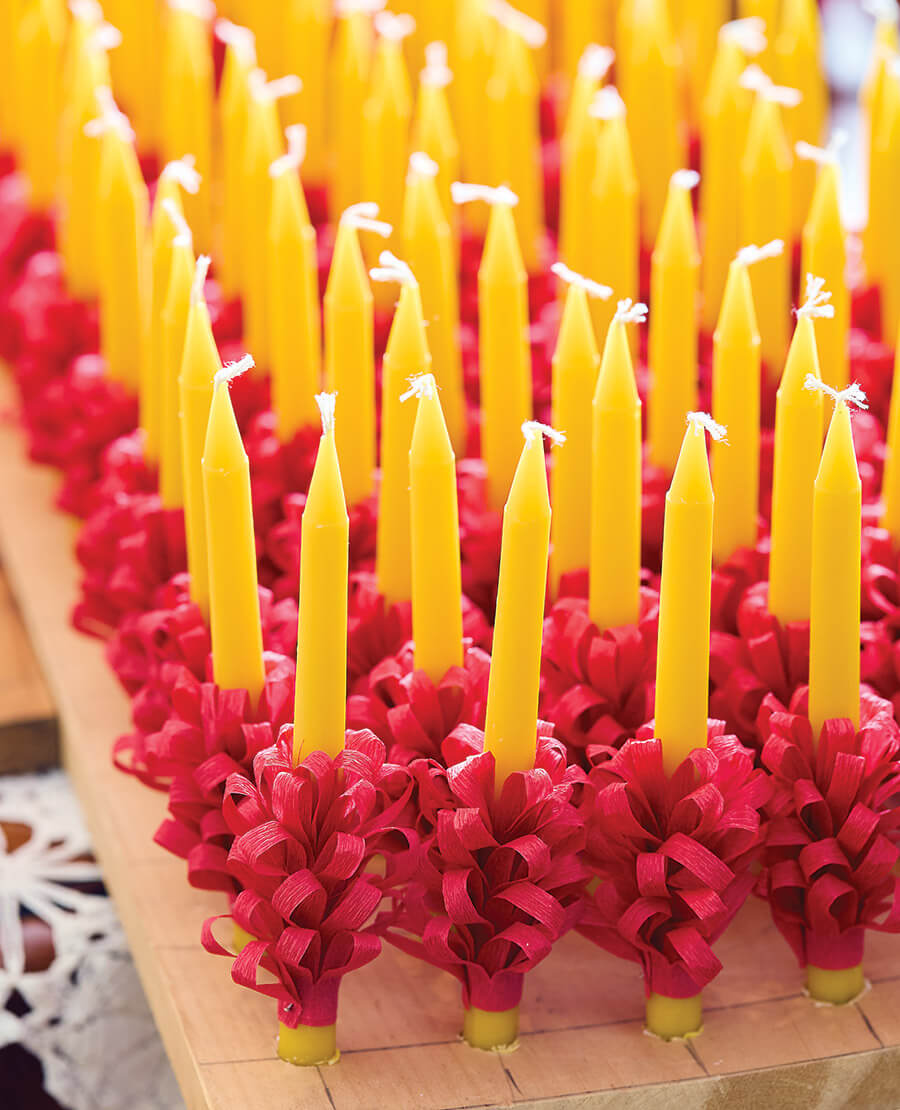
Bill Seippel has logged 43 years at the candle workshop, producing more than 750,000 tapers alongside tinware, wreaths and other festive items for congregations nationwide and at festivals across North Carolina.
The volume reflects a family trade that began with a childhood mishap in a Winston-Salem kitchen, where 8-year-old Bill dropped a coffeepot of melted votives and “couldn’t sit down for a week,” he told Our State.
Peter Blum Sr., Bill’s grandfather, was a tinsmith who made candle molds for many of North Carolina’s Moravian churches in the early 1900s. His uncle, Peter Blum Jr., became a master tinsmith for Old Salem in the mid‑1960s and supplied candles for Calvary Moravian Church lovefeasts.
In 1983, before he retired, Peter Blum Jr. asked Bill to take over the Calvary lovefeast order, hoping to keep the honorable profession in the family. The 2,500 tapers needed for that first Christmas were agreed to be made by Bill and his late wife, Anne. Word spread, and soon other churches began requesting orders.
The business now requires roughly 2,000 pounds of beeswax each year, sourced from North Carolina and the Midwest, then cleaned, strained and mixed with tallow.
“It takes 5,000 worker bees to produce even one pound of beeswax, so every little piece of wax is used,” Bill said. “It’s precious, and it took a living thing a whole lot of work.”
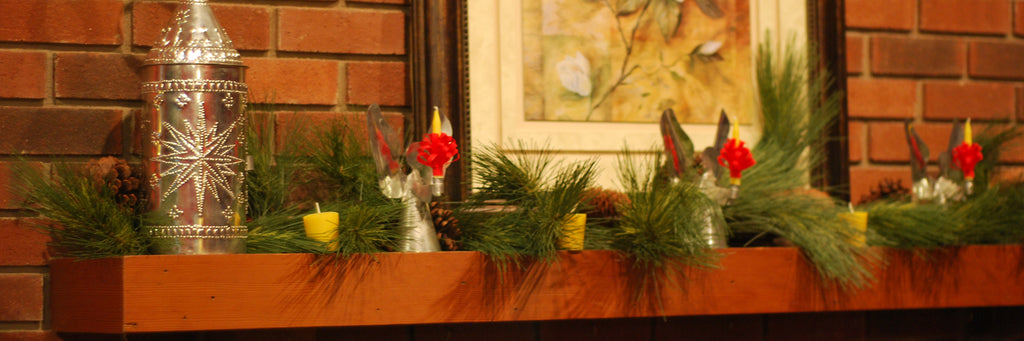
Rev. Linda Seippel, pastor of Bethania Moravian Church and Bill’s wife since Anne’s death in 2011, explained the symbolism: “Beeswax, considered the purest of all waxes, represents the purity of Christ. The red trim — called a skirt — symbolizes the blood of Christ. And when you light the candle, it’s a reminder that He’s the light of the world.”
At the Carolina Classic Fair, Salem Candle Works sets up in an 1800s log cabin in Yesterday Village. At the NC State Fair’s Village of Yesteryear, they may see hundreds of thousands of visitors. Beginning in September, Bill makes beeswax tapers six days a week for lovefeast services.
“Future generations need to see things beyond online orders, beyond what’s ‘auto-magically’ made,” Bill said. “I’ll string half a dozen molds, pour the wax, let them cool, set up two more rows, clip off the bottoms, tap the sides, then pull and pop, cut, and start over — and I’m talking to people the whole time.”
Stringing their tin molds took campers at Laurel Ridge Moravian Camp 35 minutes this year, a step that takes Bill’s trained hands less than 30 seconds. Linda shared that the Moravian Christmas candle custom began in 1747 in Germany and reached North Carolina by 1762, when lighted tapers were used in Christmas services at Bethabara and Bethania, now in Forsyth County.
The Seippels’ children have each learned the craft, as have their 15 grandchildren.
“One candle lights another, then another,” Linda said. “The light — His light — growing brighter than a single taper ever could.”
Baltimore County’s First Black Executive Julian Jones Outlines Public Safety, Education Priorities
Baltimore County Executive‑elect Julian Jones told the AFRO he was "humbled by the support" after defeating Republican challenger...

Cheyenne Forecast: Highs Upper 40s, Lows Mid-20s; Warmer Thursday, Windy Friday
Cheyenne will see high temperatures in the upper 40s and overnight lows in the mid-20s before a midweek...
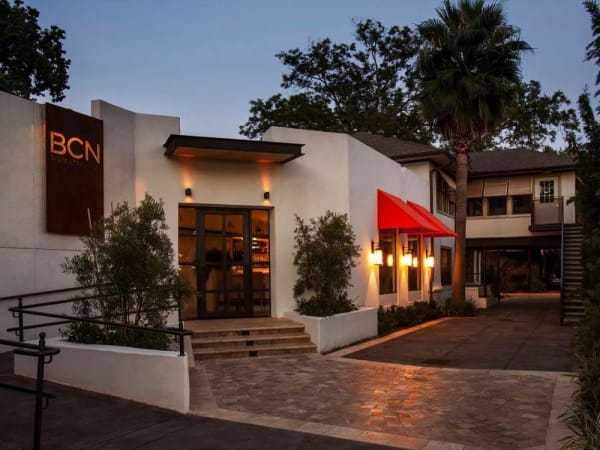
Only One Houston Restaurant Makes OpenTable’s 2026 Top 100 List
Only one Houston restaurant earned a spot on OpenTable's 2026 Top 100 list, released this week by the...

Saint Paul Requires Retail Registration Before Cannabis, Hemp Edible Sales
Saint Paul now requires cannabis and lower-potency hemp edible retailers to register with the city before making any...