
The finale of “Blade Runner 2099” concludes with the death of Julius and leaves the future of humanity uncertain as Cora survives and appears to undergo a transformation.
While Elias’ ultimate fate remains unknown, the series concludes with the central characters, Olwen (Michelle Yeoh) and Cora (Hunter Schafer), navigating a world where the boundary between human and replicant remains permanently blurred. The climax at a Tyrell Off-World Launch complex sees Olwen and Cora confront Julius (Sam C. Wilson/Tom Burke), the last living Nexus-1, who had successfully stolen the genetic blueprint for his original model. According to TVLine, Julius had previously used this data to kill and “rebirth” his partner, Clotilde (Amy Lennox), as a Nexus-1. During the final confrontation, Julius destroys the memory containing the secrets to the design. Olwen kills Julius, but not before he delivers a fatal blow to Cora, IGN reports. Despite the destruction of the memory, Olwen’s life is saved through the intervention of Clotilde, who had memorized the process. Olwen is transformed into a Nexus-1, granting her the extended lifespan she desired.
She is last seen departing Earth on a spacecraft, heading “for the stars,” according to GamesRadar+. Cora’s journey concludes at the LAPD, where she undergoes a Voight-Kampff test overseen by Greta (Katelyn Rose Downey). While the premiere episode established that Cora lacked empathy, the finale shows a shift in her character. Following her experiences and her bond with Olwen, Cora displays a complex response to the test.
GamesRadar+ notes that she fails the exam but manages to manipulate Greta into withholding the results from the LAPD, prompting a restart of the assessment. Series creator Silka Luisa emphasized that the show’s conclusion reflects the noir roots of the franchise rather than a traditional revolution narrative.
“It’s really just capitalism, and you’re in a noir world where no one is coming to save you,” Luisa said. “This is the status quo, and you have to carve out your own future within these new circumstances.”
The Path to the Finale
The final episode opens with an old Tyrell advertisement for Nexus-1 replicants before shifting to the spacecraft launch facility where Julius established his lair. Upon arrival, Cora and Olwen encounter Hodge, one of Julius’ lackeys who had already been transformed into a Nexus-1.
After a scuffle in the bunk rooms where Cora’s hand is broken by Clotilde, the protagonists manage to kill most of the newly rebirthed group. Olwen eventually encounters Clotilde, who trips near a drop-off, leading Olwen to choose to save her enemy’s life—a moment of empathy that proves pivotal.

In the city, Elias and Bebeto search for Ray, the man who originally contracted Cora to retrieve the Tyrell memory. They discover a business selling Nexus-1 upgrades and learn that Ray is a replicant employed by the Tyrell Corporation.
According to GamesRadar+, Ray intended to use the memory to manufacture more Nexus-1 units and convert humans into replicants. He attempts to convince Bebeto to betray Cora and join the corporation. Meanwhile, Elias broadcasts a false claim that he destroyed the replicant birthing center, hoping to incite a human uprising that never materializes.
Elias Attempts to Incite Human Rebellion
While Cora and Olwen pursued Julius in the wasteland, Elias and Bebeto sought out Ray, the man who originally hired Cora to retrieve the Tyrell memory. According to TVLine, the pair discovered a business selling Nexus-1 upgrades and learned that Ray is a replicant working for the Tyrell Corporation.
GamesRadar+ reports that Ray intended to use the memory to manufacture additional Nexus-1 units and convert humans into replicants, even attempting to recruit Bebeto to his cause.
The plot details for 'BLADE RUNNER 2099' have reportedly been revealed: In Los Angeles 2099, Cora lived her entire life on the run, a chameleon forced to adopt numerous identities. To secure a stable future for her brother, she assumes one final identity and is forced to partner… pic.twitter.com/cyPdWFEBS6
Desperate to reclaim control for humanity, Elias hijacked the airwaves to broadcast a false claim that he had destroyed the replicant birthing center, an act actually committed by Julius. As noted by Variety, Elias hoped this fabrication would spark a human uprising against the replicants. However, the rebellion failed to materialize, and the replicants retained their grip on the city.
Clotilde Facilitates Olwen’s Final Transformation
During the final confrontation, Julius destroyed the memory, leaving his own knowledge of the Nexus-1 process as the only remaining path to immortality. GamesRadar+ reports that after Olwen killed Julius, Clotilde revealed she had also seen the memory and understood the procedure. This process required Olwen to be killed and then “rebirthed” as a Nexus-1, an operation that occurred off-screen.
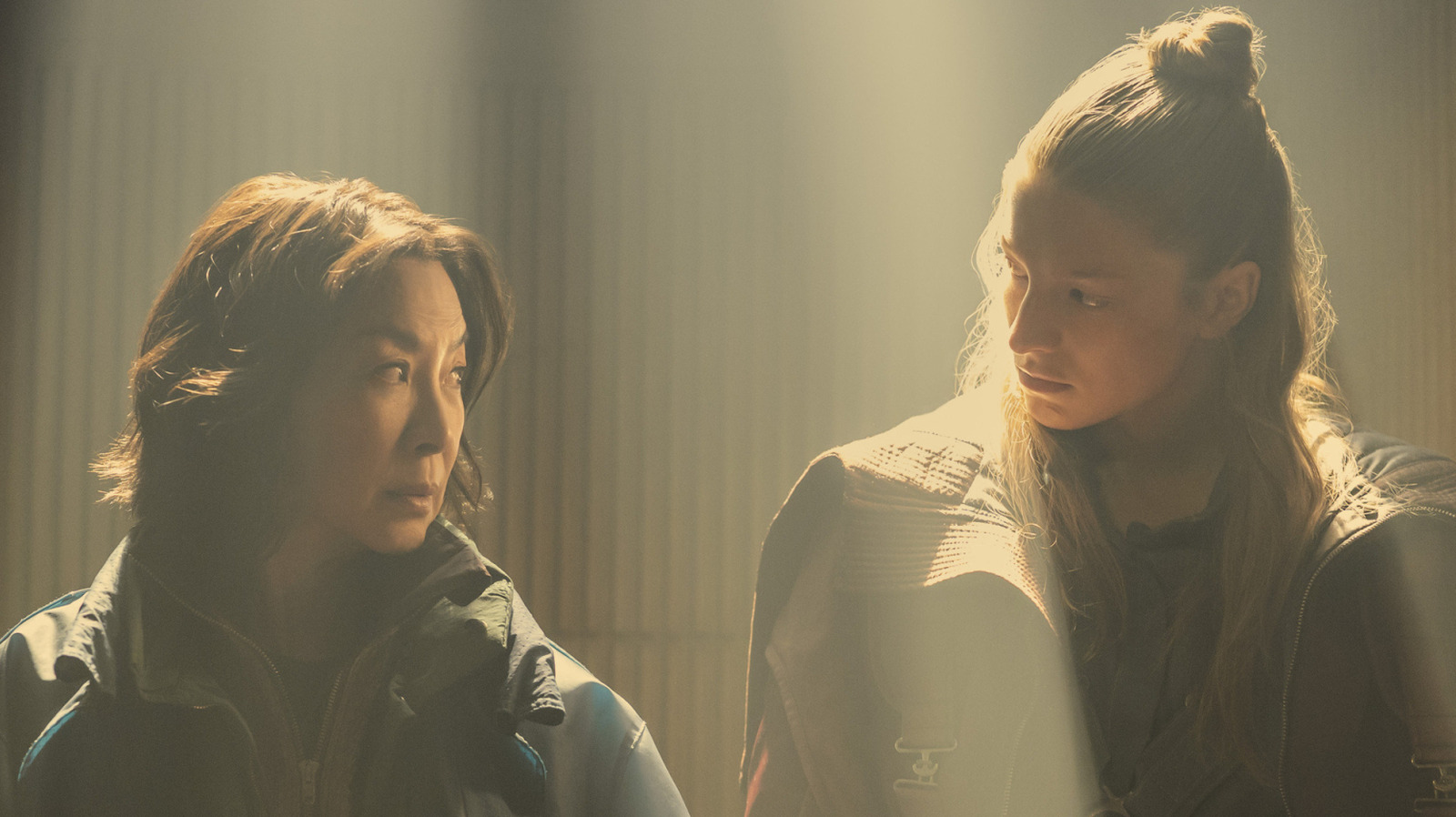
Following her successful transformation, Olwen departed Earth in a spaceship capsule to travel toward the stars, a destination that served as a reference to Marek’s past teachings. Variety confirms that this upgrade granted Olwen the extended lifespan she had been seeking throughout the series.
Meanwhile, Cora returned to the LAPD, where she faced a Voight-Kampff test administered by Greta. Although Cora failed the exam, she manipulated Greta into withholding the results, allowing for a restart of the assessment.
Creator Intentions
Reflecting on the narrative structure, Luisa compared the storytelling to the franchise’s history. “It’s the same as with ‘Blade Runner 2049,’ where I was like, ‘I think this is what happens four months later.’ I’m sure everyone had different ideas,” Luisa said.
Regarding the antagonist’s motivations, the creator noted the underlying themes of divinity and control. “Those two things didn’t seem like they fit, and so I was thinking, ‘What was his original intention when he made replicants?’ He seems to have such a God complex,” Luisa said.
The series maintains the franchise’s commitment to a sprawling metropolis, grounding its narrative in the familiar urban decay of Los Angeles. While the earlier entries explored the city’s neon-drenched streets, this iteration highlights the enduring scale of the region, which covers about 469 square miles.
By situating the climactic police station scene within this vast, 12.9 million-person metropolitan area, the show reinforces the sense of isolation and systemic control that has defined the setting since the city’s incorporation in 1850.
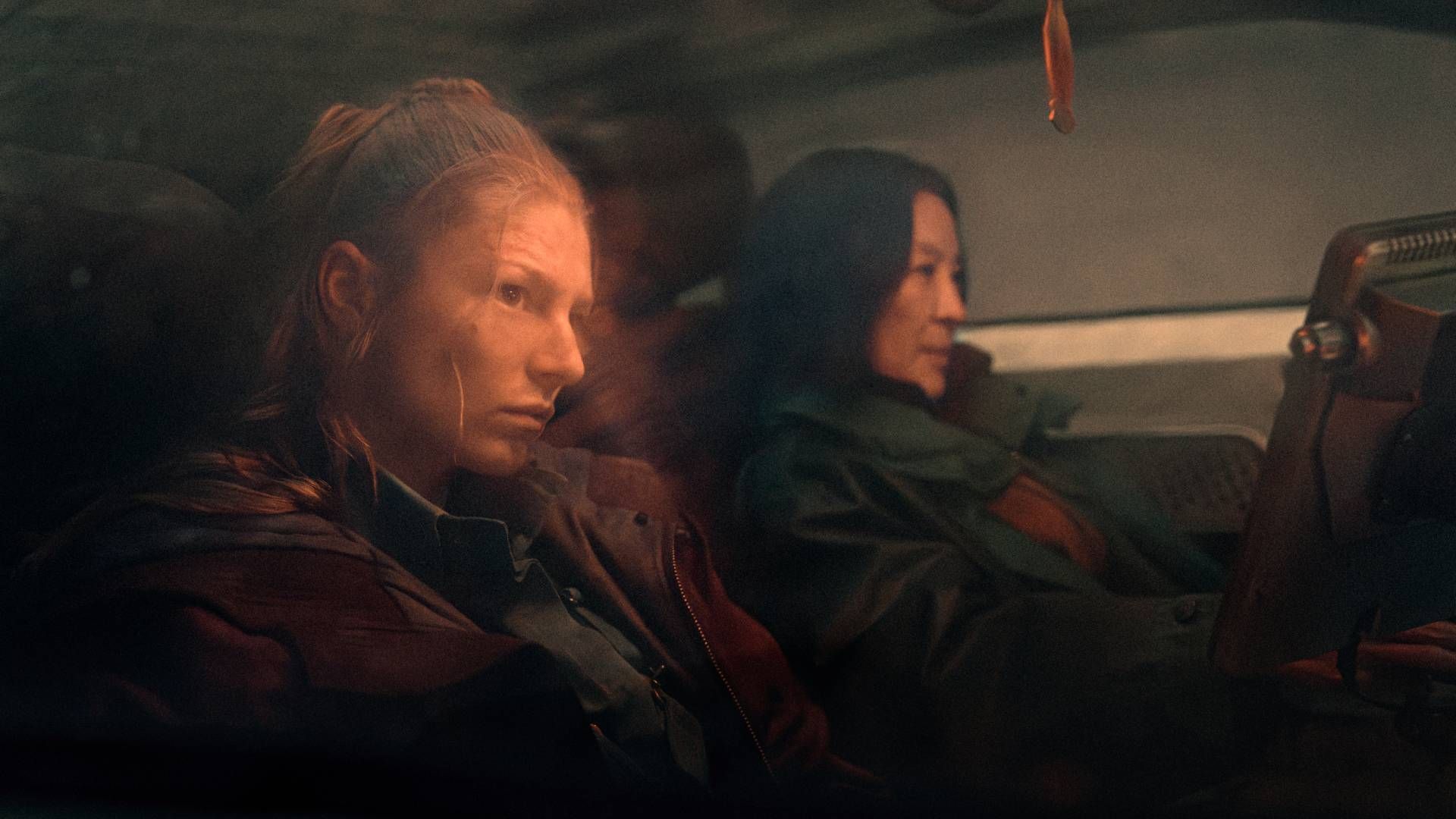
The series ends with Olwen off-world, potentially near the Tannhäuser Gate, while Cora’s status remains ambiguous at the police station. Though she fails the empathy test, her physical appearance has shifted, with bright blue eyes and slicked-back hair, leaving the audience to question her true nature.
Related reading
Fury vs Joshua set for Dec 12 in Cardiff with 1am ring walks
The fight remains in jeopardy after a Netflix documentary claimed Tyson Fury had been diagnosed with schizophrenia. The...
LPSO Inmate List: Real-Time Database Tracks East Baton Rouge Detainees
The LPSO Inmate List functions as a real-time digital database operated by the local sheriff's office to track...

LAFC Hosts Saint Louis City SC in Western Conference Semifinals
Los Angeles FC hosts Saint Louis City SC in the Western Conference semifinals on Saturday at 8:30 p.m....

Teen Admits Conspiracy to Mass Shooting at Marion County Elementary School
A 17-year-old admitted to conspiring to carry out a mass shooting at an elementary school in Turner, according...