Nearly three-quarters of former NFL players who died between 2008 and 2013 were found to have CTE, Boston University researchers reported, a figure that has long haunted the men who played the game.
Now, two studies published in JAMA suggest a blood test could finally detect that disease in the living.
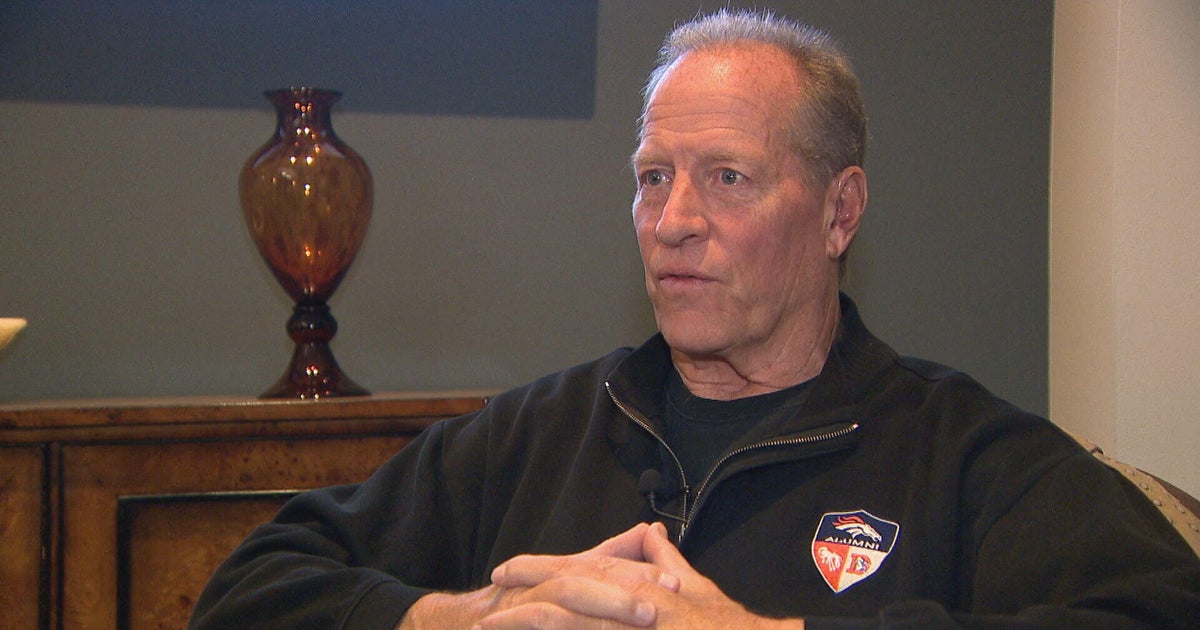
For decades, chronic traumatic encephalopathy has been a postmortem diagnosis — confirmed only by slicing into brain tissue after death. That finality shaped how former players like Nate Jackson and Ron Egloff, both former Denver Broncos, have waited and wondered. “It seems like a death sentence,” Jackson told CBS News. “It seems like we’re counting down the days until we lose it all.”
The new research, led by Boston University and Banner Health and published Thursday, examined blood samples from 21 former football players who later donated their brains. Autopsies confirmed advanced-stage CTE in most of the 12 professionals, four college players, and one high school player studied.
The blood draws, taken while they were alive, revealed elevated levels of a specific tau protein fragment — endogenously cleaved microtubule-binding region tau, or eMTBR-tau — that correlated with the disease. A separate Washington University study in St. Louis, published last Friday in the same journal, identified the same biomarker in 11 cases.
Biomarker shows promise only in advanced CTE stages
Michael Alosco, co-director of clinical research at the BU CTE Center and co-senior author of the BU study, called the finding a potential “game changer” for clinical research.
“I’m cautiously optimistic that we can really understand this finding and move it forward in the next five years or so,” Alosco told ESPN. But the test showed promise only for advanced stages of CTE. In early stages, where the disease is often symptom-free, the biomarker did not reliably appear.
That limitation frames the immediate stakes. CTE severity increases across four stages; early stages may carry no symptoms, while advanced stages bring memory loss, confusion, depression, irritability, and severe mood swings. The BU study found the highest protein concentrations in five donors who had both CTE and Alzheimer’s disease.
“We are still in the discovery phase and it’s a small sample size,” Alosco said in a statement. “But if future studies validate these findings, this blood test will allow us to detect CTE with a high level of accuracy and open the doors to clinical trials and treatment.”
A can of worms for the living
For the generation that watched Junior Seau’s suicide in 2012 — he shot himself in the chest to preserve his brain for study — the prospect of a living diagnosis is not purely hopeful. “I think when Junior Seau died, it made all of us take a step back and really assess our own brain health, but it didn’t give us any answers,” Jackson said.
Egloff, who has already participated in CTE studies nationwide, plans to contact the Boston labs. “We all know it’s in our future anyway, you know. But how soon? Nobody knows,” he told CBS News.
“You get a hold of me today and said, you know, they’ve come up with this deal where they can find it in your blood test in current players or while you’re still living, and I thought, ‘Wow, well, this opens up a whole can of worms now.'”
The worms are practical and psychological. ESPN surveyed more than 30 current and former NFL players last summer about whether they would take a CTE test if one existed. Washington Commanders quarterback Marcus Mariota said he would, to inform players at every level. Minnesota Vikings safety Joshua Metellus said he probably would not while still in the league: “I think it’ll change the way I play.”

From pledge to participation
The research pipeline depends on players like Matt Hasselbeck. The three-time All-Pro quarterback, 18-year NFL veteran and former Seattle Seahawks starter pledged his brain to BU in 2020, following his father, former New England Patriot Don Hasselbeck, who made the same commitment before his death in 2025.
“My dad led the way,” Hasselbeck told The Brink. “I was committed to pledging my brain to somebody upon my death, but I needed someone I could trust, because I only have one brain to give.”
Hasselbeck later joined the BU-led DIAGNOSE CTE Research Project as an ambassador, recruiting men over 50 who played college or pro tackle football for neurological exams. The center now holds more than 1,800 donated brains. The BU study published this week drew directly from that repository — 21 donors who gave blood in life and brains in death.
No test or treatment specific to CTE has been approved by the U.S. Food and Drug Administration. Brain-scan approaches have been attempted since 2017 but remain unvalidated for clinical use. The blood biomarker, if validated in larger cohorts, would be the first scalable tool to move CTE diagnosis from the morgue to the clinic.
“As soon as I get the word, I’m going down and getting tested, for sure,” Egloff said.

SC Sen. Tom Davis Accuses Health Agency of Violating State Law Over Marijuana Rescheduling
South Carolina Sen. Tom Davis (R) sent a formal letter to the Department of Public Health on Thursday...

Skydance Merger Prompts Buyouts at Boston CBS Affiliate WBZ-TV
Three employees at WBZ-TV have already accepted voluntary buyouts with a final workday of Dec. 4, the latest...

Arkansas Guard Jordan Smith Out vs. Mississippi Valley State With Wrist Inflammation
Arkansas freshman guard Jordan Smith missed Friday night's 92-48 win over Mississippi Valley State with wrist inflammation, leaving...

AHFC Warns Alaskans of Housing Scams Using Fake Emails, Spoofed Calls, Bogus Social Media
Scammers targeting Alaskans hunting for housing assistance are increasingly spoofing the Alaska Housing Finance Corporation, using fake email...