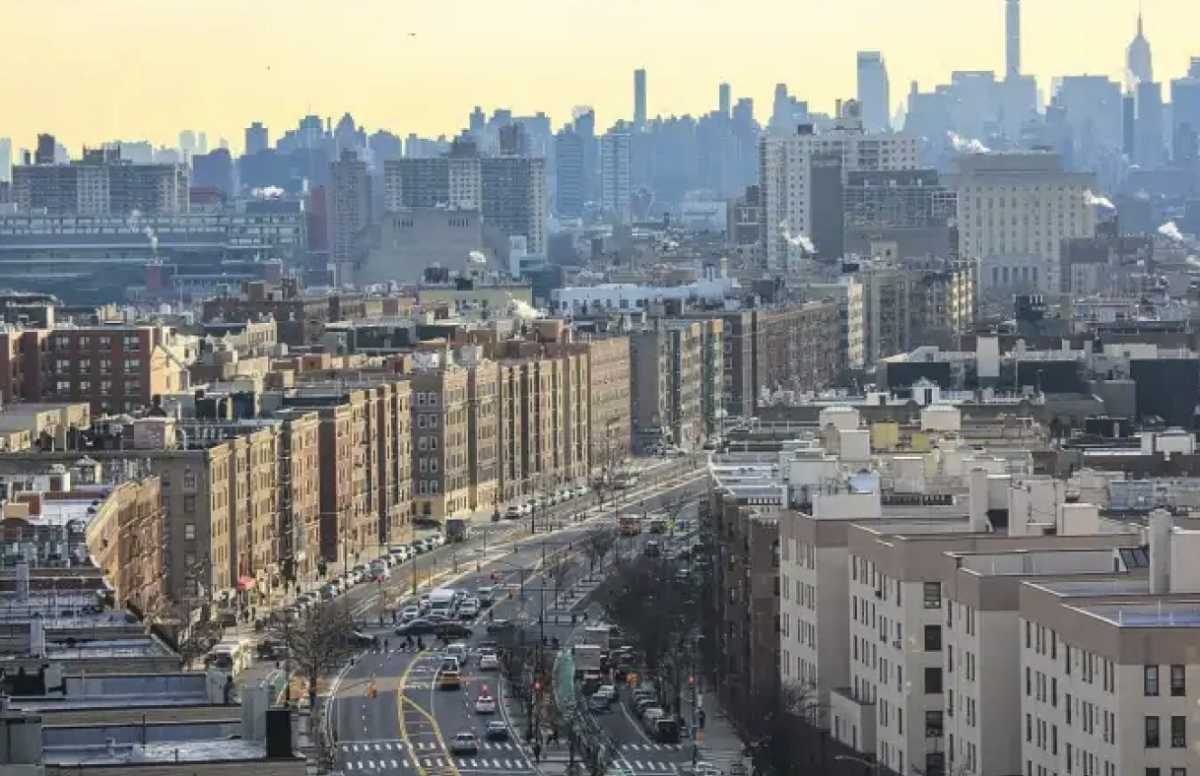
Major crimes fell by 11.6% in the Bronx compared to the same period last year, according to NYPD figures reported at the beginning of November by the Bronx Times.
Crime Rates and Public Safety
The NYPD reported the lowest number of shootings, murders, and robberies in the city’s recorded history at the start of November. Crime rates have dropped 75% since the late 1970s and early 1990s, according to thenexus.news. Yet that historical era’s reputation for job loss and ravaged neighborhoods still stays in the national consciousness, and national news outlets often report on the borough mainly when horrendous crimes occur.
“What I tell my fellow Bronxites, is that we have to be storytellers about the Bronx. We have to tell positive stories, we have to talk about the good things that are happening here,” Vanessa Gibson, Bronx Borough President, said in an interview with the Bronx Times.
Gibson noted recent tragedies such as an ICE shooting in Marble Hill and a domestic violence incident involving a mother and her baby in an effort to show that such events are not normal.

Housing and Waterfront Development
Developers are investing millions in affordable housing projects across the borough. In Hunts Point, The Peninsula opened its second phase on the former Spofford Juvenile Detention Center site, adding 359 affordable apartments, community space, an early childhood center, and a 15,000-square-foot city-owned grocery store expected to open on Thanksgiving 2027.
Morrisania’s proposed River Commons development is planned to bring 328 affordable and supportive apartments with health care services and public green space, while the West Concourse will see 292 affordable homes added through River Avenue Apartments II.
Despite hundreds of millions in investment, business owners along the Harlem River waterfront report slow growth due to limited foot traffic and a steady stream of new renters. globeverge.com said that waterfront development in neighborhoods like Mott Haven has yet to blossom into a Long Island City or Williamsburg style hotspot.
Dr. Steven Payne, Director of the Bronx Historical Society, told the Bronx Times that traveling through Mott Haven is difficult because the Major Deegan Expressway cuts the neighborhood in half.
“It’s taken a long time for Mott Haven to stick,” Payne said. “It’s still a heavily neglected borough. But we’ve seen in the past 20 years various attempts to reclaim the Bronx.”
Schools and Capital Investments
The city opened two new public schools for the 2026-27 academic year. The Bronx School of Arts & Exploration serves kindergarten through second-grade students with autism and intellectual disabilities, while the Bronx School of Hip-Hop welcomed its first class of ninth-grade students to study emceeing, DJing, graffiti art, and breaking alongside traditional subjects.
Funding totaling $24.4 million was designated for Ittner Place by City Council Speaker Julie Menin and Council Member Oswald Feliz in August 2026, aimed at turning vacant lots underneath the Cross Bronx Expressway into three new parks alongside the Harlem River Greenway initiative linking Van Cortlandt Park and Randall’s Island. Borough President Gibson also directed capital budget funding toward local resources.
| Capital Allocation Category | Funding Amount |
|---|---|
| Education | $35.2 million |
| Affordable housing and NYCHA buildings | $7 million |
| Community centers | $6.7 million |
| Hospitals and clinics | $4.2 million |
Community Future and Identity
Community leaders emphasize that these improvements should serve existing residents rather than push them out. Mark Naison, who oversees the Bronx African American History Project as a professor of History and African American studies at Fordham University, mentioned in an interview with the Bronx Times that a massive influx of outside residents coming into the borough is unlikely.
As Bronx Borough President since 2022, Vanessa Gibson has focused her platform on recovering from the impacts of COVID-19, housing instability, and food insecurity.
Previously serving as a New York City Council member representing the 16th district from 2014 to 2021 and chairing the council’s public safety committee, she has directed capital budget funding toward local resources, allocating $35.2 million for education, $7 million for affordable housing and NYCHA buildings, $6.7 million for community centers, and $4.2 million for hospitals and clinics.
“There’s no Bushwick in the making in the Bronx,” Naison said.
Heart Surgeon Dr. Jeremy London Lists Habits to Cut Dementia Risk After Heart Attack
Middle-aged adults may reduce their risk of developing dementia by following five specific health habits, according to heart...

Calls Intensify to Remove Trump Envoys From Ukraine Talks Over Kushner Putin Praise
Calls are intensifying for the removal of Donald Trump’s peace envoys from Ukraine negotiations following a series of...
HSE Warns of Winter Flu Spike After 300 Deaths as Positivity Rises
The Health Service Executive has warned of a coming winter spike in influenza and Covid-19 after confirming that...

Pulau Ubin Chairs Removal Sparks Public Debate Over Benches and Rules
“Pulau Ubin Chairs” The National Parks Board (NParks) has issued notices for the removal of chairs along a...