Boston University researchers published a study Thursday in the Journal of the American Medical Association identifying a blood protein that distinguishes advanced chronic traumatic encephalopathy from early-stage or absent disease, a first step toward diagnosing the condition in living patients.
The study analyzed blood samples from 21 former football players drawn while they were alive and compared them with autopsy results after their brain donations. Eighteen of the 21 were found to have CTE; 16 of those cases were high-stage, classified as McKee stage 3 or 4, while two were low-stage.
Concentrations of endogenously cleaved microtubule-binding region tau, or eMTBR-tau, were significantly higher in the high-stage group than in those with low-stage CTE or no CTE.
“This is a real study of hope,” said Michael Alosco, co-director of clinical research at the BU CTE Center. “For years now we’ve been trying to find a way to detect and diagnose it during life. And with this study, it brings us one step closer to being able to do that.”
“Because if this study holds up with future research, if we validate it, then you’re talking about a biomarker that can help us to detect it during life,” Alosco said.

The finding arrives as prevalence estimates climb. A separate BU study released earlier this fall concluded that nearly 75% of former NFL players who died between 2008 and 2023 likely had CTE, the highest estimate to date.
The biomarker that separates CTE from Alzheimer’s
Researchers also measured p-tau217, a blood marker already used to detect Alzheimer’s disease. That protein was elevated only in the five participants who had both CTE and Alzheimer’s, not in those with CTE alone. The distinction suggests a future blood panel could differentiate the two neurodegenerative diseases, which share symptoms such as memory loss and mood changes. Concentrations of eMTBR-tau were highest among those with both diseases.
“Having blood tests that accurately determine the underlying pathology, which are now approved for use, has been revolutionary in the way we diagnose patients and design therapeutic trials that aim to combat Alzheimer’s disease,” said Nicholas Ashton, senior director of Banner Health’s Fluid Biomarker Program and co-senior author. “With this new study, we are optimistic that the same will be true for CTE.”
A second, independent research team published a companion study in the same issue of JAMA reporting elevated plasma eMTBR-tau243 in autopsy-confirmed CTE cases, using different methods and a different cohort. The convergence strengthens the association between the marker and the disease.

From discovery to clinic: the road ahead
The participants ranged across playing levels: 12 professional, seven college, and two high school athletes, enrolled in BU research projects between 2008 and October 2026. Eleven of the 12 pros, four of the seven college players, and one of the two high school players had high-stage CTE.
One participant was Ron “Bogie” Edwards, a former Utah State football and basketball player who also played in the Canadian and Continental football leagues and tried out for the Denver Broncos. He died last year at 79 with advanced CTE.
“I am so excited that my dad’s final contribution to the world can potentially help millions,” his son, Rogue Edwards, said. “He always tried to help others, and I am so thankful for the work the BU team has been able to do.”
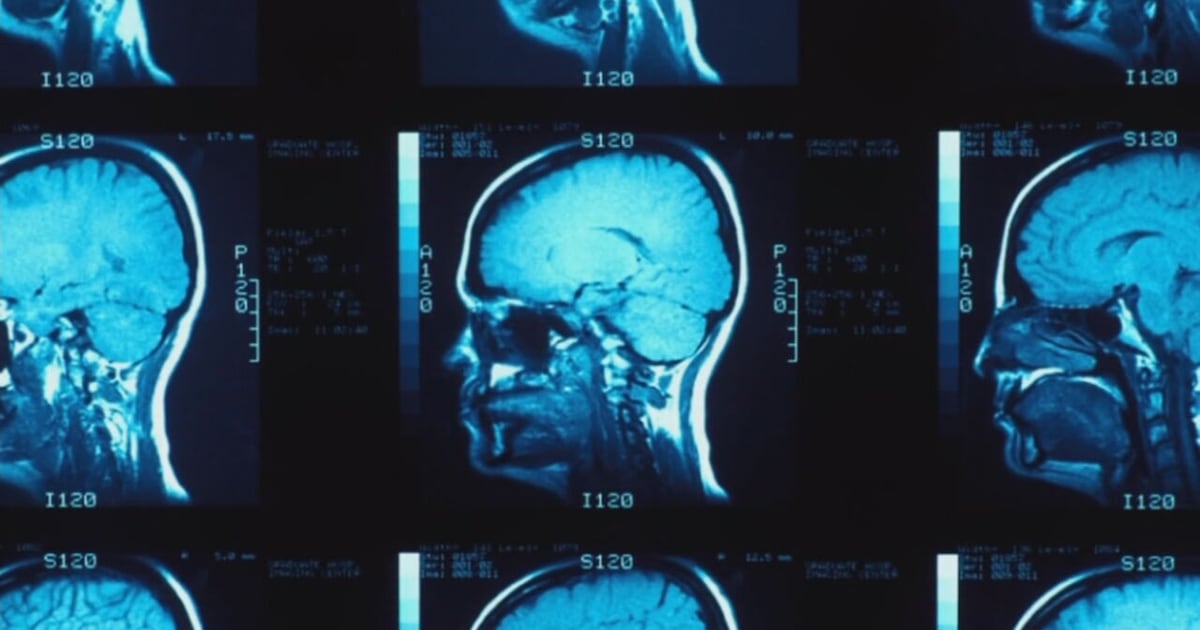
Alosco cautioned that the test remains in the discovery phase. The sample is small, low-stage cases were few, and age-matched controls were lacking.
“We really need to do more studies to confirm this finding, better understand this finding, and then get this on a path where hopefully we can bring it to patients one day,” he said. He estimated that, if validation holds, a test could move toward FDA review within five years.
“But this is a really exciting step, and it is a big breakthrough,” Alosco said. “If we can validate our findings and this holds up, it’s gonna really change the landscape of clinical research and clinical care.”
Michael Alosco, a licensed clinical neuropsychologist, earned his doctorate from Kent State University in 2015 and completed postdoctoral training at Boston University’s Alzheimer’s Disease Research Center and CTE Center under NIH awards.
He leads the FIND-CTE and SAVE studies, collaborative projects with the University of California, San Francisco, that evaluate PET imaging and other neuroimaging techniques to detect CTE and related pathologies from repetitive head impacts. In 2021 he received the Boston University School of Medicine Spivack Emerging Leader in Neuroscience Award.
Without a living diagnosis, clinical trials for CTE treatments cannot recruit or monitor patients. A validated blood test would change that, opening the door to therapeutic development for a disease currently managed only symptomatically. “This is what we ultimately need to really kind of launch clinical trials,” Alosco said.
Keep reading
- Lawmakers Question 8 Star’s Pipeline Land Rights Conversion Request
- Cheyenne Schools Locked Down as Police, U.S. Marshals Arrest Escapee
- 3.6% for Social Security, 2.6% for FERS, and a Bill Still Pending for VA (daybreakwire.com)
- Tofacitinib Curbs Interferon Signaling in Down Syndrome Phase 2 Trial (archyde.com)
Lawmakers Question 8 Star’s Pipeline Land Rights Conversion Request
Lawmakers questioned 8 Star's request to convert land rights for a pipeline corridor the state and Glenfarne Group...

Cheyenne Schools Locked Down as Police, U.S. Marshals Arrest Escapee
Three Cheyenne schools went into lockdown Thursday morning as police and U.S. Marshals hunted a 19-year-old escapee from...

Central Florida Braces for Up to 30 Inches of Rain Across Multiple Counties
Daytona Beach had already swallowed nearly seven inches of rain by Wednesday evening, and the heaviest bands were...

Austin City Council Accepts $25M for Lady Bird Lake Boardwalk After Years of Disputes
Austin City Council accepted a $25 million state payment for a Lady Bird Lake boardwalk Thursday, ceding to...