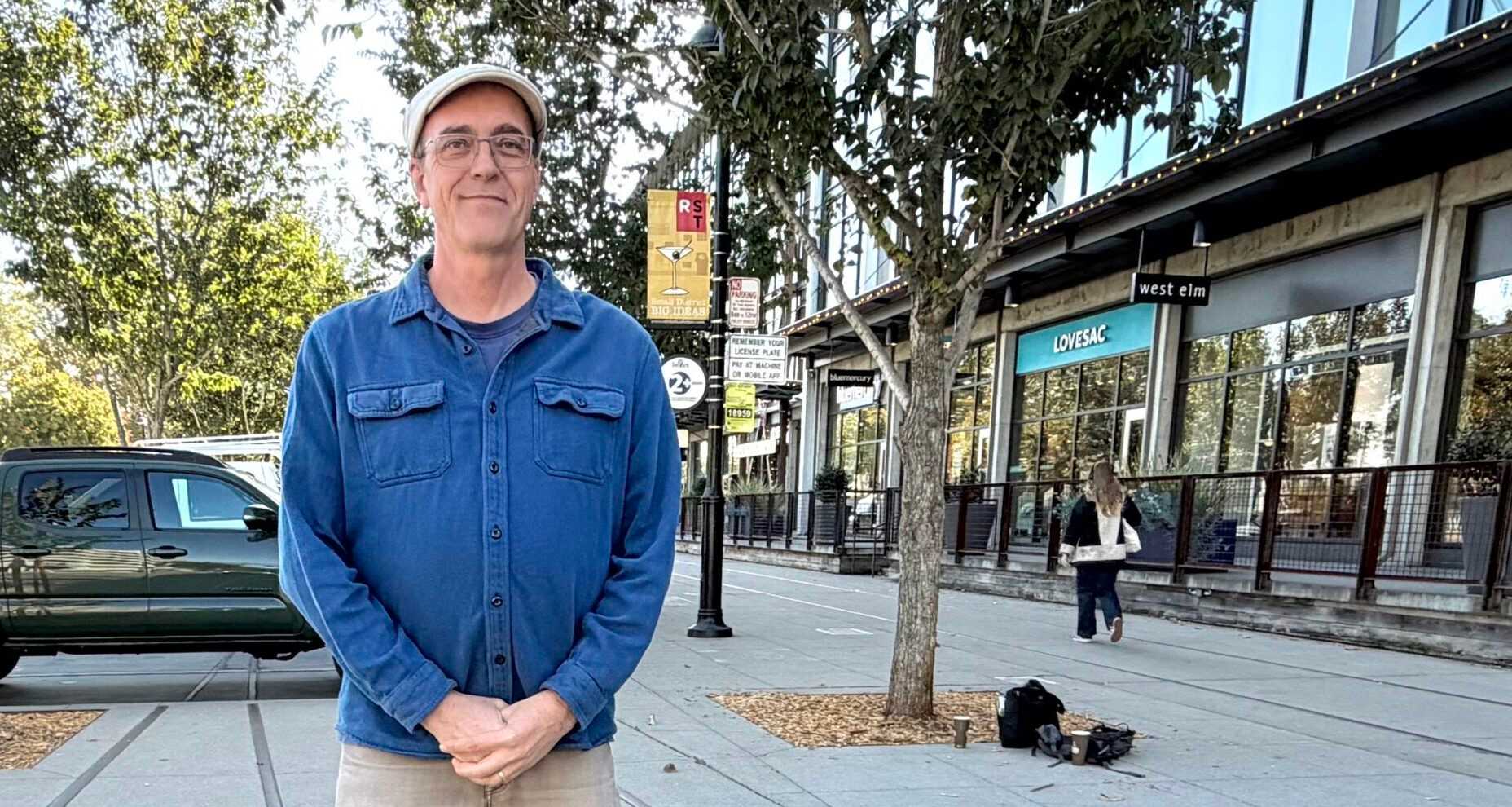
Historian Andrew McLeod says a Gold Rush industrial hub the size of a sports stadium lies buried beneath the levees near Old Sacramento, erased by flood control projects and decades of land disputes, Abridged – PBS KVIE reported.
McLeod, co-author of “Lost Gold Rush Towns of Sacramento” with James C. Scott and Eric Webb, calls the area “Older Sacramento.” It sits on an eight-acre tract known as Slater’s Addition near the I Street Bridge. The combined footprints of the Sacramento Gas Works, Pioneer Flour Mill and an ice company that shipped Alaskan glacier ice totaled nearly eight acres before the Great Flood of 1862 triggered massive levee building and a project that raised downtown streets by a full story.
“The strangeness of this large-scale disappearance can’t be overstated. Imagine future Sacramentans being confused about the location of the current Golden 1 Center,” McLeod said.
Only the flour mill’s brick shell remains visible today. McLeod uses 170-year-old maps on the Jedediah Smith Memorial Trail to match modern property lines with the vanished parcels. He points to a pockmarked column of bricks and crumbling mortar as the tip of an iceberg far below.
The physical erasure followed a decades-long war over land ownership. After the Squatters’ Riot of 1850, nearly every parcel faced multiparty lawsuits. In 1868, speculator William Muldrow produced a deed signed by Johann Sutter Jr. challenging ownership of huge downtown areas. The Sacramento Daily Union published a front-and-back-page list of more than 700 property lawsuits filed in two weeks. County assessor records from 1850 to 1870 then vanished, wiping out the first 20 years of ownership history.
A 1915 Sanborn Company map shows a tract of homes that disappears entirely from subsequent maps with no explanation. The Sacramento Railyards were later built atop the filled-in Sutter Lake, known as China Slough.
Levee remediation north of the I Street Bridge went unfunded by co-sponsors including the Central Valley Flood Protection Board, Sacramento Area Flood Control Agency and the California Department of Water Resources, said Lt. Col. Kara Greene, spokesperson for the U.S. Army Corps of Engineers South Pacific Division. Corps work continues through 2027, including three miles of improvements along the Sacramento River in West Sacramento. Environmental impact studies require work to halt if important relics or human remains are uncovered.
In 2015, construction companies in Yolo County were accused of hiding Indigenous human remains to keep a residential development on schedule. McLeod suggests putting cameras on excavation equipment to aid discovery.
“Our area has had a history of displaced riverbank communities,” Webb said.
“Not only at Slater’s Addition, but places like Brighton, Sutterville and areas of Folsom. Layer over that the building of the freeways over established Sacramento neighborhoods, and the story is the same. We need to be aware of all of the issues of power and displacement: who makes the choices.”
“Progress has to happen,” McLeod said. “We just need to do it with our eyes wide open.”
Keep reading
South Dakota Road Trip: Badlands to Rushmore | WorldHotels – Best Western
South Dakota stretches wide with landmarks that have earned legendary status through genuine grandeur, Best Western reported. Mount...

Montana Filmmaker Screens Alaska Wilderness Documentary “Roadless” in Hometown
“My thought was, well, if somebody’s got to go show them, it might as well be me,” said...

Albuquerque Service Workers See Weekly Acts of Generosity, Say Trend Rose After Pandemic
Service workers in Albuquerque say they witness acts of generosity at least once a week, a frequency several...
Lt. Gov. David Toland Accepts Annual Christmas Tree at Governor’s Mansion
The Kansas governor's mansion received its annual Christmas tree on Nov. 24, 2026, continuing a holiday tradition. Lt....