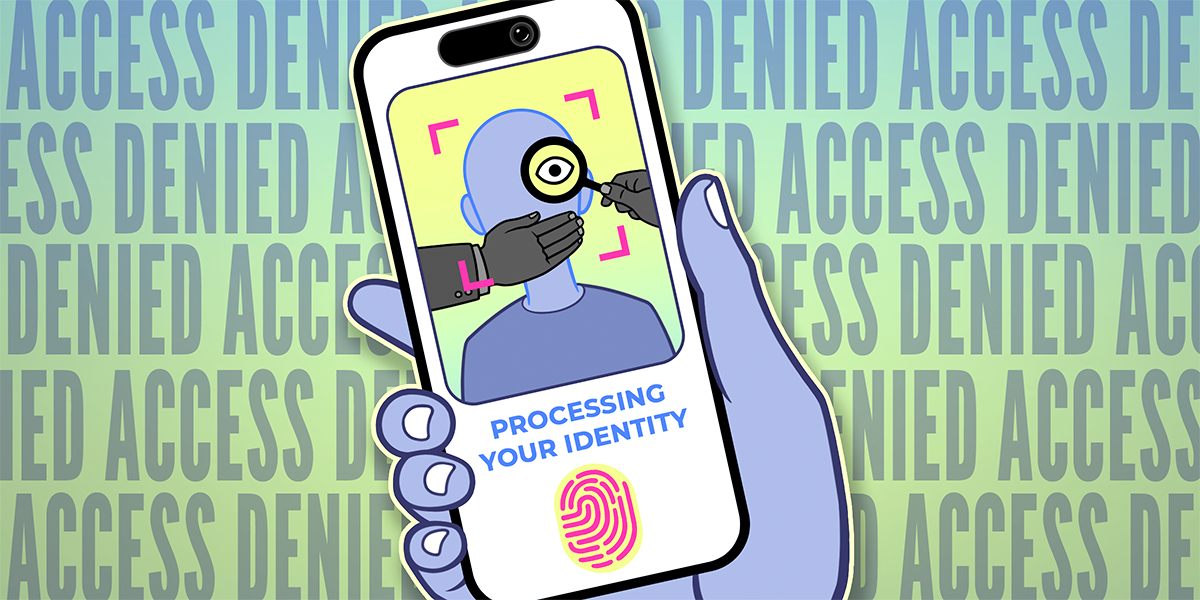
California and New York will enforce new social-media age-gating rules starting in January 2027, Electronic Frontier Foundation reported.
- Three California laws take effect January 1, 2027, restricting algorithmic feeds and requiring age-assurance checks.
- New York SAFE for Kids Act regulations take effect January 25, 2027, limiting personalized recommendations and nighttime notifications.
- New York’s regulations permit a false-positive rate of up to 15% for 17-year-olds with no false-negative benchmarks.
- First Amendment lawsuits have been filed against California’s SB 976 and AB 1709.
California rules take hold January 1
The Digital Age Assurance Act, AB 1043 (2025), mandates age-assurance checks across operating systems and apps as the enforcement backbone for those restrictions, EFF reported. The California Attorney General’s proposed rules on SB 976 outline age-gating methods, accuracy, circumvention, and parental consent. Those regulations encourage companies to evaluate behavioral patterns, collected user data, digital interactions, and metadata to estimate age, alongside location data collected for other purposes, the proposed rules show.
New York regulations follow January 25
New York Attorney General regulations implementing the Stop Addictive Feeds Exploitation (SAFE) for Kids Act take effect on January 25, 2027, the AG’s office announced. The rules restrict personalized recommendations and nighttime notifications between midnight and 6 a.m. without required consent, and mandate that platforms run age assurance and determine user location, according to Electronic Frontier Foundation.
The New York regulations use broad definitions for “age estimation,” “age inference,” and “age verification” that push companies to collect and retain more personal information from users, Electronic Frontier Foundation reported.

New York rules expand location tracking while allowing 15% false-positive rate for teens
On accuracy, the rules permit up to a 15% false-positive rate for 17-year-olds, yet say nothing about false negatives — echoing the California problem.
Social media companies sue over First Amendment violations as EFF warns of privacy trade-offs
Social media companies have filed First Amendment lawsuits against both SB 976 and AB 1709, Electronic Frontier Foundation reported.
The California Attorney General enforces the new age-gating regulations through the Department of Justice, which employs over 1,100 attorneys and 3,700 non-attorney employees to ensure state laws are “uniformly and adequately enforced” under Article V, Section 13 of the California Constitution.
Historically, the office has implemented major regulatory schemes through its rulemaking and litigation authority.
EFF seeks user impact reports
EFF is asking people affected by age checks or parental-consent restrictions in California, New York, or elsewhere to document their experiences and email [email protected].
The organization recommends saving screenshots, dates, times, services, and what the user was trying to do, along with what was lost — whether an account, a club or volunteer group, contact with friends, local news, or a favorite creator — or if the user chose to walk away from a service rather than submit an ID or personal data.
Keep reading

Man Charged With Forcing Oral Sex on Woman in University of Minnesota Dorm, Admits “I Should Have Stopped”
A 19-year-old Minneapolis man faces a felony charge of fifth-degree criminal sexual conduct after a woman told police...
Columbia County Officials Consider One-Year Data Center Moratorium Tuesday
Columbia County officials will consider a one-year moratorium on new data center projects Tuesday to prevent developers from...

Boise State Falls Out of CFP Rankings After Loss to San Diego State; No Group of Six Teams Ranked
Boise State dropped out of the College Football Playoff rankings on Tuesday after a 22-20 home loss to...

BermudAir to Operate Four Routes From New Orleans in 2027
The Bermuda-based carrier will operate twice-weekly service on Wednesdays and Saturdays to Providenciales, Turks and Caicos (PLS); San...