
“Honestly, he’s the only teacher I listen to about the phones,” said 17-year-old Lesly Argueta, a 12th grader at Richmond High.
Her assessment captures the uneven reality of California’s new cellphone restrictions, which took effect this year but leave enforcement to individual districts and, often, individual teachers. West Contra Costa Unified, a 29,000-student district in the East Bay, jumped the gun last academic year with its own classroom ban modeled on the state law, EdSource reported.
The district lets teachers decide how to store the devices — pouches, backpacks, or otherwise — but a district survey last August revealed just how patchy the rollout has been: only 34 of 56 schools responded, and just 19 of those reported consistent implementation.
Superintendent Cheryl Cotton insisted the low response rate did not mean schools were ignoring the issue. “This is not about punishing students. It’s about shifting our culture,” she told the school board.
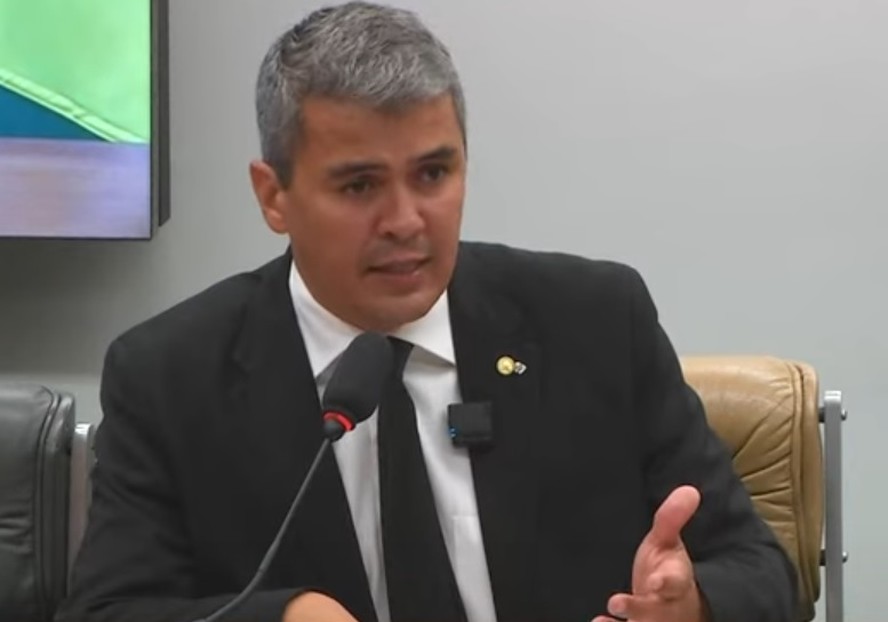
Diego Garcia, a 51-year-old media and graphic arts teacher at Richmond High, has effectively shifted the culture in his own classroom without sending a single student to the principal’s office. His 112-minute periods run phone-free: students deposit devices in plastic pouches at the front of the room. It wasn’t always this smooth.
When Garcia first introduced the rule after the pandemic, some students walked out rather than comply. He responded with clarity — a large “no cellphones” sticker on the door, a matching poster on the blackboard, and conversations with anxious parents, facilitated by Principal Rocio Reyes, about emergency contact protocols.
“As with any kind of addiction, if you try to stop students (from using their phones), it can backfire. But if you can get them to concentrate and substitute that addiction for something fun and attractive, then they can cope with it better. Otherwise, you’ll lose them real quick.”
Diego Garcia, Richmond High teacher
Garcia frames the struggle as “internet addiction disorder,” a term he uses to depersonalize the conflict. He argues that engagement is the only enforcement that scales. “If I were to [send a student to the office], then I’d be taking all of my power to connect with the kids, and giving that authority to someone else,” he said.
Students confirm the variance. Itzel Vargas, also 17, described a patchwork of pouch systems, backpack rules, and teachers who simply don’t press the issue. “Some students don’t listen, and they’re still on it, and they get distracted and then other students around them get distracted,” she said.
Vargas admitted the temptation spikes when classwork runs thin. “Sometimes when I’m finished with my work or if there’s nothing really to do, then it does get a little boring,” said Vargas, 12th grade.

The decoy problem persists district-wide: students slip burner phones, dead handsets, or paper cutouts into the pouches. Garcia catches few fakes; when he does, he sits the student down for a reminder rather than a referral.
State law requires a policy. West Contra Costa has one. But as Garcia’s classroom shows, the ban lives or dies in the minute-to-minute choices of a teacher who makes the work worth more than the scroll.
Related reading

Indiana Senate Democrats Tie IPS School Closures to State Funding Priorities
Indianapolis voters agreed to tax themselves more for public schools two weeks ago. Today, nearly 1,450 students face...

Ravens Bench Marlon Humphrey for ‘Criminals’ Comment After Internal Talks
Baltimore Ravens cornerback Marlon Humphrey was deactivated Thursday for Sunday’s game against the Carolina Panthers after saying on...

A 14-year-old boy was struck and killed
A 14-year-old boy was struck and killed on June 11 while riding an electric motorcycle on a dark...
Wyoming Woman Hauls Roadkill Moose by Tractor After Medical Emergency Sidelined Hunt
Lacelynn Seibel drove a tractor 15 miles per hour down Teton Pass with a cow moose strapped to...