
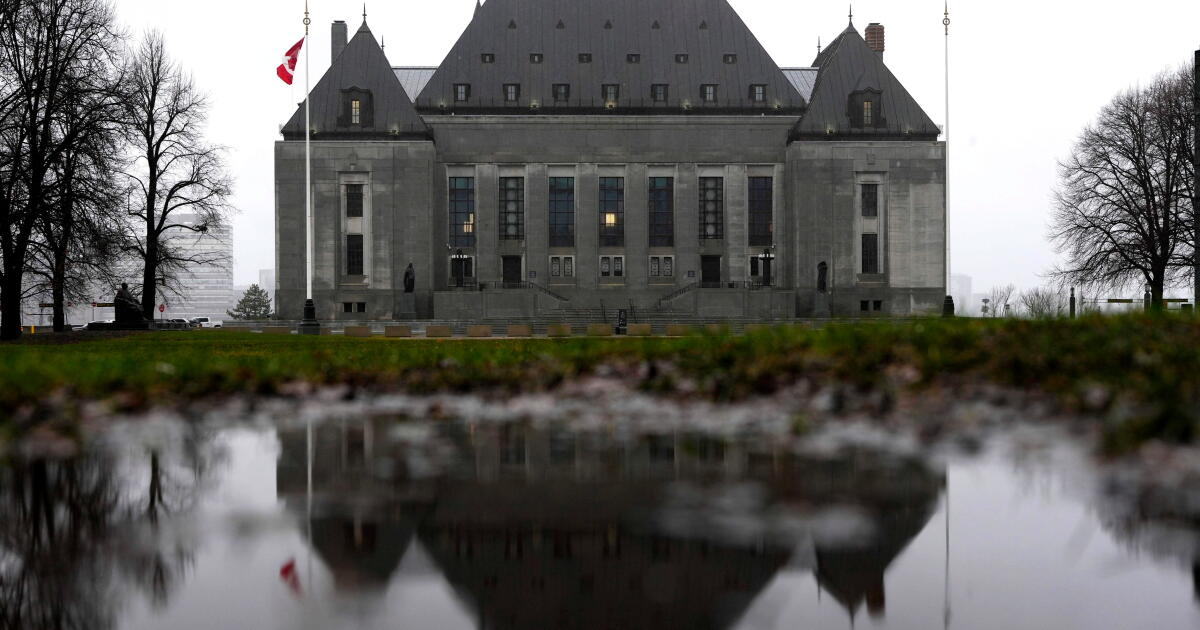
Canada’s Supreme Court upheld most of Quebec’s law banning religious symbols for public schoolteachers, police officers and other public employees in positions of authority on Friday, affirming the province’s power to override certain constitutional rights to keep the ban in place.
The 2019 law, known as Bill 21, prohibits Muslim headscarves, Sikh turbans, Jewish skullcaps and Christian crosses for workers covered by it. Chief Justice Richard Wagner wrote that the law reflected Quebec’s “legitimate and historical commitment” to keeping government secular, Boston Herald reported.
The court upheld Quebec’s use of the “notwithstanding clause,” which allows lawmakers to override rights including religious freedom and equality protected by the Charter of Rights and Freedoms; the override must be renewed every five years.
Exemption for legislators maintained
The court maintained an exemption allowing members of Quebec’s legislature to cover their heads — or potentially, for women, to cover their faces — while performing their duties. However, the court ruled that the law infringes on democratic rights by banning elected officials from wearing a face covering for religious reasons.
The court also affirmed that Canadian courts have the power to declare whether a law is consistent with the Charter even when the notwithstanding clause is invoked, though they declined to do so in this case.
Dissenting justices cite fundamental character of Canada
Justices Andromache Karakatsanis, Michelle O’Bonsawin and Nicholas Kasirer wrote that the notwithstanding clause “cannot be used to authorize laws that are incompatible with the fundamental character of Canada as a free and democratic country.” They said the law infringes on the charter’s guarantees of freedom of religion, freedom of expression and the right to equality.
Political reactions split
Quebec Premier Paul St-Pierre Plamondon welcomed the ruling as “a victory for secularism” and for Quebec’s ability to make different choices from the rest of Canada. Prime Minister Mark Carney said he respected the ruling but pledged his government would not use the constitutional override.
“Canada is a mosaic,” Carney said. “It’s a commitment, in my judgment, a commitment to how we treat each other.” He welcomed the court’s finding that judges can still declare a law violates constitutional rights even when the override allows it to remain in force.
Manitoba Premier Wab Kinew called Bill 21 “legislated discrimination” against Muslims, Sikhs and other religious minorities. “If I need to pick on somebody in order to get elected, I don’t deserve the office,” Kinew said. Bloc Québécois leader Yves-François Blanchet said the ruling upheld the province’s right to protect its values.
“We are now more than ever in a position to move forward with the preservation of the very elements that profoundly define the distinct nature of Quebec society,” Blanchet told reporters in French.
Civil liberties groups condemn decision
Stephen Brown, CEO of the National Council of Canadian Muslims, called the law “discriminatory” and criticised the court’s decision. “Entire categories of people are now barred from entire sectors of employment, not because of what they have done, but because of who they are,” he said.
The chair of the English Montreal School Board, one of the main groups challenging the law, said the board was “obviously very disappointed” with the ruling but took solace from the court’s declarations. Mehramat Kaur of the World Sikh Organization of Canada said, “Quebec is still telling qualified people that they must set aside their faith.”
The ruling is a political win for Quebec’s sovereigntist government and could complicate Prime Minister Carney’s efforts to unify Canada as the country faces an ongoing trade war and annexation threats from U.S. President Donald Trump. Earlier this year, Quebec passed another bill expanding secularism rules to subsidised daycares and post-secondary institutions and restricted public prayer with fines for non-compliance.
More on Supreme Court
- No. 13 Iowa Beats No. 25 Nebraska 31-7 in Heroes Game
- Boise State Playoff Hopes Wobble After San Diego State Loss
- Dealz Workers Face Potential Redundancies After Administrators Appointed to Irish Arm of Poundland (archyde.com)
- Supreme Court Ruling on Quebec’s Law 21 and Royal Oath Debate Heats Up (world-today-news.com)

No. 13 Iowa Beats No. 25 Nebraska 31-7 in Heroes Game
No. 25 Nebraska (7-5, 4-5) lost the Heroes Game to No. 13 Iowa (10-2, 7-2) by a 31-7...

Boise State Playoff Hopes Wobble After San Diego State Loss
Boise State's playoff chances fell from 82.7% to 41.7% after a 22-20 home loss to San Diego State....

Helena Libero Riley Woods Signs with Tennessee Tech Volleyball
Helena High School libero Riley Woods signed a national letter of intent Thursday, Nov. 19, to play Division...

Detroit’s Third Annual Giving Machine Returns for Holiday Donations at Campus Martius Park
Giving Machine returns to downtown Detroit for holiday donations. DETROIT — A bright red vending machine in downtown...