
Canadian police have identified Michael Joseph Moore, an Irish immigrant who later served as a firefighter for 28 years, as the killer of 16-year-old Jacqueline “Jackie” Dunleavy in London, Ontario, in 1968.
Moore died in March 2018, nearly a decade before investigators named him publicly following a review using modern forensic DNA technology and forensic investigative genetic genealogy.
Detective Mike Budzyn of the London Police Service Major Crime Section said investigators used DNA testing on preserved evidence and genealogical research to narrow the investigation to a single suspect. “Based on the evidence obtained through this investigation, we are confident that the evidentiary threshold to support criminal charges was met,” Budzyn said. “Had Moore been alive today, he would have been arrested and charged in relation to Jackie’s murder.”
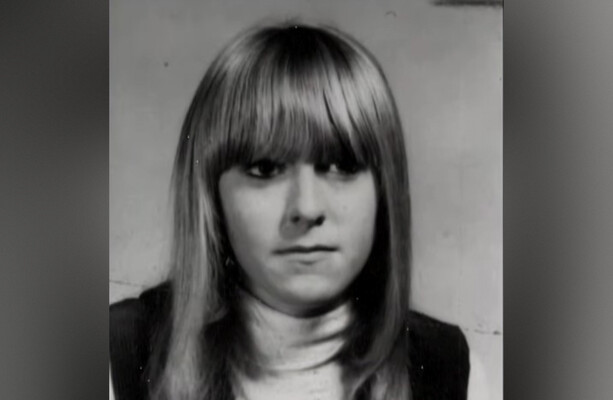
Dunleavy was last seen alive leaving her shift at a local shop on the evening of January 9, 1968. She was found hours later on the grounds of a school, now the site of Matthews Hall, and pronounced dead at the scene.
While she had suffered a head injury, the cause of death was determined to be strangulation. At the time, police conducted an extensive investigation, collecting and preserving biological material, but the case went cold. She finished work at 6:35 p.m. and was discovered dead by three youths on the school grounds at 8 p.m.
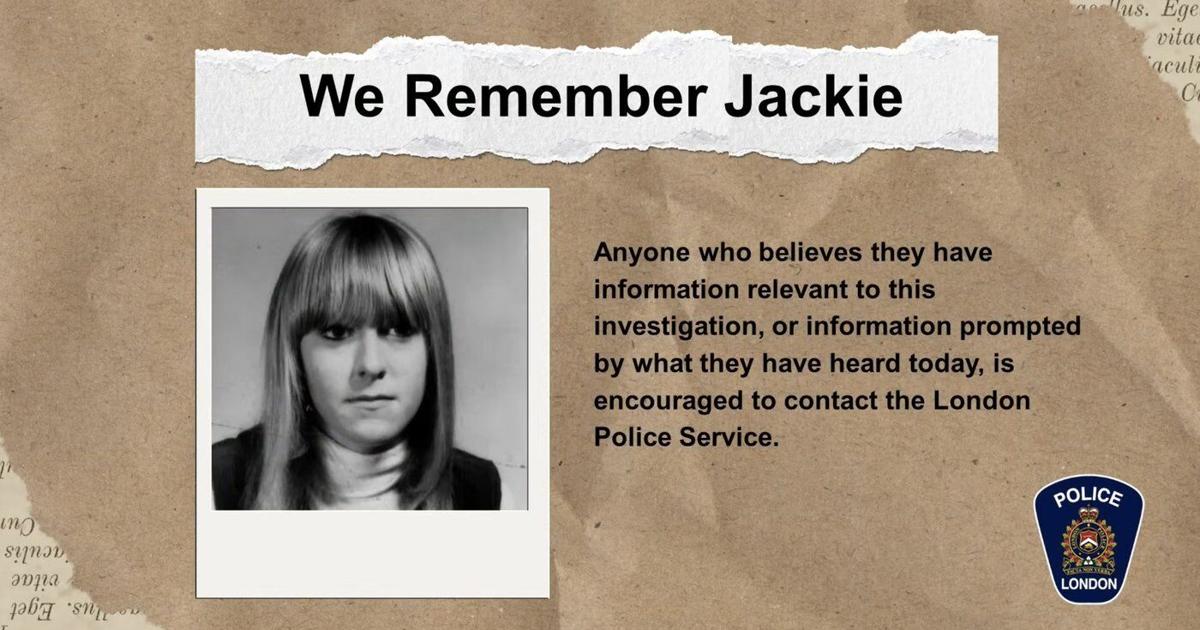
Moore was born in Ireland in 1942 and immigrated to Canada in January 1967, moving into an apartment on Springbank Drive that May. He was 25 years old at the time of the murder and had been living in Canada for less than a year. Police described him as white, around six feet tall, with dark hair, typically clean-shaven but sometimes growing a beard on vacation.
A witness from the original investigation recalled Dunleavy mentioning she had accepted a ride from a man with an English accent who said he had arrived in Canada about a year earlier. Moore drove a white Ford Galaxie 500.
“There was a witness at the time of the original investigation who spoke of an incident in December, less than a month before her death,” said London police Det. Mike Budzyn. This man spoke with what she described as an English accent.”
Moore joined the London Fire Department after the murder and served for 28 years, rising to the rank of captain before retiring in 2012. He told the department he had served as a fire officer in Ireland before emigrating. London Fire Chief Lori Hamer said the news has shaken the department.
“While we cannot speak to the actions of the former employee, today’s news has been deeply troubling for many within the London Fire Department,” Hamer said. “Our focus at this time is on supporting our staff and acknowledging the impact of this news on our community.”
Detective Sergeant Micah Bourdeau said detectives in 1968 did everything they could with the techniques available then. “The evidence they carefully collected and preserved ultimately allowed investigators decades later to continue that work,” Bourdeau said. “This investigation shows the importance of preserving evidence and continuing to revisit historical cases as new technology becomes available.”
Police said the decision to publicly identify Moore “was not made lightly” and followed consideration of the evidence, public interest, and the responsibility to be transparent about the outcome of an investigation unresolved for nearly six decades.
“Publicly identifying Moore provides an accurate historical record and answers that Jackie’s family and the community have sought for decades,” the police statement said. “Their collective efforts reflect the professionalism, persistence, and commitment that serious investigations demand.”
Related reading

ICDS: Europe 5% of AI Compute vs US 78% in 2026
Europe’s share of global AI compute capacity stood at roughly 5% in 2026 against 78% in the United...

Poland Accuses Russia of Drone Incursion as NATO to Deploy AWACS After Missile Strikes
Poland accused Russia on Tuesday of deliberately violating its airspace with a surveillance drone that briefly crossed the...

Lao PM Arrives in Hanoi for First Visit, Summits on Nov 27-28
Lao Prime Minister Saleumxay Kommasith arrives in Hanoi on Friday for his first official visit to Vietnam since...

Finucane Murdered for Challenging State as Lawyer, Inquiry Told
"The reason Patrick Finucane was killed is because he was a lawyer and an effective one whose work...