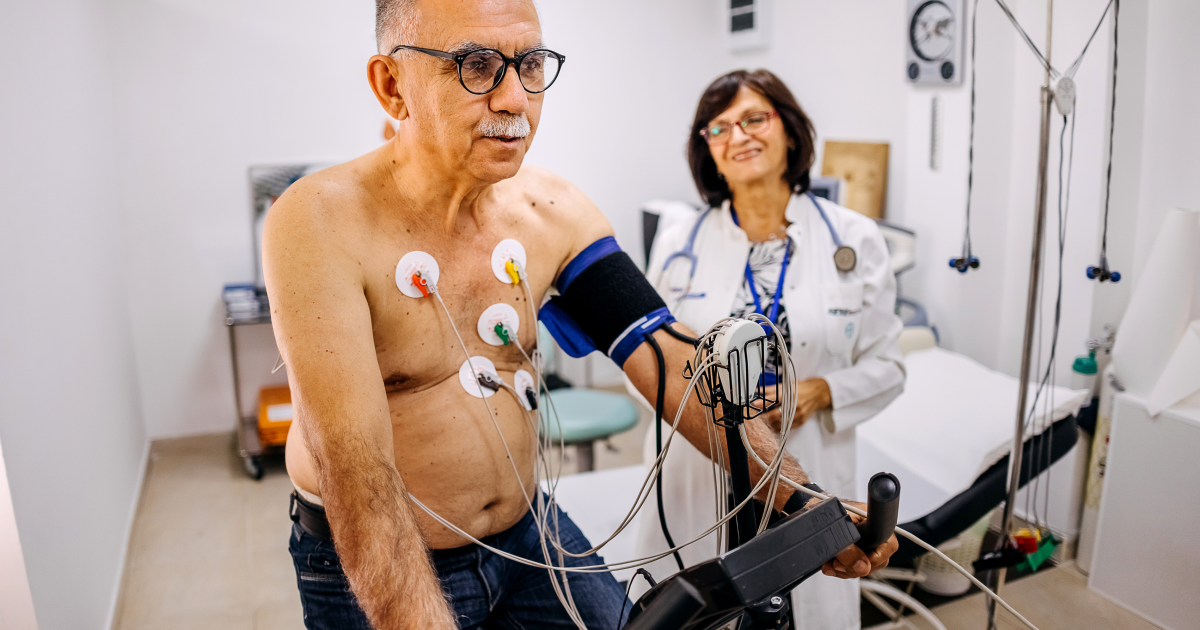
Cardiac rehabilitation combines supervised exercise, education and emotional support to help patients recover from heart attacks, surgery and other cardiac events. Programs such as the one at the Eden Prairie Cardiac Rehab Center run 12 weeks with three monitored sessions per week.
How the program works
Each participant begins with an evaluation of fitness level, health history and individual needs, including questionnaires on mood, stress, anxiety and depression. Patients then follow a 12-week schedule of 36 visits that may include treadmill walking, upright stationary bikes, elliptical trainers, rowing machines and strength training.
Staff adjust intensity based on comfort and confidence while continuously monitoring heart activity with an EKG, recording blood pressure and tracking fatigue to ensure safe progress. A dietitian also leads classes on healthy eating and other risk-factor reduction.
Participation gap persists nationally
Despite documented benefits, only about 1 in 5 eligible patients nationwide attend even one cardiac rehab session. A 2024 study by Minneapolis Heart Institute Foundation found that at Abbott Northwestern Hospital, 9 out of 10 eligible patients were referred to an outpatient cardiac rehab center and nearly half attended the first session — a rate roughly double the national average.
“Recovery affects both physical and emotional health,” the foundation said in its report on the Eden Prairie program.
Heart care has shifted from weeks of strict bed rest in the early 1960s to a holistic approach that combines supervised exercise, lifestyle habits and stress management. Research continues on ways to increase participation with the goal of improving outcomes and lowering the risk of future heart problems.
Minnesota Secretary of State Updates Dissolution Filings and Fees for Business Entities
Minnesota's Secretary of State has published updated filing requirements and fees for closing business entities registered in the...

Surveillance Video Shows ICE Agents Jump From Moving Vehicles, Guns Drawn, to Detain Driver in Concord
Surveillance footage shows six ICE agents jumping from moving vehicles with guns drawn to chase and detain a...

Nova Scotia’s Annual Christmas Tree to Boston Honors 1917 Halifax Explosion Relief
Nova Scotia's annual gift of a Christmas tree to Boston marks more than a century of gratitude for...
Siena Overcomes Halftime Deficit to Defeat Vermont 98-88
Siena defeated Vermont 98–88 on Monday in a non-conference game at Patrick Gym, outscoring the Catamounts 55–45 in...