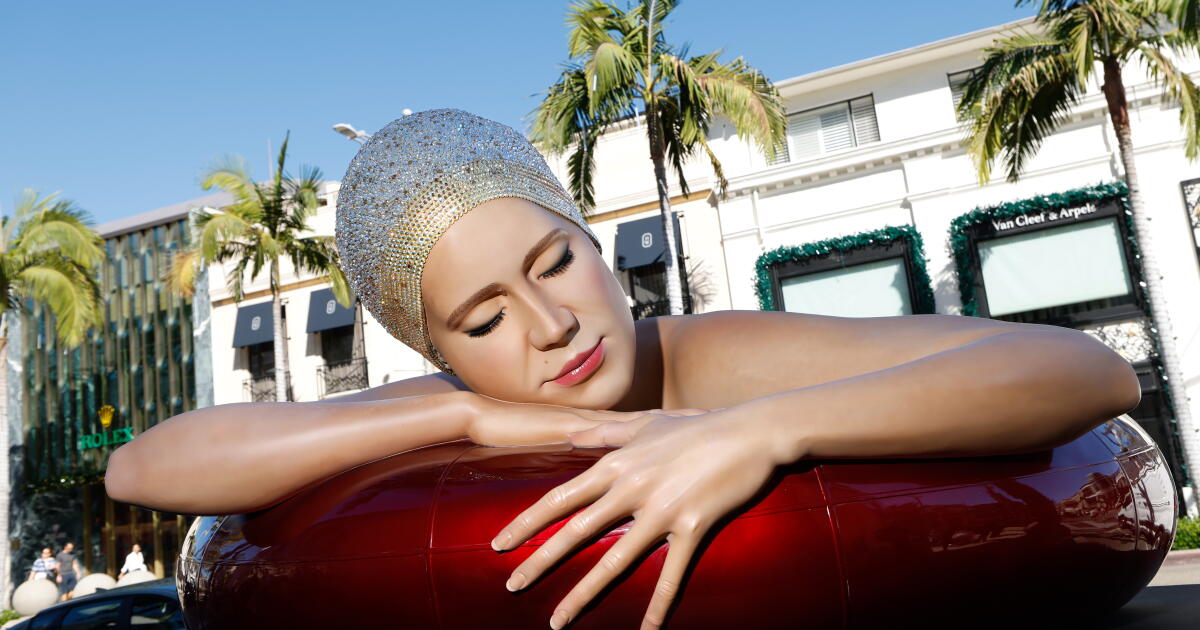
Carole Feuerman’s monumental sculptures arrived on Rodeo Drive this week, marking the West Coast debut of an exhibition that has traveled from the streets of New York to the shadow of the Eiffel Tower.
Ten massive works, titled “Monuments of Stillness,” now flank the famous Beverly Hills boulevard from Dayton Way to South Santa Monica Boulevard. According to a report by the Los Angeles Times, the pieces were transported across the country on two flatbeds and an enclosed truck, making a brief stop in Palm Desert for inspections and touch-ups before their unveiling.
The exhibition brings a sense of “superrealism” to the luxury shopping district, placing life-sized, highly detailed figures alongside high-fashion houses like Chanel, Gucci, and Prada. This public display aims to bridge the gap between the intimidating atmosphere of private galleries and the accessibility of the street.
“Public art is something that everyone can enjoy, both residents and visitors,” Beverly Hills Mayor Craig Corman said during a phone call from New York.
The journey of the swimmers
The sculptures have a history of appearing in major global landmarks. One piece, “The Diver,” traveled across the Atlantic to stand before the Eiffel Tower during the 2024 Olympic and Paralympic Games. Before reaching California, the collection occupied Park Avenue in Manhattan and lined Michigan Avenue in Chicago near the Wrigley Building.
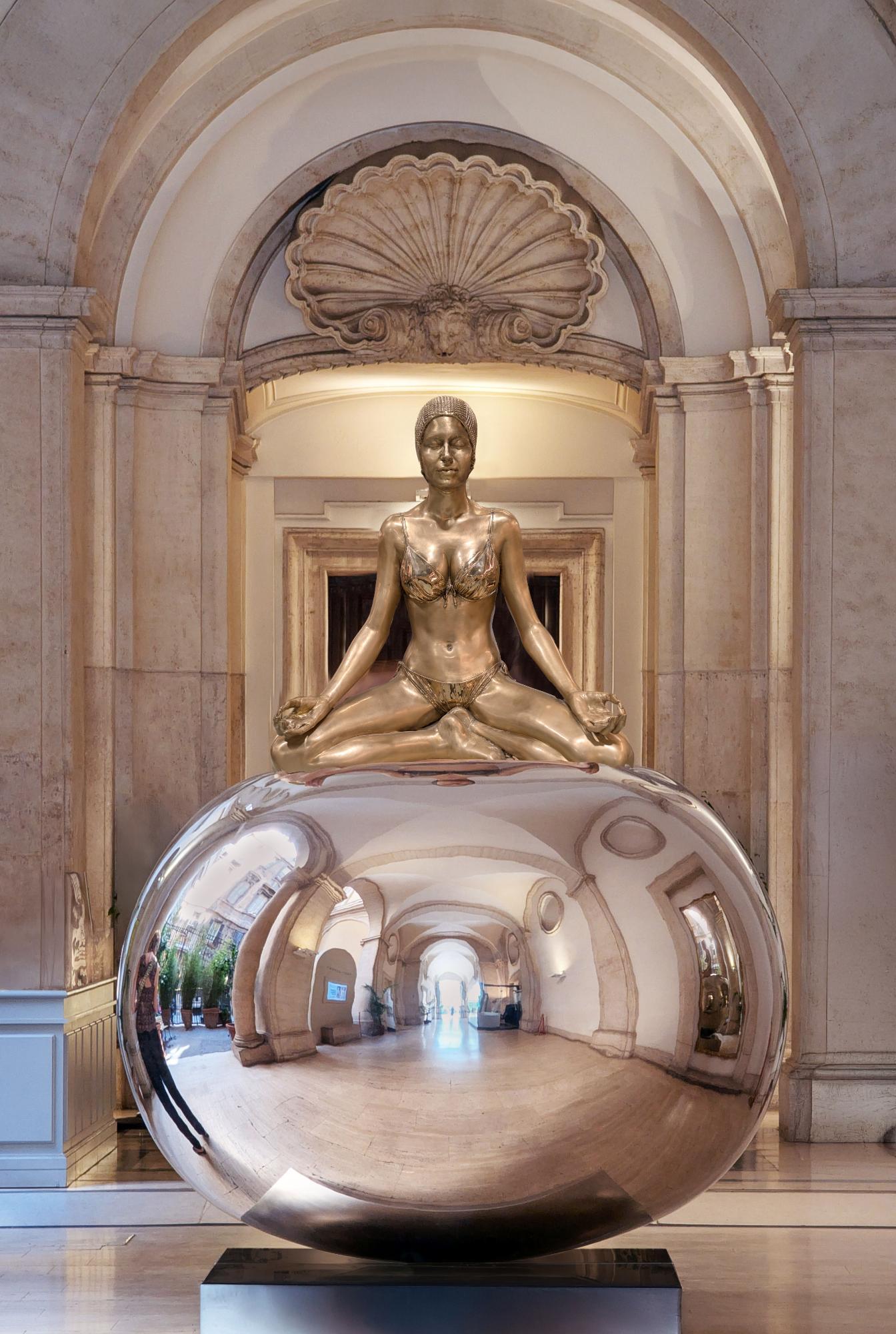
The artist, who recently received the International Sculpture Center’s 2026 lifetime achievement award, focuses on capturing intimate, quiet moments through large-scale forms. Her work often features hyper-realistic details, such as eyelashes, fingernails, and hair escaping from gilded swim caps.
One of the most significant pieces, “Survival of Serena,” carries a heavy historical weight. Feuerman originally created the work in 1981, when it was titled “Innertube,” after witnessing Cuban asylum seekers reaching the shores of Key West, Florida, on driftwood and inner tubes. She later renamed the piece as an ode to the bravery of immigrants.
“I changed the name to ‘Survival of Serena,’ because survival is what these brave people did when they came on floats, what the immigrants did,” Feuerman told Los Angeles Times during a guided walking tour. “The immigrants are extremely brave to leave their country and to hope for the best and to start again. So this is an ode to the immigrants, and she’s a survivor.”
Art beyond the gallery walls
For many, the high-end environment of Rodeo Drive can feel exclusive. While the sculptures sit on the sidewalk for anyone to view, the surrounding luxury brands often cater to a specific demographic. Feuerman and her gallerists, Melissa Morgan and Alec Longmuir, suggest that bringing these works outdoors helps bypass the social barriers found in traditional art spaces.
“She’s getting international recognition because of these public exhibitions, and exposing people that maybe won’t walk into a snobby, intimidating gallery in SoHo, but are going to be exposed to this work,” Longmuir said on a joint call with the artist.
The impact of this accessibility was visible on Monday morning when visitors from China stopped to photograph a 7-foot-long sculpture titled “Patience.” The piece, modeled after Feuerman’s doctor, Holly F. Lofton, features a swim cap adorned with 24-karat gold leaf.
The scale of the works often invites physical interaction. In Peekskill, New York, where “The Golden Mean” was previously displayed, residents were known to attempt handstands next to the 1,500-pound sculpture to mimic its pose.
Kathy Gohari, President of the Rodeo Drive Committee, said that the goal is to integrate creativity into the daily rhythm of the city. “We’re all in this very creative environment, and we believe that art should be part of everyday life,” Gohari told Los Angeles Times. “It shouldn’t just be something that you plan to visit in a museum.”
A presence on the world stage
The exhibition includes “The Golden Mean,” a 12-and-a-half-foot-tall creation inspired by Olympic gold medalist Greg Louganis. Moving the collection through the American West required extensive logistics.
Beyond the aesthetic value, Feuerman views her work as a mirror for the public. Her sculpture “Justice,” which depicts a woman balanced on a sphere, was designed to reflect the environment and the people observing it. During a previous showing in Chicago, the piece stood in front of protesters advocating for political change, a moment Feuerman cited as proof of the medium’s power.
The “Monuments of Stillness” exhibition is scheduled to remain on display along the Walk of Style through sometime next year.
Worth a look
Patrick Mahomes Praises New Chiefs Receiver Josh Downs
Patrick Mahomes met new wide receiver Josh Downs for the first time on Wednesday and walked away impressed...
Wichita Officials to Update on Deadly Stryker Sports Complex Crash
Sedgwick County officials are preparing to release new details regarding the October 17 crash that killed two people...

UI Study Finds Pesticides in Iowa Water, Leaves, and Dust
Researchers have identified traces of pesticides in Iowa waterways, tree leaves, and household dust, KGAN reported. The findings,...

Good Samaritan Boys Ranch Partners on Millstone Flats Housing
Eight apartment units in a new Springfield housing development will be reserved specifically for young people transitioning out...