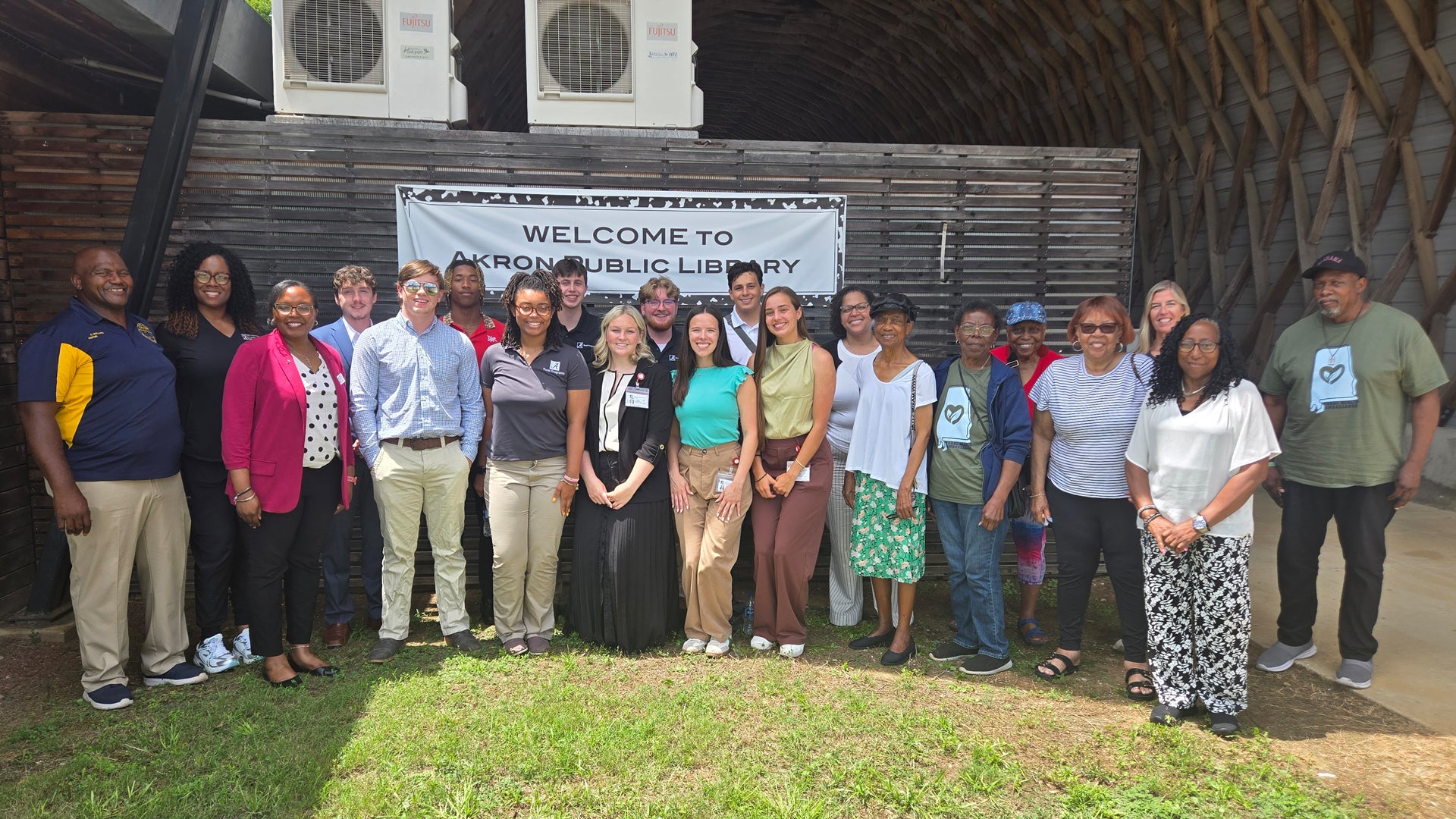
The University of Alabama is expanding its specialized pipeline programs to address a growing shortage of primary care providers in rural communities.
Many Alabamians struggle to access medical services, as 42% of the state's population resides in rural areas. According to the Alabama Department of Public Health, 7% of the state’s rural counties currently operate without a hospital. To combat these gaps, the University of Alabama College of Community Health Sciences (CCHS) has spent over three decades training local residents to return to their hometowns as healthcare professionals.
The initiative focuses on creating a direct pathway from rural roots to medical practice.
“We are working to improve access to healthcare for rural Alabamians through our pathway programs,” said Dr. Drake Lavender, director of CCHS Rural Programs and one of its first graduates.
The Rural Health Leaders Pipeline provides structured opportunities for both high school and college students to explore careers in dentistry and primary care. These programs offer early exposure to the medical field, helping students understand the specific healthcare needs of their own communities.
The effectiveness of these programs is reflected in the current workforce and the broader local economy. Data from the university highlights the scale of the program’s reach:
| Metric of Success | Recorded Impact |
|---|---|
| Practicing rural physicians from the program | 62 |
| Physician-years of primary care in rural Alabama | 884 |
| Graduates practicing primary care | More than 70% |
| Graduates entering practice in rural Alabama | More than 50% |
| Economic impact to rural Alabama | More than $1.1 billion |
Each summer, the College hosts dozens of students through the Rural Health Scholars, Rural Dental Health Scholars, and the Medical Opportunities and Outreach in Rural Education Scholars programs. These students spend five weeks on the Tuscaloosa campus completing college courses for credit and shadowing physicians.
The university is also broadening the scope of its specialized training to include more diverse medical disciplines. This fall, the CCHS welcomed its 31st class of Rural Medical Scholars, its fourth class of Rural Dental Scholars, and three Rural Community Health Scholars. Looking ahead, the Rural Programs division has received approval to pilot new tracks in pre-physical therapy and pre-occupational therapy over the next few years.
Beyond general primary care, the university is addressing specialized legal and medical needs through the National Center on Forensics. Established in partnership with the Alabama Department of Forensic Sciences and the University of Alabama at Birmingham Department of Criminal Justice, the center provides medico-legal training on the UA campus.
According to the Institute for Rural Health Research, this center helps medical students train as deputy medical examiners or coroners, with a specific focus on those intending to work in underserved rural areas. This training is designed to improve the availability of medico-legal knowledge, which can increase access to justice for rural residents.
The strategy relies on a cycle of recruitment and mentorship. By identifying and nurturing students who already have ties to rural Alabama, the university seeks to stabilize the healthcare workforce in areas where provider turnover is often high.
“The people in our program — faculty, staff and students — are rural Alabamians working hard to improve the health of our fellow rural Alabamians,” said Dr. Lavender.

Texas Visits LSU for First Time Since 1953 With CFP Stakes
Texas returns to Baton Rouge this weekend to face LSU for the first time in 73 years. The...
MHEC Grant Helps Iowa Develop Statewide Prior Learning Assessment
Iowa's higher education leaders are moving to bridge the gap between professional experience and academic credit through a...

WIBW: Freezing Temperatures Expected Through the Weekend in Topeka
Topeka residents should prepare for a sharp temperature drop as a cold front moves through the region, bringing...
Indiana Dental Radiography Coursework and Licensure Bundle
Indiana dental assistants must complete a specific, state-approved radiology curriculum to maintain legal compliance for taking x-rays, according...