
Turkey safety requires thawing without washing, as raw turkey can harbor illness-causing bacteria including salmonella and campylobacter
Some food poisoning incidents of some types tend to rise in November and December, according to the U.S. Centers for Disease Control and Prevention
Donald Schaffner, a food science expert at Rutgers University, said that “Cooking takes longer with big masses of food. Cooling takes longer with big masses of food”
Benjamin Chapman, a food scientist at North Carolina State University, said that “Anything that hits that surface and generates spray is going to basically spread contamination around your kitchen” when rinsing turkey in a sink
A frozen turkey must be thawed first using methods such as in the refrigerator, in the microwave, or in cold running water, according to Schaffner
The Department of Agriculture states that a frozen turkey requires about 24 hours for every 4 to 5 pounds of weight to thaw in a refrigerator
If the microwave or cold water method is used, the bird must be cooked immediately
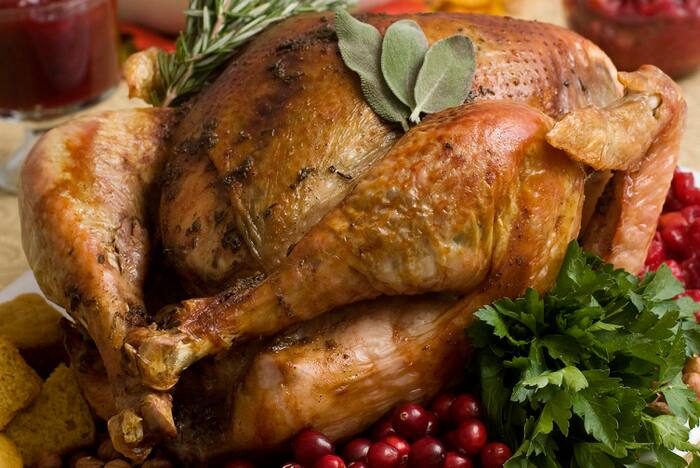
Instead of washing, the turkey should be patted dry with paper towels and tossed, or a kitchen towel should be used and disinfected in the laundry
Turkey must reach a cooked temperature of 165 degrees Fahrenheit (73.8 degrees Celsius) before serving
The best way to confirm doneness is to use a tip-sensitive digital thermometer inserted in the innermost section of the thigh, ensuring it does not touch the bone
Chapman’s past research indicates that plastic pop-up thermometers in commercial turkeys can activate before the bird is fully cooked, and relying on golden-brown skin, pink-free meat, or clear juices are not great indicators of temperature, according to Chapman
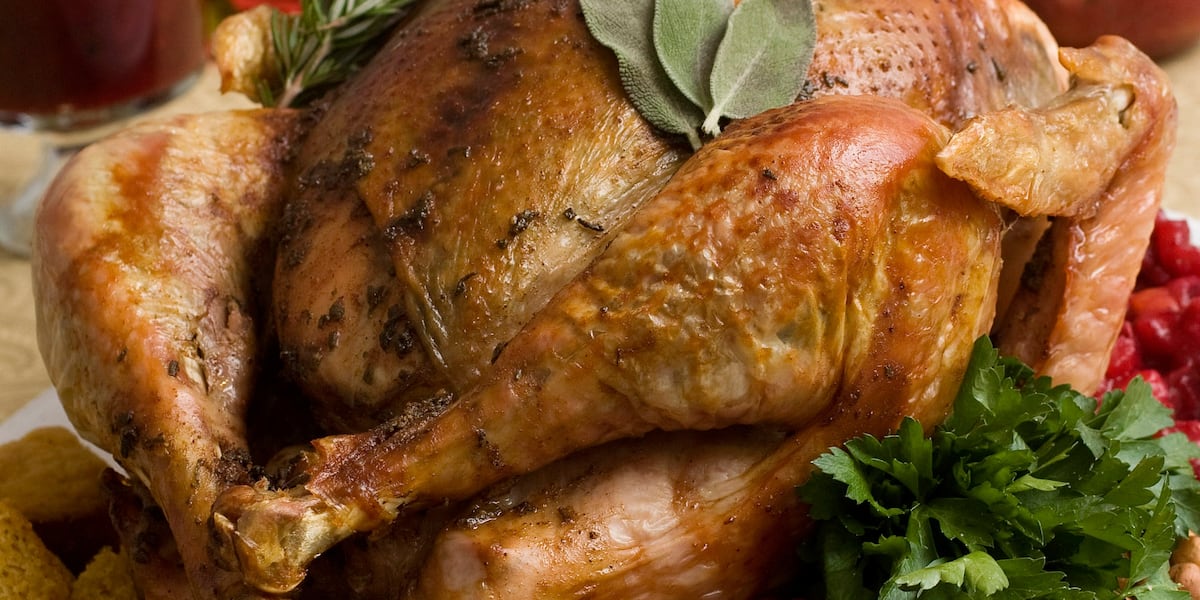
To prevent bacterial growth, food must be kept either hot or cold, avoiding the danger zone between 40 degrees and 140 degrees Fahrenheit (between 4C and 60C)
Schaffner recommended that leftovers be refrigerated within two hours of coming off the stove
Dense foods like sliced turkey, cooked sweet potatoes, or gravy should be refrigerated in shallow containers to cool quickly
According to Schaffner’s recent study, foods placed in containers with a depth of no more than 2 inches faced minimal danger of developing harmful germs
Scrupulous cleaning, including washing hands before preparing food and after touching raw food, is a key way to avoid food poisoning
For details about safe turkey handling, check out the thawing and cooking calculators created by the USDA
Related reading

Local Leaders Frame Laramie County Housing as Crisis per the Open Range Record
Housing pressures in Laramie County are characterized not by a shortage of physical housing but by an affordability...

SMSU Secures 81-69 Road Victory Against Northwest Missouri State
Southwest Minnesota State men's basketball secured an 81-69 road victory against Northwest Missouri State at Bearcat Arena on...

Kansas Hosts Denver Pioneers Monday November 23
The Kansas Jayhawks will host the Denver Pioneers in Allen Fieldhouse on Monday, November 23, at 7:00 p.m....

Fernandes Confirms Man Utd Contract Talks on Hold, ‘Priority Is Winning’
In an interview published on Sunday Bruno Fernandes confirmed that Manchester United offered him a new contract, but...