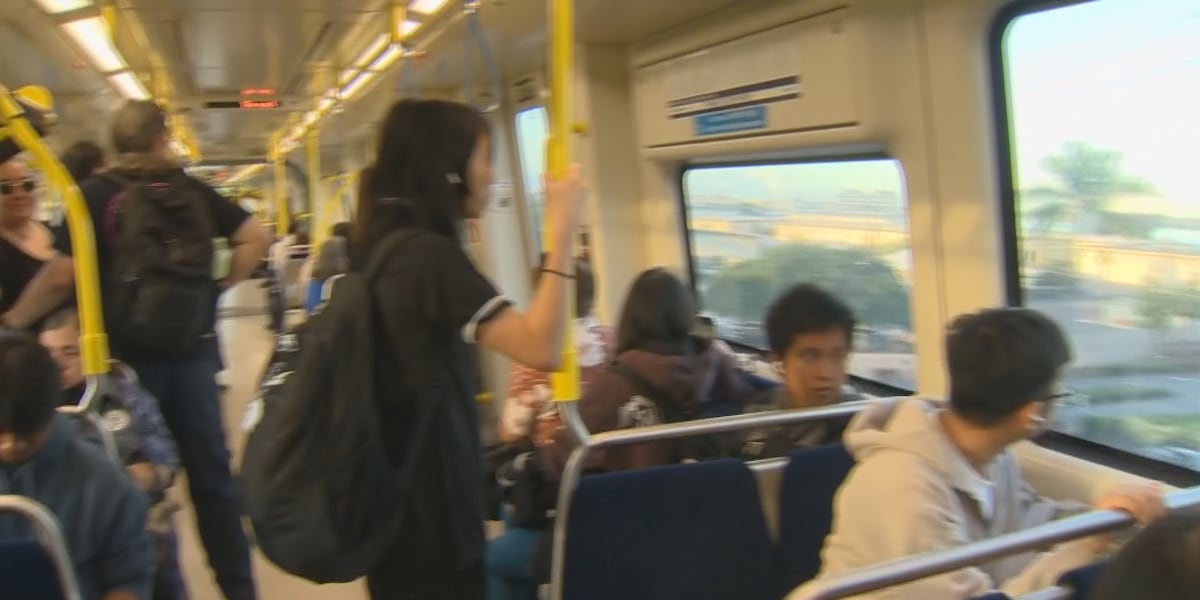
Honolulu officials are reassuring residents that the island’s critical infrastructure remains resilient following a series of widespread technological disruptions across the United States.
The push for reassurance comes as a string of high-profile outages has rattled confidence in the stability of essential services.
Recent incidents included a massive Microsoft Outlook outage last Thursday, a nationwide airport ground stop that canceled thousands of domestic flights, a system-wide outage at United Airlines, and a technological glitch that blocked account access for thousands of major U.S. bank customers. Amid this volatility, local leaders are highlighting the specific defenses protecting Hawaii’s transit and water systems.
“They are an autonomous system that is separate from the internet,” said Roger Morton, Department of Transportation Services Director, when asked how the Skyline rail system would fare against cyberattacks, Hawaii News Now reported.
The Skyline rail system, which carries between 13,000 and 14,000 riders every week, relies on a strategy of physical isolation to mitigate digital threats. By keeping the system disconnected from the broader internet, officials aim to remove the primary pathway used by bad actors to infiltrate critical infrastructure.
“There are too many actors in the world today that can figure out how to get into a system, into critical infrastructure, like our rail here, and so we just don’t connect that system to the internet,” Morton said.
While the rail’s isolation provides a hardware-level barrier, other vital utilities cannot rely on being offline. The Honolulu Board of Water Supply requires internet connectivity for its daily operations, necessitating a different layer of defense centered on active monitoring and specialized personnel.
Because the water utility must remain connected to function, its protection strategy shifts from isolation to constant vigilance. The utility maintains a dedicated cybersecurity team to defend against the same types of global threats that recently disrupted banking and aviation sectors.
“We have very strong systems in place, we take our cybersecurity extremely seriously. We know we’re critical infrastructure, so we do everything possible, in order to protect ourselves and protect our water system,” Kathleen Pahinui, the utility’s information officer, told Hawaii News Now.
Pahinui said that the board does not operate in a vacuum; the utility is integrated into a broader safety network to ensure early detection of emerging threats.
“We are always alerted. We’re linked in to all sorts of cybersecurity type of teams nationwide. So if something’s happening worldwide, we will know about it, and we will be ready to and be prepared to deal with it,” Pahinui said.
This interconnectedness is intended to provide a buffer against the “cascading failure” effect often seen in modern technological outages, where a glitch in one sector—such as cloud computing or telecommunications—triggers a domino effect across unrelated industries.
Despite these institutional safeguards, some residents remain skeptical of the inherent risks involved in a hyper-connected society. Alika Maule, a rail rider, pointed to the ubiquity of digital tools as a persistent vulnerability.
“There’s going to be threats no matter where you go and how you connect to the internet because even using our phones our using computers, yeah, it does happen,” Maule said.
Worth a look
- St. Mary’s University to Launch New Catholic Trade High School in St. Paul
- Lansing Town Board to Vote on Potential Data Center Ban Amid Legal Battles
- Banks and Zelle Respond to Widespread Technical Outages (world-today-news.com)
- Russia strikes Kyiv bridges and infrastructure in massive overnight attack (newsarchyuk.com)
St. Mary’s University to Launch New Catholic Trade High School in St. Paul
“The St. James church building has been used by one or more Protestant churches since then and (was)...

Lansing Town Board to Vote on Potential Data Center Ban Amid Legal Battles
The Lansing Town Board is set to vote on a proposed ban on data centers on Wednesday following...

$1 Billion UBS Wealth Team Moves to Merrill Lynch in Boston
Merrill Lynch secured a private wealth team managing $1 billion in assets from UBS Wealth Management USA in...

LSU Guard MiLaysia Fulwiley Misses Game Following Arrest
LSU senior guard MiLaysia Fulwiley was absent from Monday night's 116-70 victory over Troy following her arrest during...