
U.S. Coast Guard and Charleston Harbor Pilot officials recently met with law students to discuss the regulatory and operational complexities of maritime commerce, Charleston School of Law reported.
The guest speakers addressed the Global Trade and Maritime Law LLM Intermodal Container Transportation Law class, providing a technical look at how vessels move through one of the region’s most critical economic arteries. By bringing frontline enforcement and maritime experts into the classroom, the session bridged the gap between theoretical maritime statutes and the high-stakes reality of port operations.
For the Port of Charleston, the intersection of law and physical movement is constant. Every foreign-flag commercial vessel entering the harbor must follow international and domestic regulations to ensure both economic flow and environmental safety.
Coast Guard Captain Shawn A. Lansing, who serves as the Port/Sector Charleston Commander, detailed the agency’s specific legal mandate within the local waters. Lansing explained the Coast Guard’s vital role in ensuring that all foreign-flag commercial vessels calling at the Port of Charleston remain in full compliance with established rules and regulations.
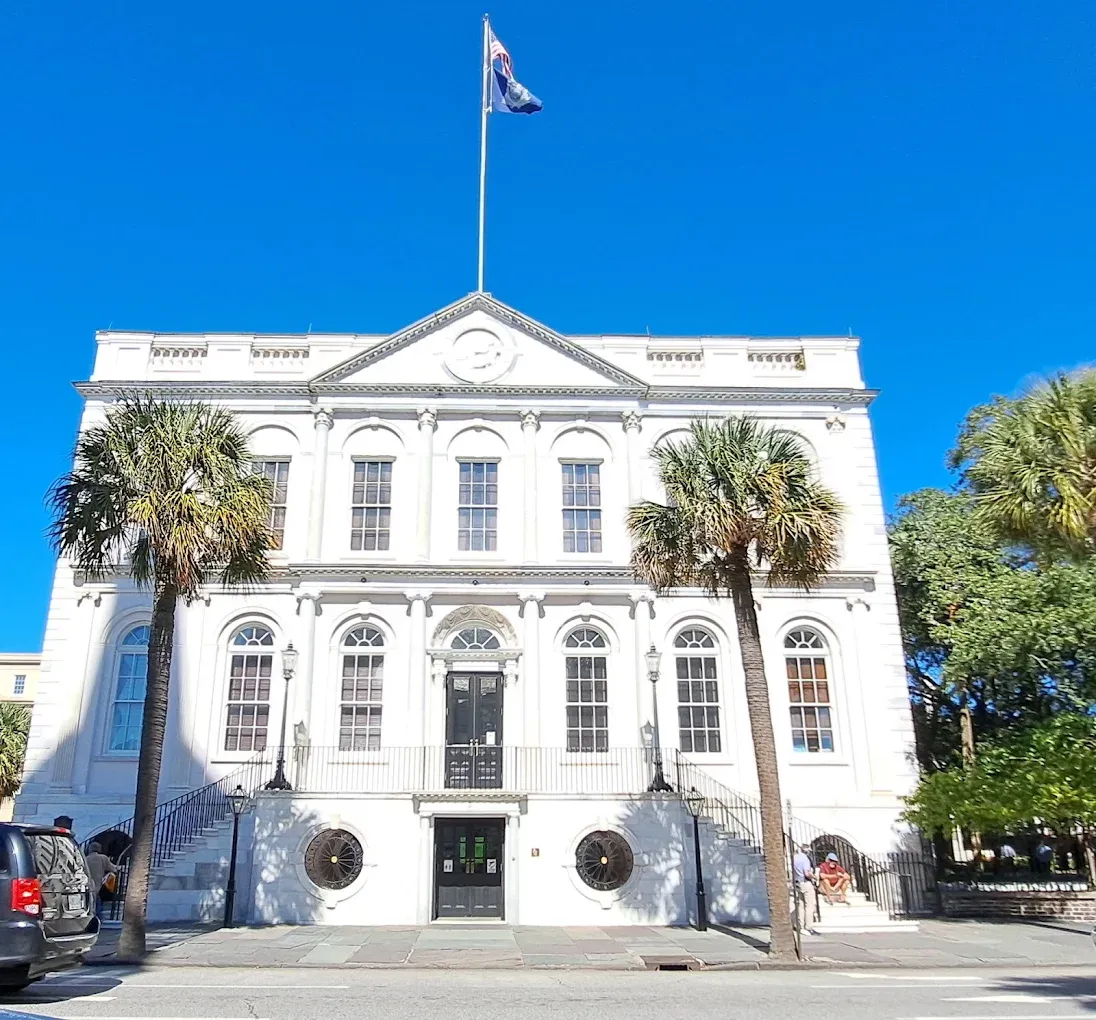
Beyond simple observation, the agency maintains significant legal authority to enforce these standards. This authority is a cornerstone of maritime security, preventing unregulated or unsafe vessels from disrupting the supply chains that rely on the South Carolina coast.
The stakes of these enforcement actions extend far beyond paperwork. A failure to comply with maritime law can lead to environmental disasters, blocked shipping lanes, or significant delays in the delivery of goods, affecting everything from local logistics businesses to global retail markets.
While the Coast Guard manages the legal and regulatory framework, the physical movement of massive cargo ships requires specialized local expertise. To illustrate this, Captain Crayton Walters, current President of the Charleston Branch Pilots Association, and Capt. John Cameron joined the discussion.
Cameron, the Executive Director of the Charleston Harbor Pilots and a retired Coast Guard Sector Commander for Charleston, helped provide a “day-in-the-life-of-a-Charleston Harbor Pilot” perspective. The presentation highlighted the technical precision required for the job, noting that harbor pilots must board every foreign-flag cargo ship calling at the Port of Charleston.
Once aboard, these pilots take responsibility for guiding these massive vessels safely into and out of the port. This process is a critical link in the intermodal transportation chain, ensuring that the transition from deep-sea transit to local port docking occurs without incident.
The coordination between the regulatory oversight provided by the U.S. Coast Guard and the tactical navigation provided by the pilots creates a dual layer of protection for the harbor. One manages the legality of the vessel, while the other manages the physics of the movement.
For students specializing in intermodal container transportation law, these sessions offer a direct look at how the law is applied in real-time environments where a single error in judgment or a lapse in compliance can have immediate, massive economic consequences.
Keep reading

Economic Panel Forecasts Modest Revenue Growth for Nevada – Nevada Current
Nevada Approves $13.4 Billion Biennium Revenue Baseline Nevada’s economy is expected to outperform the national average over the...

Lou Ella Purkaple Becomes Colorado’s First Female Parachutist
“O-o-o-o! It was the most wonderful thrill of my life,” Lou Ella Purkaple said after becoming Colorado’s first...
Madison School District Staffing Decisions Spark Concerns Over Student Needs and Transparency
“My feeling right now is that we are waiting for kids to fail,” said Anna Mei Piro, a...
Zach Edey and Anthony Davis Trade Defensive and Scoring Plays
The Memphis Grizzlies and Washington Wizards engaged in a closely contested opening period characterized by frequent scoring shifts...